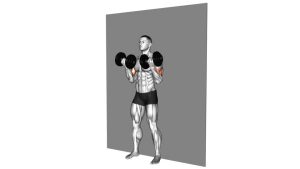
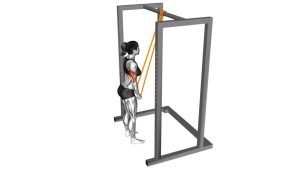
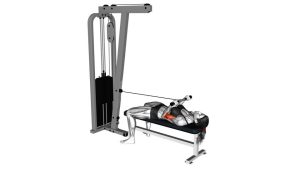
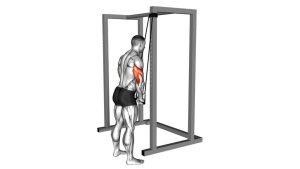
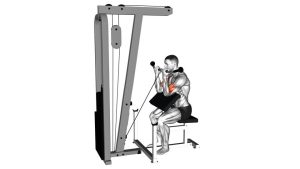
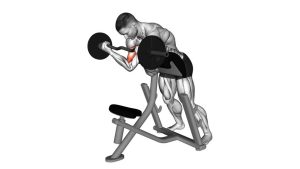
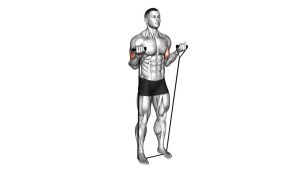
Band Kneeling Preacher Curl: Proper Form, Sets, Tips & FAQ
Learn the Band Kneeling Preacher Curl to isolate the biceps with strict form and constant band tension. Includes setup, execution, sets by goal, common mistakes, FAQs, and recommended equipment.
Band Kneeling Preacher Curl
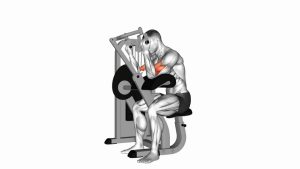
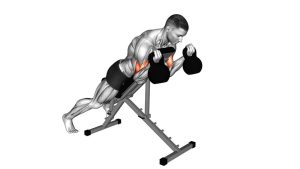
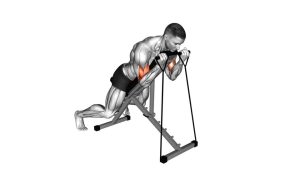
This variation is ideal for lifters who want a controlled curl with strong peak tension and better arm isolation. The kneeling position helps stabilize the body, while the preacher pad keeps the upper arms fixed so the biceps do most of the work. Focus on smooth reps, full control, and a hard squeeze at the top rather than using speed.
Quick Overview
| Body Part | Biceps |
|---|---|
| Primary Muscle | Biceps brachii |
| Secondary Muscle | Brachialis and brachioradialis |
| Equipment | Resistance band, preacher bench or angled arm pad |
| Difficulty | Beginner to Intermediate |
Sets & Reps (By Goal)
- Muscle growth: 3–4 sets × 8–15 reps with controlled tempo and 45–75 sec rest
- Technique practice: 2–3 sets × 10–12 reps using lighter band tension and perfect form
- High-rep pump work: 2–4 sets × 15–20 reps with short rest and constant tension
- Accessory arm training: 2–3 sets × 8–12 reps after rows, chin-ups, or pulldowns
Progression rule: First improve rep quality, then increase band resistance. Avoid jumping to a band that forces you to shorten the range or swing the body.
Setup / Starting Position
- Anchor the band low: Secure the resistance band under a stable point so it pulls upward against your hands.
- Kneel behind the preacher bench: Position yourself so your chest stays stable and your upper arms rest comfortably on the pad.
- Use a supinated grip: Hold the band with palms facing up and hands about shoulder-width apart or slightly narrower.
- Plant the upper arms: Keep the triceps supported by the pad so the elbows stay fixed throughout the set.
- Start near full extension: Lower the hands until your elbows are almost straight, while keeping tension in the band.
Tip: Move slightly closer or farther from the anchor point to fine-tune starting tension without losing clean mechanics.
Execution (Step-by-Step)
- Brace and stay still: Keep the torso quiet, shoulders down, and upper arms glued to the pad.
- Curl upward: Flex at the elbows and pull the band toward your shoulders in a smooth arc.
- Squeeze at the top: When the forearms approach vertical, contract the biceps hard without lifting the elbows off the pad.
- Lower under control: Slowly return to the bottom position, resisting the band instead of letting it snap back.
- Repeat with constant tension: Keep the motion strict and rhythmic from rep to rep.
Pro Tips & Common Mistakes
- Keep your upper arms pinned: The preacher setup only works if the elbows stay fixed on the pad.
- Don’t rush the eccentric: The lowering phase builds control and keeps the biceps under tension longer.
- Avoid wrist curling: Let the elbows and biceps drive the movement, not the wrists.
- Use full but comfortable range: Lower until the arms are nearly straight, but do not force painful lockout.
- Don’t lean or bounce: Momentum reduces the isolation effect and shifts work away from the biceps.
- Match the band to the goal: Use moderate tension for hypertrophy and lighter tension for strict high-rep work.
FAQ
What makes the band kneeling preacher curl different from a regular band curl?
The preacher pad fixes the upper arms in place, which reduces cheating and increases isolation. That makes it easier to focus on pure elbow flexion and biceps contraction.
Is the band version good for muscle growth?
Yes. It can be very effective for hypertrophy when you train close to failure, control the eccentric, and use enough tension to challenge the top half of the movement.
Why does this exercise feel harder near the top?
Resistance bands usually increase tension as they stretch, so the curl often feels toughest in the upper half where the band is pulled longer.
Should I lock out fully at the bottom?
You can approach full extension, but keep it controlled and pain-free. Many lifters benefit from staying just short of a completely relaxed bottom position to maintain tension.
Can beginners use this exercise?
Yes. Beginners can do very well with this movement by using a lighter band, slower reps, and strict form. It is easier on many home setups than machine preacher curls.
Recommended Equipment
- Resistance Bands Set — useful for adjustable tension, arm training, and home workouts
- Preacher Curl Bench — provides the arm support angle that makes preacher curls stricter and more stable
- Arm Blaster — a useful alternative when you want preacher-style elbow positioning without a full bench
- Workout Handles / Band Grips — can improve comfort and grip consistency when using looped or tube bands
- Wrist Wraps — helpful if you need extra wrist support during higher-tension curls
Tip: The best setup is the one that lets you keep your elbows stable, wrists neutral, and tension consistent from start to finish.