Dumbbell One-Arm Kickback: Proper Form, Sets, Tips & FAQ
Learn how to perform the Dumbbell One-Arm Kickback with proper form to isolate the triceps. Includes setup, execution, sets by goal, common mistakes, FAQs, and recommended equipment.
Dumbbell One-Arm Kickback
This exercise is excellent for lifters who want to improve triceps detail, reinforce elbow control, and add extra arm volume without relying on heavy pressing. Because the resistance curve is hardest near full extension, the Dumbbell One-Arm Kickback is especially useful for practicing a hard triceps contraction at the end of each rep.
Quick Overview
| Body Part | Triceps |
|---|---|
| Primary Muscle | Triceps brachii |
| Secondary Muscle | Posterior deltoid, forearm stabilizers, core |
| Equipment | Single dumbbell; optional bench for support |
| Difficulty | Beginner to Intermediate |
Sets & Reps (By Goal)
- Muscle growth: 3–4 sets × 10–15 reps per arm with controlled form
- Triceps burn / accessory work: 2–4 sets × 12–20 reps per arm using lighter weight
- Technique practice: 2–3 sets × 8–12 reps per arm with a 1–2 second squeeze at lockout
- Finisher after presses: 2–3 sets × 15–20 reps per arm with short rest periods
Progression rule: Add reps first, then increase weight only when you can keep the elbow high, upper arm still, and each rep free from torso swing.
Setup / Starting Position
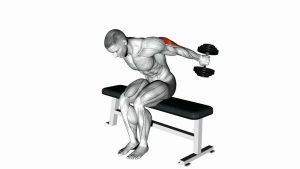
- Pick up one dumbbell: Hold the dumbbell in one hand with a neutral grip.
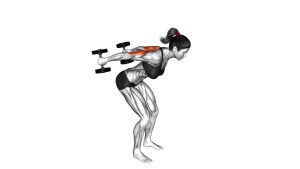
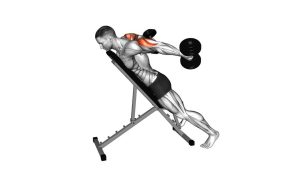
- Hinge forward: Bend at the hips until your torso is close to parallel to the floor.
- Create support: Place your non-working hand on your thigh or a bench for balance.
- Raise the upper arm: Bring your working elbow up so the upper arm stays close to your torso.
- Start bent: Begin with the elbow bent around 90 degrees and the forearm hanging under control.
Tip: The best setup feels stable and quiet. If your torso is moving around, reset before starting the rep.
Execution (Step-by-Step)
- Brace your position: Keep your spine neutral, chest steady, and shoulders square to the floor.
- Fix the upper arm: Hold the elbow high and close to your side without letting it drop.
- Extend the elbow: Drive the dumbbell backward by straightening your arm until it is fully extended.
- Squeeze the triceps: Pause briefly at the top and focus on a strong contraction.
- Lower with control: Bend the elbow slowly and return to the start without swinging.
- Repeat smoothly: Perform all reps on one side, then switch arms.
Pro Tips & Common Mistakes
- Keep the upper arm locked in place: This is the most important cue in the entire exercise.
- Use lighter weight than you think: Kickbacks are about isolation, not heavy loading.
- Squeeze at full extension: A brief pause improves triceps recruitment and rep quality.
- Do not swing the dumbbell: Momentum shifts tension away from the triceps.
- Avoid dropping the elbow: If the elbow falls during the set, tension usually decreases.
- Do not round the back: Maintain a strong hip hinge and neutral spine throughout.
- Control the eccentric: The lowering phase should be deliberate, not loose or rushed.
FAQ
What muscle does the Dumbbell One-Arm Kickback target most?
The exercise mainly targets the triceps brachii. It is especially useful as an isolation movement for finishing arm sessions or adding focused triceps volume after compound presses.
Should I go heavy on one-arm kickbacks?
Usually no. This movement works best with strict technique, moderate reps, and a clean peak contraction. Going too heavy often leads to torso swing and poor elbow control.
Is a bench required for this exercise?
No. You can support yourself with your non-working hand on your thigh, but a bench can make the setup more stable and help you focus on the triceps.
Where should I feel the rep?
You should feel it mostly in the back of the upper arm. If you feel more lower-back strain than triceps tension, improve your setup and reduce the weight.
When should I place kickbacks in a workout?
Kickbacks usually fit best after compound pressing or near the end of an arm workout, when the goal is to isolate the triceps and chase a strong contraction.
Recommended Equipment
- Adjustable Dumbbells — ideal for progressive overload and home training with minimal space
- Adjustable Weight Bench — provides extra support and stability for cleaner one-arm kickback setups
- Light Neoprene Dumbbells — useful for beginners learning strict form and slower tempo work
- Lifting Straps — optional grip aid if forearm fatigue limits arm isolation work
- Home Gym Floor Mat — helps create a more stable training area and protects flooring during dumbbell work
Tip: For this exercise, better control usually beats heavier load. A stable setup and the right dumbbell size make a bigger difference than chasing maximum weight.