Prayer Push (Shoulders): Form, Benefits, Sets, Tips & FAQ
Learn how to perform the Prayer Push (Shoulders) with proper form to improve shoulder mobility, activation, and overhead control. Includes setup, step-by-step execution, sets and reps by goal, mistakes to avoid, FAQ, and recommended equipment.
Prayer Push (Shoulders)
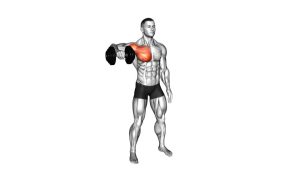
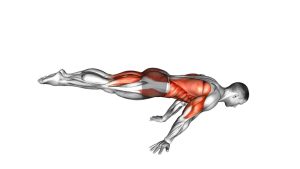
This drill works best as a warm-up, mobility reset, or light activation exercise before upper-body training. It is not meant to be a heavy strength movement. Instead, focus on smooth overhead motion, steady palm pressure, and a relaxed neck. You should feel the shoulders working without turning the exercise into a shrug or lower-back compensation pattern.
Quick Overview
| Body Part | Shoulders |
|---|---|
| Primary Muscle | Anterior deltoids |
| Secondary Muscle | Serratus anterior, upper trapezius, upper chest stabilizers |
| Equipment | None |
| Difficulty | Beginner |
Sets & Reps (By Goal)
- Warm-up before training: 2–3 sets × 8–12 reps
- Shoulder mobility practice: 2–4 sets × 10–15 reps
- Posture / activation reset: 1–3 sets × 8–10 slow reps
- Light rehab-style control: 2–3 sets × 6–10 reps with a brief pause overhead
Progression rule: First improve range, smoothness, and overhead control. Only then add extra reps, slower tempo, or longer pauses.
Setup / Starting Position
- Stand tall: Keep the feet about hip- to shoulder-width apart with a neutral spine.
- Brace lightly: Engage the abs gently so the ribs do not flare as the arms rise.
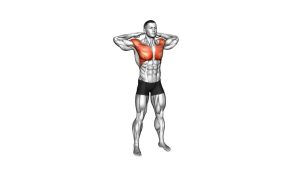
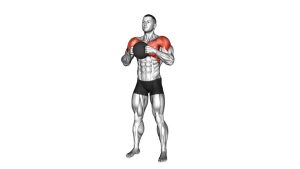
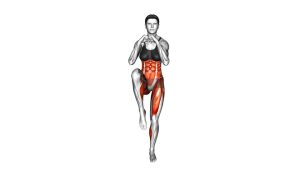
- Bring the hands together: Place the palms together in a prayer position at chest level.
- Set the shoulders: Keep the neck relaxed and shoulders down before starting the lift.
- Create light pressure: Press the palms together just enough to create tension without straining.
Tip: A slight bend in the elbows at the start is fine, but the motion should stay smooth and symmetrical.
Execution (Step-by-Step)
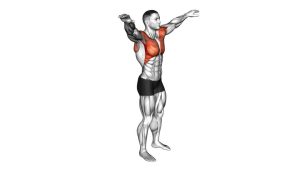
- Start in prayer position: Hands together at the chest, elbows angled outward, torso upright.
- Press the palms together: Maintain light inward pressure to create upper-body tension.
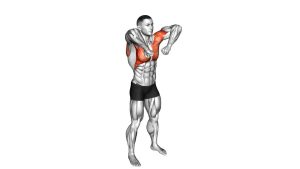
- Raise the arms upward: Move the hands in front of the face and then overhead in a controlled arc.
- Reach overhead without leaning back: Let the shoulders rotate upward naturally while the core stays engaged.
- Pause briefly at the top: Stop in a comfortable overhead range, not an exaggerated stretch.
- Lower with control: Bring the hands back down to the chest while maintaining alignment and palm pressure.
- Repeat smoothly: Keep each rep controlled, quiet, and free of shrugging or lumbar extension.
Pro Tips & Common Mistakes
- Press, don’t crush: Use gentle palm pressure for activation, not maximal force.
- Keep the ribs down: Avoid flaring the rib cage as the arms move overhead.
- Don’t shrug excessively: Some natural scapular movement is fine, but avoid turning the motion into a neck-dominant shrug.
- Move through pain-free range: Stop before pinching or compensation starts.
- Use slow tempo: A smooth 2-second lift and controlled return makes the drill more effective.
- Stay symmetrical: Both arms should rise evenly without twisting the torso.
- Use it before pressing workouts: It pairs well with shoulder sessions, posture routines, and mobility flows.
FAQ
What does the Prayer Push (Shoulders) work?
It mainly targets the front deltoids while also encouraging better scapular upward rotation and shoulder control. It is more of a mobility and activation drill than a heavy muscle-building exercise.
Is this a good warm-up exercise?
Yes. It works well before upper-body sessions because it helps prepare the shoulders for overhead motion and reinforces controlled arm movement.
Should my palms stay pressed together the whole time?
Yes. Keeping the palms together adds light isometric tension and helps make the drill more controlled. Just avoid pressing so hard that your neck or wrists tense up.
What if I cannot lift fully overhead?
That is fine. Work only within a comfortable, pain-free range. Over time, smooth and controlled reps can help improve mobility without forcing the shoulder joint.
Can beginners use this exercise daily?
In many cases, yes. Because it is low impact, it can be used frequently as long as the volume stays moderate and the movement feels comfortable.
Recommended Equipment (Optional)
- Resistance Bands Set — great for pairing this drill with pull-aparts, external rotations, and light shoulder activation work
- Lacrosse Massage Ball — useful for soft-tissue work around the chest, rear shoulder, and upper back before mobility drills
- Yoga Block — helpful for posture drills, floor-supported mobility work, and modified shoulder positioning
- Yoga Strap / Stretching Strap — useful for assisted shoulder mobility and gradual range-of-motion drills
- RangeMaster BlueRanger Over-the-Door Shoulder Pulley — a rehab-style option for controlled assisted shoulder range-of-motion practice
These tools are optional. The exercise itself is bodyweight-only, but simple mobility and rehab accessories can make shoulder warm-ups and recovery sessions more effective.