Cable Rope Pushdown: Proper Form, Sets, Tips & FAQ
Learn the Cable Rope Pushdown to build stronger, more defined triceps with strict form. Includes setup, step-by-step execution, sets by goal, common mistakes, FAQs, and recommended equipment.
Cable Rope Pushdown
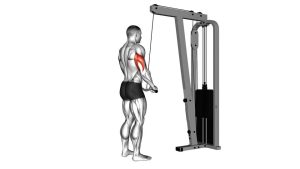
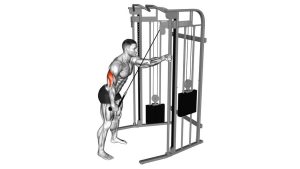
This exercise works best when you keep the movement strict and controlled. The triceps should do the work, while the shoulders and torso stay quiet. You should feel tension building in the back of the upper arms throughout the rep, especially near full extension. If you find yourself swinging the body, letting the elbows drift, or rushing the return, reduce the weight and focus on cleaner mechanics.
Quick Overview
| Body Part | Triceps |
|---|---|
| Primary Muscle | Triceps brachii |
| Secondary Muscle | Forearms, anconeus, shoulder stabilizers |
| Equipment | Cable machine with rope attachment |
| Difficulty | Beginner to Intermediate |
Sets & Reps (By Goal)
- Muscle growth: 3-4 sets × 10-15 reps (45-75 sec rest)
- Strength support: 3-4 sets × 6-10 reps (60-90 sec rest)
- End-of-workout triceps burn: 2-3 sets × 12-20 reps (30-60 sec rest)
- Technique practice: 2-3 sets × 10-12 slow, controlled reps (light load)
Progression rule: First improve form, range, and contraction quality. Then add reps within the target range before increasing the load.
Setup / Starting Position
- Attach the rope: Set a rope attachment to a high pulley on the cable machine.
- Take your grip: Grab the rope ends with a neutral grip so your palms face each other.
- Set your stance: Stand tall with feet about hip-width apart and knees slightly soft.
- Pin the elbows: Bring your elbows close to your sides and keep them fixed there.
- Brace lightly: Keep the chest up, shoulders down, and core engaged so your torso stays still.
- Start under tension: Begin with elbows bent and the rope near the upper abdomen or lower chest.
Tip: A slight forward lean is fine, but avoid turning the movement into a bodyweight press. Let the elbows act like hinges.
Execution (Step-by-Step)
- Lock in your upper arms: Keep your elbows tucked in and your shoulders quiet before starting the rep.
- Push the rope down: Extend your elbows smoothly and drive the rope toward your thighs.
- Split the rope at the bottom: As you near full extension, separate the rope ends slightly outward to maximize triceps contraction.
- Squeeze hard: Pause briefly at the bottom while keeping tension on the triceps.
- Return with control: Let the rope rise slowly as you bend the elbows, stopping before the weight pulls you out of position.
- Repeat smoothly: Maintain steady tempo and avoid bouncing between reps.
Pro Tips & Common Mistakes
- Keep elbows pinned: The upper arms should stay mostly still so the movement comes from elbow extension.
- Separate the rope intentionally: A slight outward finish can improve peak contraction at the bottom.
- Don’t use momentum: Swinging the torso or leaning hard over the cable turns the exercise into a cheat rep.
- Control the negative: The return phase is where a lot of growth-friendly tension happens, so do not let the stack yank you upward.
- Use full but safe range: Extend fully without violently snapping into lockout.
- Keep wrists neutral: Excessive wrist bending can shift tension away from the triceps and irritate the joints.
- Choose the right load: Too much weight often causes elbow flare, shoulder involvement, and poor contraction.
FAQ
What muscles does the cable rope pushdown work?
It primarily targets the triceps brachii. The forearms and small stabilizers also assist by helping you control the rope and maintain position.
Is the rope attachment better than a straight bar?
For many lifters, yes. The rope allows a more natural wrist position and lets you separate the hands at the bottom, which can improve comfort and peak triceps contraction.
Should my elbows move during rope pushdowns?
Ideally, very little. Small natural movement can happen, but the goal is to keep the elbows close to your sides so the triceps stay under constant tension.
How heavy should I go on this exercise?
Use a weight that lets you keep strict form and feel the triceps working through the full range. If you have to swing, lean, or flare the elbows, the load is too heavy.
Where should I feel the exercise?
You should feel it mostly in the back of the upper arms. If you feel it mostly in the shoulders, wrists, or lower back, your setup or technique likely needs adjusting.
Recommended Equipment
- Tricep Rope Cable Attachment — the main tool for performing rope pushdowns with a comfortable neutral grip
- Cable Machine / Functional Trainer — provides the adjustable pulley resistance needed for pushdowns and other arm exercises
- Lifting Straps — optional support if grip fatigue limits your triceps work on higher-volume sets
- Elbow Sleeves — can help keep the elbows warm and comfortable during pressing and extension movements
- Adjustable Weight Bench — useful for building a complete upper-body cable and strength-training setup
Tip: The best upgrade for this exercise is usually a high-quality rope attachment with strong end caps and comfortable grip thickness.