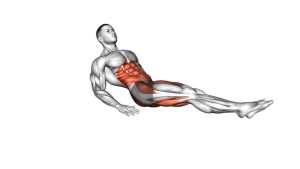
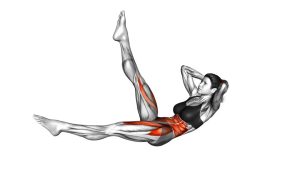
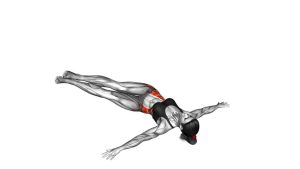
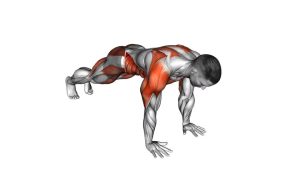
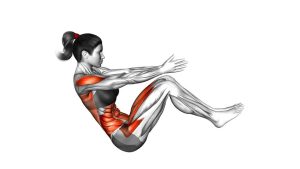
Sitting Air Twisting Crunch: Seated Oblique Exercise Guide
Learn the Sitting Air Twisting Crunch to train obliques and core rotation with controlled seated form, sets, tips, mistakes, FAQs, and equipment.
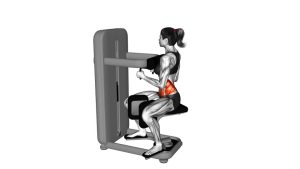
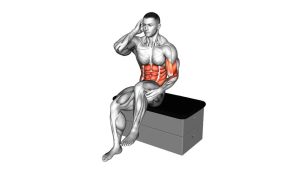
Sitting Air Twisting Crunch on a Padded Stool
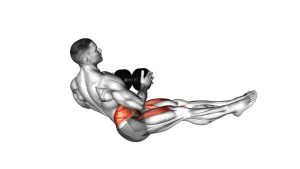
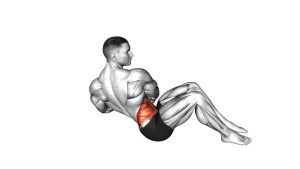
This exercise works best when the movement stays smooth, moderate, and controlled. Instead of swinging quickly, rotate your torso from side to side while keeping your feet grounded and your posture tall between reps. As a result, the obliques can do more of the work while the neck, shoulders, and hips stay quiet.
Quick Overview
| Body Part | Core |
|---|---|
| Primary Muscle | Obliques |
| Secondary Muscle | Rectus abdominis, deep core stabilizers, hip flexors as light stabilizers |
| Equipment | Padded stool or stable bench |
| Difficulty | Beginner to Intermediate |
Sets & Reps (By Goal)
- Core activation: 2–3 sets × 10–12 reps per side with a slow, controlled tempo.
- Oblique endurance: 3–4 sets × 12–20 reps per side with steady breathing.
- Beginner control: 2 sets × 8–10 reps per side using a smaller rotation range.
- Bodyweight core finisher: 2–3 rounds × 30–45 seconds with clean alternating reps.
Progression rule: First improve control and symmetry. Then add more reps, longer sets, or a slower tempo before increasing difficulty.
Setup / Starting Position
- Sit on a stable padded stool: Place your hips securely on the stool so your body feels balanced before moving.
- Ground your feet: Keep both feet planted to create a stable base and reduce unnecessary lower-body movement.
- Set your torso tall: Lift through the chest while keeping the ribs controlled and the core lightly braced.
- Place your hands near your head: Keep the elbows open without pulling on the neck.
- Prepare to rotate: Keep your eyes and head following the torso naturally, while avoiding aggressive neck twisting.
Execution (Step-by-Step)
- Brace gently: Tighten your core enough to keep your spine controlled, but do not hold your breath.
- Rotate to one side: Turn your torso toward one side while creating a small crunch through the midsection.
- Keep the movement moderate: Avoid forcing the twist. Instead, move only as far as your trunk can control smoothly.
- Return to center: Bring your torso back to the starting position without bouncing or relaxing completely.
- Rotate to the opposite side: Repeat the same controlled twist and small crunch on the other side.
- Continue alternating: Move side to side with a steady rhythm while keeping your lower body mostly still.
Pro Tips & Common Mistakes
- Rotate from the torso: Let the rib cage and trunk turn together instead of only moving the arms.
- Keep the feet grounded: A stable base helps your obliques control the twist more effectively.
- Do not pull the neck: Hands should stay light near the head, not force the head forward.
- Avoid excessive speed: Faster reps often reduce core tension and increase momentum.
- Use a small crunch: Slight abdominal compression is enough. Do not collapse your chest toward your thighs.
- Match both sides: Rotate with the same range and control to the left and right.
- Breathe through each rep: Exhale gently during the twist, then inhale as you return to center.
FAQ
What muscles does the Sitting Air Twisting Crunch work?
It mainly targets the obliques. In addition, the rectus abdominis and deep core stabilizers assist because the exercise includes a small crunch and controlled trunk rotation.
Is this exercise good for beginners?
Yes, it can be beginner-friendly when performed slowly with a small range of motion. However, beginners should prioritize posture, balance, and controlled rotation before adding speed or higher reps.
Should I lean back during the movement?
A slight lean may appear during the exercise, but the main focus should remain on controlled torso rotation and a small crunch. Avoid leaning so far back that your lower back takes over.
Can I do this without a padded stool?
Yes. You can use a stable bench or firm chair. Still, the surface must be steady, supportive, and safe enough to prevent slipping during the twisting motion.
Why do I feel my hip flexors during this exercise?
Some light hip-flexor activity can happen because you are seated and stabilizing your lower body. If they dominate, sit taller, reduce your lean, and slow the rotation.
Recommended Equipment
- Padded Workout Stool — provides a comfortable seated base for controlled core exercises.
- Adjustable Weight Bench — useful for seated, lying, and supported abdominal variations.
- Thick Exercise Mat — helpful for warm-ups, floor core drills, and post-workout stretching.
- Core Sliders — useful for progressing into more dynamic core stability exercises.
- Resistance Bands Set — useful for pairing this exercise with anti-rotation and core stability work.
Tip: Choose stable equipment first. A stool or bench that shifts during rotation can make the exercise less effective and less safe.