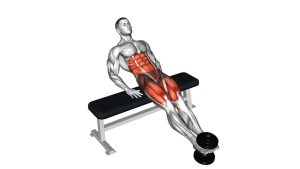
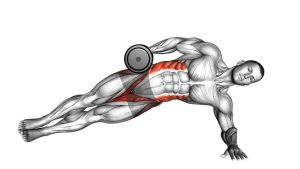
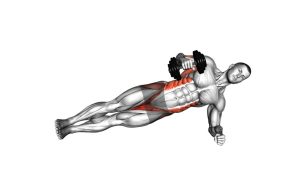
Dumbbell Side Bend: Proper Form, Oblique Benefits, Sets & Tips
Learn how to do the Dumbbell Side Bend with proper form to train obliques, improve core control, avoid mistakes, and build stronger side abs.
Dumbbell Side Bend
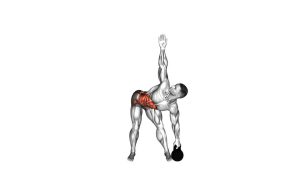
This exercise looks simple, yet it rewards precision. First, the feet create a stable base. Then, the dumbbell travels close to the thigh while the torso bends sideways. Meanwhile, the hips stay mostly quiet, the shoulders stay relaxed, and the spine moves in a clean lateral path. As a result, the obliques and quadratus lumborum can work without unnecessary momentum.
For best results, use a weight that allows smooth control. Also, avoid leaning forward, rotating the torso, or dropping too far into the bottom position. A shorter, cleaner range is usually better than a deep bend that turns into compensation.
Quick Overview
| Body Part | Core |
|---|---|
| Primary Muscle | Obliques |
| Secondary Muscle | Quadratus lumborum, transverse abdominis, spinal stabilizers, glutes |
| Equipment | Dumbbell |
| Difficulty | Beginner to Intermediate |
Sets & Reps (By Goal)
- Beginner technique: 2–3 sets × 10–12 reps per side, using a light dumbbell and slow tempo.
- Core strength: 3–4 sets × 8–12 reps per side, with moderate weight and full control.
- Muscle endurance: 2–4 sets × 12–20 reps per side, keeping the movement smooth and steady.
- Accessory hypertrophy work: 3–5 sets × 10–15 reps per side, with a strong squeeze on the way up.
- Warm-up or activation: 1–2 sets × 10 reps per side, using a very light dumbbell.
Progression rule: Add reps first, then increase dumbbell weight gradually. However, never increase load if your hips shift, your torso twists, or your lower back feels compressed.
Setup / Starting Position
- Stand tall: Place your feet about hip-width apart and keep your weight balanced through both feet.
- Hold one dumbbell: Grip the dumbbell in one hand with your arm straight and the weight resting beside your thigh.
- Brace lightly: Tighten your core as if preparing for a small push, but keep your breathing natural.
- Set your posture: Keep your chest open, shoulders relaxed, ribs stacked over the pelvis, and head neutral.
- Keep the opposite side long: Let the non-working side of your torso stay tall before you begin the bend.
A mirror can help you check that your torso bends sideways instead of rotating. In addition, it helps confirm that the dumbbell travels close to the leg.
Execution (Step-by-Step)
- Start from a tall position: Stand upright with the dumbbell hanging naturally at your side.
- Bend toward the dumbbell: Slowly slide the dumbbell down the outside of your thigh as your torso bends sideways.
- Control the descent: Move only as far as you can without twisting, leaning forward, or shifting your hips aggressively.
- Pause briefly: At the bottom, feel a stretch through the opposite side of your waist while keeping tension under control.
- Return to center: Contract the obliques on the opposite side and bring your torso back to a tall, neutral position.
- Finish before switching: Complete all reps on one side, then switch the dumbbell to the other hand and repeat.
Pro Tips & Common Mistakes
Pro Tips
- Move slowly: A controlled 2–3 second descent makes the obliques work harder without needing excessive weight.
- Keep the hips steady: Slight movement is normal, but the pelvis should not swing side to side.
- Use one dumbbell only: Holding dumbbells in both hands can counterbalance the exercise and reduce the training effect.
- Stay in the side plane: Think of your body moving between two walls so you do not rotate forward or backward.
- Exhale on the return: Breathing out as you come up can improve core engagement and control.
Common Mistakes
- Using too much weight: Heavy loading often causes swinging, hip shifting, or lower-back irritation.
- Twisting the torso: Rotation turns the movement away from clean lateral flexion.
- Going too low: More range is not always better, especially if the spine loses control.
- Shrugging the shoulder: Keep the dumbbell-side shoulder relaxed so the traps do not dominate.
- Rushing the reps: Fast reps reduce tension and increase the risk of using momentum.
FAQ
What muscles does the Dumbbell Side Bend work?
The Dumbbell Side Bend mainly works the obliques. It also involves the quadratus lumborum, transverse abdominis, and smaller spinal stabilizers. Additionally, the glutes help keep the pelvis stable during the movement.
Should I hold one dumbbell or two?
Hold one dumbbell. If you hold a dumbbell in each hand, the weights can balance each other out and reduce the challenge on the side-core muscles. Therefore, one-sided loading is usually the better choice.
Is the Dumbbell Side Bend good for building obliques?
Yes, it can help build stronger obliques when performed with controlled reps and progressive loading. However, it works best as an accessory exercise alongside planks, carries, anti-rotation drills, and compound lifts.
How heavy should the dumbbell be?
Start light enough to control every rep without swinging. For many beginners, a light to moderate dumbbell is enough. Once your form stays clean for all reps, you can gradually increase the weight.
Can beginners do Dumbbell Side Bends?
Yes. Beginners can perform this exercise safely when they use a light dumbbell, limit the range, and move slowly. Still, anyone with current back pain should use caution and consider professional guidance.
Should I bend to both sides?
Yes. Train both sides evenly. Complete all reps on one side, then switch the dumbbell and repeat the same number of reps on the other side.
Recommended Equipment
- Adjustable Dumbbells — useful for gradually increasing load as your obliques get stronger
- Rubber Hex Dumbbell — stable, durable, and easy to grip for standing core exercises
- Exercise Mat — helpful for warm-ups, stretching, and core accessory work after side bends
- Weightlifting Gloves — improves grip comfort when using heavier dumbbells
- Workout Mirror — helps monitor posture, hip position, and unwanted torso rotation
Tip: Equipment should support better form, not hide poor technique. Therefore, choose a dumbbell that lets you move slowly, breathe normally, and keep your torso aligned.