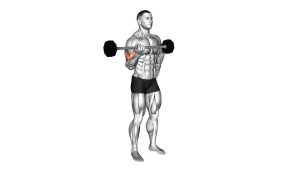
Barbell Standing Close-Grip Curl: Proper Form, Sets, Tips & FAQ
Learn how to perform the Barbell Standing Close-Grip Curl with proper form to build biceps size and arm strength. Includes setup, execution, sets and reps by goal, common mistakes, FAQs, and recommended equipment.
Barbell Standing Close-Grip Curl
This exercise is most effective when you use a moderate load and maintain strict technique. You should feel the biceps doing the work from the bottom to the top of the curl, especially through the mid-range and peak contraction. The close grip can make the movement feel more demanding on the biceps, so control matters more than chasing heavy weight.
Quick Overview
| Body Part | Arms |
|---|---|
| Primary Muscle | Biceps brachii (with strong emphasis on the long head) |
| Secondary Muscle | Brachialis, brachioradialis, forearm flexors |
| Equipment | Barbell, weight plates, optional collars |
| Difficulty | Beginner to Intermediate |
Sets & Reps (By Goal)
- Muscle growth: 3–4 sets × 8–12 reps (60–90 sec rest)
- Strength-focused arm work: 4–5 sets × 5–8 reps (90–120 sec rest)
- Technique and control: 2–3 sets × 10–15 reps (light to moderate load, smooth tempo)
- Finisher / pump work: 2–3 sets × 12–15 reps (45–60 sec rest)
Progression rule: Add reps first while keeping the curl strict. Increase load only when you can complete all target reps without torso swing or elbow drift.
Setup / Starting Position
- Load the barbell: Choose a weight you can curl without using momentum.
- Take a close grip: Place your hands inside shoulder width with palms facing forward.
- Stand tall: Keep your chest up, core braced, and feet about hip- to shoulder-width apart.
- Set the elbows: Let the elbows stay close to your sides near the torso.
- Start at the bottom: Hold the bar at thigh level with arms extended and wrists neutral.
Tip: A grip that is too narrow can irritate the wrists. Use a comfortable close grip rather than forcing your hands extremely close together.
Execution (Step-by-Step)
- Brace your body: Stand upright and keep your ribcage stacked over your hips.
- Begin the curl: Bend at the elbows to raise the bar upward in a smooth arc.
- Keep elbows tucked: Avoid letting them swing forward or flare outward too much.
- Reach peak contraction: Curl the bar until your biceps are fully shortened, usually near the upper abdomen or lower chest.
- Squeeze briefly: Pause for a moment at the top without relaxing tension.
- Lower under control: Slowly return the bar to the starting position, resisting gravity the whole way down.
- Repeat smoothly: Start the next rep without bouncing or swinging the bar.
Pro Tips & Common Mistakes
- Use a controlled tempo: Lift with intent, then lower slower than you raise.
- Keep wrists neutral: Don’t let them bend back excessively under the bar.
- Don’t swing: Using body English turns the exercise into a partial cheat curl.
- Don’t let elbows drift too far forward: Too much shoulder involvement reduces direct biceps tension.
- Avoid half reps: Use a full, clean range of motion unless you are intentionally doing advanced partials.
- Match load to form: A slightly lighter bar with strict technique usually builds better biceps than sloppy heavy reps.
FAQ
What does the close grip change in a barbell curl?
A close grip generally increases emphasis on the long head of the biceps and can create a different tension profile compared to a standard or wider grip. It still trains the entire biceps and elbow-flexor chain.
Should I go heavy on close-grip barbell curls?
You can train them moderately heavy, but this exercise works best when the weight stays strictly controllable. If you have to swing the bar or lean back hard, it is too heavy for quality reps.
Where should I feel this exercise most?
You should feel it mainly in the front of the upper arms, especially the biceps. Some forearm involvement is normal because you must hold and stabilize the bar.
Is a straight bar always comfortable for this movement?
Not always. Some lifters feel wrist strain with a straight bar. If that happens, reduce the load, adjust grip width slightly, or use an EZ curl bar variation instead.
Can beginners use the barbell standing close-grip curl?
Yes. Beginners can use it effectively as long as they keep the weight moderate and focus on clean reps, elbow control, and a slow lowering phase.
Recommended Equipment
- Olympic Barbell — the main tool for performing standing close-grip curls with progressive overload
- Weight Plates Set — lets you scale resistance gradually as your arm strength improves
- Barbell Collars — helps keep plates secure during curls and other barbell arm exercises
- EZ Curl Bar — a useful alternative for lifters who want a more wrist-friendly curling option
- Weightlifting Gloves or Grip Pads — optional support for grip comfort during higher-rep sets
Tip: If your goal is arm growth, prioritize a barbell and plates first. Accessories help, but consistent progressive training matters most.