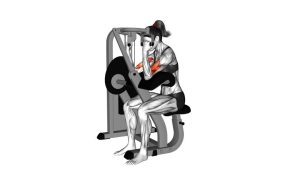
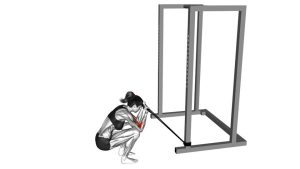
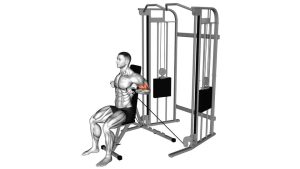
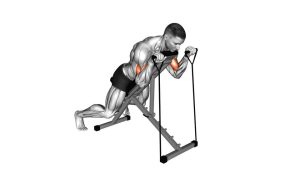
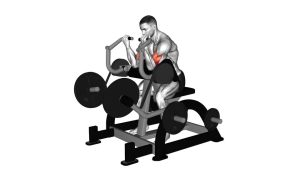
Band Concentration Curl: Form, Sets, Muscles Worked, Tips & FAQ
Learn how to do the Band Concentration Curl with strict form to isolate the biceps. Includes muscles worked, setup, step-by-step execution, sets and reps by goal, mistakes to avoid, FAQ, and recommended equipment.
Band Concentration Curl
This variation is excellent for lifters who want better arm isolation, more control, and a strong peak contraction without needing heavy free weights. The movement works best when you stay still through the torso, keep the elbow planted, and curl with deliberate tempo instead of rushing the rep.
Quick Overview
| Body Part | Biceps |
|---|---|
| Primary Muscle | Biceps brachii |
| Secondary Muscle | Brachialis, brachioradialis, forearm flexors |
| Equipment | Resistance band, flat bench or seat, optional handle attachment |
| Difficulty | Beginner to Intermediate |
Sets & Reps (By Goal)
- Muscle growth: 3–4 sets × 10–15 reps per arm with controlled tempo and a strong top squeeze
- Strength-focused arm work: 3–5 sets × 6–10 reps per arm using a heavier band and strict form
- Technique / mind-muscle connection: 2–3 sets × 12–20 reps per arm with lighter tension and slower negatives
- Finisher / pump work: 2–3 sets × 15–25 reps per arm with short rest periods
Progression rule: First improve control, range of motion, and squeeze quality. Then increase band tension, total reps, or time under tension without letting the elbow drift or the torso swing.
Setup / Starting Position
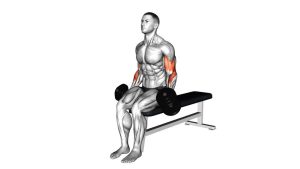
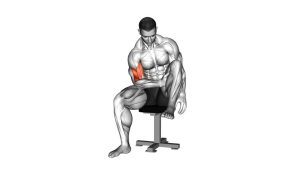
- Sit on a bench or sturdy seat: Keep your feet planted and spread your knees enough to create room for the working arm.
- Anchor the band low: Place it securely under your foot or attach it to a low anchor point in front of you.
- Grab the band with one hand: Use a neutral or underhand grip depending on the band setup, but aim to finish with a strong supinated biceps curl position.
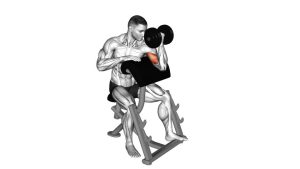
- Brace the elbow inside the thigh: Press the back of the upper arm lightly against the inner thigh to stabilize it.
- Start with the arm extended: Let the working arm hang down with slight tension in the band and keep your chest angled forward naturally.
Tip: Set the band so there is already a little tension at the bottom, but not so much that you lose full extension or pull out of position.
Execution (Step-by-Step)
- Lock in your position: Keep your torso steady, elbow planted against the inner thigh, and shoulders relaxed.
- Begin the curl: Flex the elbow and pull the band upward in a smooth arc without swinging the body.
- Keep the upper arm fixed: Do not let the elbow travel forward or lift away from the thigh as the band gets tighter.
- Squeeze at the top: Bring the hand toward the same-side chest or shoulder and contract the biceps hard for a brief pause.
- Lower under control: Slowly extend the arm back down, resisting the band on the way to the starting position.
- Repeat evenly: Perform all reps on one side, then switch arms and match the same tempo and range.
Pro Tips & Common Mistakes
- Keep the elbow pinned: The more stable your upper arm is, the better the biceps isolation.
- Use full control on the eccentric: The lowering phase is one of the best parts of this exercise for building tension.
- Do not twist aggressively: A natural supination is fine, but over-rotating the wrist can irritate the forearm or elbow.
- Avoid body English: If you have to lean, shrug, or jerk the band up, the tension is too heavy.
- Chase the squeeze, not speed: The top contraction is where the band gets hardest, so pause there briefly.
- Match both arms: Keep reps, tempo, and range consistent from side to side to avoid imbalances.
FAQ
What muscles does the Band Concentration Curl work?
It mainly targets the biceps brachii, while the brachialis, brachioradialis, and forearm flexors assist with the curling motion and grip.
Is a band concentration curl as effective as a dumbbell concentration curl?
It can be very effective, especially for maintaining constant tension and creating a hard peak contraction. The main difference is that a band increases resistance as it stretches, so the top half often feels harder.
Should I curl one arm at a time?
Yes. This exercise is best performed one arm at a time so you can focus on strict setup, a clean squeeze, and equal development on both sides.
How heavy should the band be?
Choose a band that lets you complete your target reps with full control. If you cannot pause near the top or lower the band slowly, the resistance is too high.
Can beginners use this exercise?
Yes. It is beginner-friendly because it teaches biceps isolation and control. Start with a lighter band, focus on form, and gradually increase tension as your technique improves.
Recommended Equipment
- Resistance Bands Set — useful for adjusting tension as your strength and control improve
- Exercise Band Handles — can make single-arm curls more comfortable and easier to grip
- Flat Workout Bench — gives you a stable seated position for strict concentration curl setup
- Resistance Band Door Anchor — helpful if you want a consistent low anchor point at home
- Training Grips or Workout Gloves — useful if band friction or grip fatigue limits your focus on the biceps
Tip: For this exercise, smooth resistance and stable positioning matter more than maximum tension. Choose gear that helps you maintain clean reps.