Cable One-Arm Curl: Proper Form, Muscles Worked, Sets, Tips & FAQ
Learn how to perform the Cable One-Arm Curl with proper form to build stronger, fuller biceps. Includes muscles worked, setup, step-by-step execution, sets and reps by goal, common mistakes, FAQs, and recommended equipment.
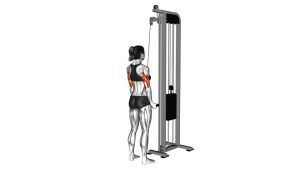
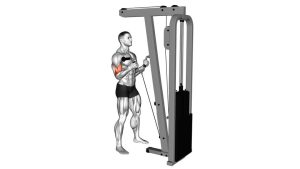
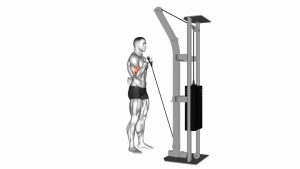
Cable One-Arm Curl
This variation is excellent for lifters who want cleaner biceps isolation than many free-weight curls. Because the cable keeps tension on the arm through the full range, the movement feels smooth and controlled, especially in the mid-range and peak contraction. It works well for hypertrophy, balanced arm development, and focused technique practice.
Quick Overview
| Body Part | Biceps |
|---|---|
| Primary Muscle | Biceps brachii |
| Secondary Muscle | Brachialis, brachioradialis, forearm flexors |
| Equipment | Cable machine with single D-handle attachment |
| Difficulty | Beginner to Intermediate |
Sets & Reps (By Goal)
- Muscle growth: 3–4 sets × 8–15 reps per arm, 45–75 seconds rest
- Strength-focused arm work: 3–5 sets × 6–10 reps per arm, 60–90 seconds rest
- Technique and control: 2–3 sets × 10–15 reps per arm with slower tempo and lighter load
- Finisher / pump work: 2–3 sets × 12–20 reps per arm with strict form and short rest
Progression rule: Add reps before adding load. When you can complete all target reps per arm without leaning, swinging, or letting the elbow drift, increase the weight slightly.
Setup / Starting Position
- Set the pulley: Place the cable at the lowest setting and attach a single D-handle.
- Grab the handle: Use a supinated grip (palm facing up) with one hand.
- Stand tall: Keep your feet about hip-width apart and your chest lifted.
- Align the arm: Let the working arm hang down with a slight bend at the elbow rather than locking it hard.
- Brace lightly: Tighten your core and keep the shoulder down so the biceps—not the traps—do the work.
Tip: Stand far enough from the stack to keep tension on the cable at the bottom, but not so far that your shoulder gets pulled forward.
Execution (Step-by-Step)
- Start under tension: Begin with the arm extended down and the elbow close to your side.
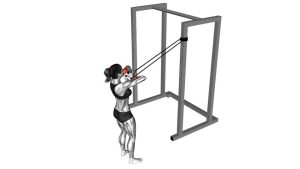
- Curl the handle upward: Flex the elbow and bring the handle toward your shoulder in a smooth arc.
- Keep the upper arm quiet: Do not let the elbow swing forward excessively or the shoulder roll in.
- Squeeze at the top: Pause briefly when the biceps is fully shortened.
- Lower slowly: Control the eccentric all the way back down until the arm is nearly straight again.
- Repeat on the same side: Finish all reps on one arm or alternate sides depending on your program.
Pro Tips & Common Mistakes
- Keep the elbow pinned: A little natural movement is fine, but too much forward drift turns it into a shoulder-assisted curl.
- Don’t rush the lowering phase: The eccentric is one of the best parts of the lift for biceps growth.
- Avoid torso swing: Leaning back to finish reps reduces isolation and increases cheating.
- Use full, controlled range: Don’t cut the bottom short unless tension or joint comfort demands it.
- Stay wrist-neutral: Excessive wrist curling shifts stress away from the biceps and into the forearm.
- Train both sides honestly: Match reps and technique to prevent the stronger arm from dominating.
FAQ
What makes the Cable One-Arm Curl different from a dumbbell curl?
The cable provides more continuous tension across the full range of motion, especially at the bottom and mid-range. It also makes it easier to keep steady resistance without relying on momentum.
Should I do all reps on one arm first or alternate arms?
Either works. Doing all reps on one side helps you focus more deeply on technique and contraction, while alternating sides can feel more efficient and may reduce local fatigue between reps.
Where should I feel this exercise most?
You should mainly feel the biceps working, with some assistance from the brachialis and forearm muscles. If you feel it mostly in the front of the shoulder, check your elbow position and reduce body swing.
Is this exercise good for beginners?
Yes. It is beginner-friendly because the cable creates a smooth resistance path and makes it easier to focus on strict elbow flexion without balancing two weights at once.
Can I use this as my main biceps exercise?
Absolutely. It works very well as a main biceps builder or as a secondary isolation movement after rows, pulldowns, or chin-up variations.
Recommended Equipment
- Single D-Handle Cable Attachment — the most direct attachment for one-arm cable curls and a standard option sold across Amazon results
- Rotating D-Handle Cable Attachment — useful if you want a smoother wrist path and a more natural feel during curls
- Cable Machine Attachment Set — a practical choice if you want multiple handle options for curls, rows, pushdowns, and other cable work
- Resistance Band Set — a useful backup for arm training and travel workouts when you do not have cable access
- Exercise Handles for Bands — helpful for creating a cable-like grip when pairing handles with bands at home
Tip: Amazon currently surfaces dedicated single D-handles, broader cable attachment sets, and resistance-band options for this kind of training setup.