Cable Biceps Curl (EZ Bar): Proper Form, Muscles Worked, Sets, Tips & FAQ
Learn how to perform the Cable Biceps Curl with an EZ bar using strict form for better biceps growth and elbow-friendly tension. Includes muscles worked, setup, execution, sets by goal, mistakes, FAQ, and recommended equipment.
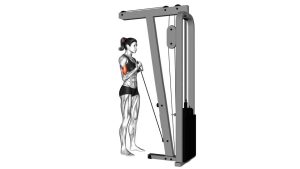
Cable Biceps Curl (EZ Bar)
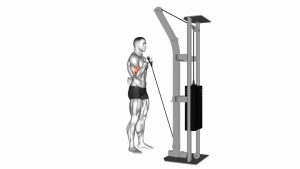
This exercise works best when performed with strict control rather than heavy body English. You should feel the work concentrated in the front of the upper arms, with the cable keeping tension on the biceps even near the bottom. The EZ bar helps many lifters maintain a more comfortable hand position while still allowing a strong contraction.
Quick Overview
| Body Part | Biceps |
|---|---|
| Primary Muscle | Biceps brachii |
| Secondary Muscle | Brachialis and brachioradialis |
| Equipment | Cable machine with EZ curl bar attachment |
| Difficulty | Beginner to Intermediate |
Sets & Reps (By Goal)
- Muscle growth: 3–4 sets × 8–15 reps with controlled tempo and 45–75 seconds rest
- Strength-focused arm training: 3–5 sets × 6–10 reps with slightly heavier load and 75–120 seconds rest
- Technique and mind-muscle connection: 2–3 sets × 10–15 reps with lighter weight and a strong top squeeze
- Finisher / pump work: 2–3 sets × 12–20 reps with short rest and smooth, nonstop tension
Progression rule: Add reps first, then increase the load slightly once you can keep the elbows tucked, avoid torso swinging, and control the lowering phase from rep to rep.
Setup / Starting Position
- Attach the EZ bar: Connect an EZ curl bar attachment to the low pulley of a cable machine.
- Choose your stance: Stand tall with feet about hip- to shoulder-width apart for balance.
- Grip the bar: Use the angled portions of the EZ bar so your wrists feel comfortable and supported.
- Set posture: Keep chest up, shoulders down, core lightly braced, and head neutral.
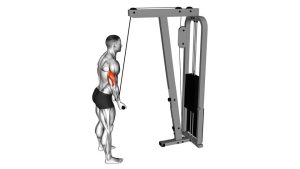
- Start position: Let your arms extend down with a slight bend at the elbows, keeping tension on the cable and elbows close to your sides.
Tip: Step back just enough to keep the cable taut at the bottom without dragging the stack or forcing you to lean backward.
Execution (Step-by-Step)
- Lock in your torso: Stand still and brace lightly so your body does not rock during the curl.
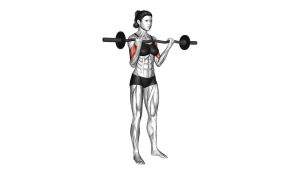
- Initiate from the elbows: Curl the bar upward by bending your elbows, not by swinging your shoulders.
- Keep elbows pinned: Let the upper arms stay close to your torso throughout the rep.
- Lift to full contraction: Bring the bar toward the lower chest or upper waist area, depending on your cable path and arm length.
- Squeeze at the top: Pause briefly and contract the biceps hard without letting the wrists collapse.
- Lower with control: Return the bar slowly to the start position, maintaining tension and avoiding a sudden drop.
- Repeat smoothly: Keep the same path and tempo on every rep for better isolation and safer mechanics.
Pro Tips & Common Mistakes
- Use the cable tension: Don’t relax completely at the bottom—keep the biceps engaged.
- Keep wrists neutral: Avoid excessive wrist bending, especially at the top.
- Don’t swing the torso: Momentum shifts tension away from the biceps.
- Elbows stay close: Flaring or drifting forward turns the curl into a less efficient pattern.
- Control the eccentric: The lowering phase is where many lifters lose tension and technique.
- Don’t overload too fast: A lighter, stricter curl usually builds the biceps better than sloppy heavy reps.
- Use a full workable range: Get a good stretch at the bottom and a strong squeeze at the top without joint discomfort.
FAQ
What muscles does the Cable Biceps Curl (EZ Bar) work?
It mainly targets the biceps brachii, while the brachialis and brachioradialis assist during the curl.
Is the EZ bar better than a straight bar for cable curls?
For many lifters, yes. The angled grip can feel more natural on the wrists and forearms, which may make it easier to train the biceps comfortably and consistently.
Should I go heavy on cable biceps curls?
You can load them progressively, but this exercise usually works best with strict form and continuous tension. If you need to lean back or swing, the load is too heavy.
Where should I feel this exercise?
You should feel it mostly in the front of the upper arms. A strong squeeze at the top and steady tension during the lowering phase are good signs.
Can beginners use this exercise?
Absolutely. It is beginner-friendly because the cable path is stable, and the EZ bar grip is often easier on the wrists than straighter curl variations.
Recommended Equipment
- EZ Curl Bar Cable Attachment — the main attachment for comfortable cable curls and other arm exercises
- Wrist Wraps — useful for extra wrist support if heavy curls or forearm fatigue bother you
- Resistance Bands Set — great for warm-ups, pump finishers, and home biceps work when a cable machine is unavailable
- Padded Wrist Cuffs — helpful for cable accessory work and grip-variation arm training
- Cable Attachment Set — useful if you want multiple grip options for curls, rows, pushdowns, and other cable movements
Tip: Start with the EZ bar attachment first. The other tools are optional upgrades that can improve comfort, variety, and long-term training flexibility.