Cable Standing Biceps Curl: Proper Form, Sets, Muscles Worked & FAQ
Learn how to do the Cable Standing Biceps Curl with proper form. Discover muscles worked, setup tips, sets and reps by goal, common mistakes, FAQs, and recommended equipment.
Cable Standing Biceps Curl
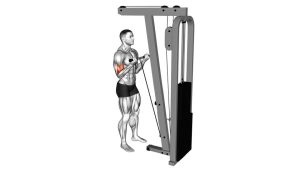
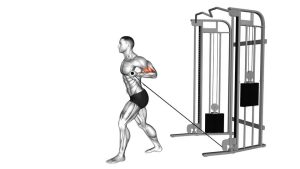
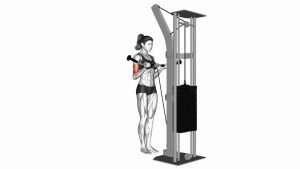
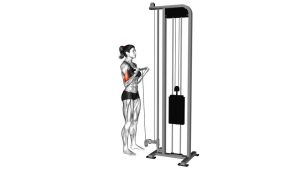
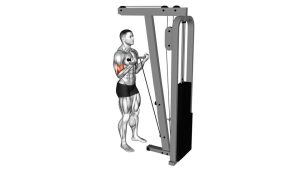
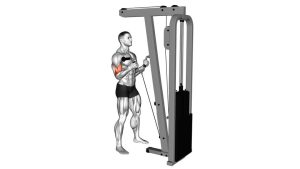
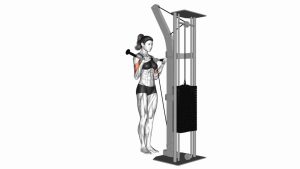
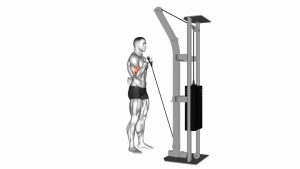
The Cable Standing Biceps Curl works best when you stay tall, brace lightly through the core, and let the elbows drive the movement. Because the cable provides continuous tension, this variation is especially useful for lifters who want a strong contraction at the top and better control during the lowering phase. Use smooth reps, avoid momentum, and keep wrist position neutral.
Quick Overview
| Body Part | Biceps |
|---|---|
| Primary Muscle | Biceps brachii |
| Secondary Muscle | Brachialis, brachioradialis, forearms |
| Equipment | Cable machine with straight bar or short bar attachment |
| Difficulty | Beginner to Intermediate |
Sets & Reps (By Goal)
- Muscle growth: 3-4 sets × 8-15 reps with controlled tempo and full squeeze
- Strength-focused arm work: 3-5 sets × 6-10 reps using strict form
- Technique and pump work: 2-3 sets × 12-20 reps with lighter weight
- Finisher at the end of arm day: 2-3 sets × 10-15 reps with short rest
Progression tip: Add reps first, then increase the load slightly while keeping the elbows steady and the lowering phase controlled.
Setup / Starting Position
- Set the pulley low: Attach a straight bar or short bar to the low cable position.
- Grab the bar with an underhand grip: Hands about shoulder-width apart, wrists straight.
- Stand tall: Keep your chest up, core braced, and feet about hip-width apart.
- Position the elbows: Keep them close to your torso and slightly in front of the hips.
- Start with tension: Arms extended but not violently locked out, with the cable already pulling slightly.
Tip: Step back just enough to keep tension on the cable at the bottom without forcing your shoulders forward.
Execution (Step-by-Step)
- Brace and stay still: Keep the torso upright and avoid rocking backward.
- Curl the bar upward: Bend at the elbows and bring the bar toward the lower chest or upper abdomen.
- Keep elbows pinned: Let the forearms move while the upper arms stay mostly fixed.
- Squeeze at the top: Contract the biceps hard for a brief moment without shrugging the shoulders.
- Lower under control: Extend the arms slowly back to the starting position while maintaining cable tension.
Pro Tips & Common Mistakes
- Keep your elbows close: Excess elbow drift shifts work away from the biceps.
- Do not lean back: Swinging turns the curl into a full-body movement and reduces isolation.
- Control the eccentric: Lowering slowly increases tension and improves form quality.
- Keep wrists neutral: Avoid excessive wrist bending to reduce unnecessary strain.
- Use a full range of motion: Get a deep stretch at the bottom and a strong squeeze at the top.
- Do not rush the top: A brief pause improves mind-muscle connection and makes lighter weights more effective.
FAQ
What muscles does the Cable Standing Biceps Curl work?
It mainly targets the biceps brachii, while the brachialis, brachioradialis, and forearm muscles assist during the curl.
Are cable curls better than dumbbell curls?
Cable curls are not automatically better, but they provide constant tension and often feel smoother through the entire repetition. Dumbbell curls are still excellent for strength and arm development. Both can work well in a balanced program.
Should I use a straight bar or an EZ attachment?
A straight bar works well for many lifters, but an EZ-style attachment may feel more comfortable if straight-bar curls bother your wrists. Choose the option that lets you keep strict form and train pain-free.
How heavy should I go on cable curls?
Use a weight that allows you to keep your elbows controlled and avoid torso swinging. If form breaks down before the target rep range, lower the load.
Can beginners do Cable Standing Biceps Curls?
Yes. This is a beginner-friendly exercise because the cable path is stable and the movement is easy to learn. Start light, focus on control, and build consistency before adding more weight.
Recommended Equipment
- Straight Bar Cable Attachment — ideal for standing cable curls, pushdowns, and other cable arm work
- Arm Blaster / Curl Support — helps keep the elbows stable and reduces cheating during curls
- Resistance Band Set — useful for warm-ups, pump work, and home biceps training
- Wrist Wraps or Lifting Straps — helpful if grip or wrist fatigue limits your arm training sessions
- Home Cable Pulley System — a practical option for training cable curls at home with adjustable resistance
Choose equipment that supports strict form and comfort. Good arm training is built on control, not just heavier weight.