Dumbbell Lying Triceps Extension: Proper Form, Sets, Tips & FAQ
Learn the Dumbbell Lying Triceps Extension with proper form, setup, step-by-step execution, sets by goal, common mistakes, FAQs, and recommended equipment for stronger triceps and safer arm training.
Dumbbell Lying Triceps Extension
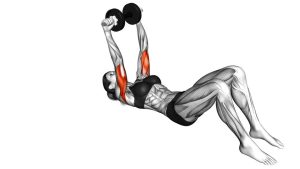
This exercise works best when you treat it as a strict triceps movement, not a loose pressing pattern. You should feel tension in the back of the upper arms while keeping the wrists neutral, elbows controlled, and upper arms steady. A moderate range of motion with clean reps is usually more productive than forcing the dumbbells too deep or using momentum to finish the lift.
Quick Overview
| Body Part | Triceps |
|---|---|
| Primary Muscle | Triceps brachii |
| Secondary Muscle | Anconeus, forearm stabilizers, shoulder stabilizers |
| Equipment | Pair of dumbbells and a flat bench |
| Difficulty | Beginner to Intermediate |
Sets & Reps (By Goal)
- Muscle growth: 3–4 sets × 8–12 reps with 60–90 sec rest
- Strength-focused assistance work: 3–5 sets × 6–8 reps with 90–120 sec rest
- Technique and joint-friendly control: 2–3 sets × 10–15 reps with light-to-moderate load
- Arm finishers: 2–3 sets × 12–15 reps with slow lowering and short rest
Progression rule: Add reps first, then increase load in small steps while keeping the elbows steady and the tempo controlled.
Setup / Starting Position
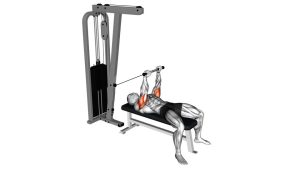
- Set up the bench: Lie flat on a bench with your head supported and feet planted firmly on the floor.
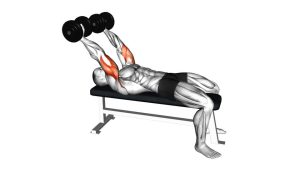
- Hold the dumbbells securely: Press or position the dumbbells above your chest with palms facing each other or slightly angled in.
- Stack the arms: Start with the arms extended and the dumbbells roughly over the shoulders.
- Tuck the elbows slightly: Keep the elbows pointed upward rather than letting them flare wide.
- Brace lightly: Keep the ribs down and shoulders stable against the bench.
Tip: A neutral or semi-neutral grip often feels better on the wrists and elbows than forcing a fully pronated grip.
Execution (Step-by-Step)
- Start at the top: Hold the dumbbells above the chest with arms extended and elbows under control.
- Bend at the elbows: Lower the dumbbells in a smooth arc toward the sides of the head or temples.
- Keep upper arms mostly fixed: Avoid turning the exercise into a pullover or shoulder-dominant movement.
- Pause briefly near the bottom: Stop when you feel a strong triceps stretch without losing joint position.
- Extend the elbows: Drive the dumbbells back to the starting position using the triceps.
- Reset and repeat: Stabilize at the top before beginning the next rep.
Pro Tips & Common Mistakes
- Use a controlled eccentric: Lowering too fast usually increases elbow stress and reduces tension quality.
- Keep the elbows from flaring too wide: A moderate tuck helps keep tension on the triceps.
- Do not let the upper arms travel excessively: Too much shoulder movement turns it into a different exercise.
- Choose a manageable range: Going deeper is not always better if you lose alignment.
- Keep wrists neutral: Avoid letting the dumbbells fold the hands backward.
- Don’t slam the top: Finish the rep under control instead of snapping into lockout.
- Use matching dumbbell paths: Both arms should descend and rise symmetrically.
FAQ
What muscles does the dumbbell lying triceps extension work?
It primarily trains the triceps brachii. The forearms and shoulder stabilizers help support the dumbbells, but the main movement should come from elbow extension.
Is this the same as a dumbbell skull crusher?
Yes, many lifters use the terms interchangeably. Some people use “skull crusher” more loosely, but the dumbbell lying triceps extension is one of the common dumbbell versions.
Should I lower the dumbbells to my forehead or behind my head?
Either can work, but most people do best lowering them near the sides of the head with a path that feels natural on the elbows. The best version is the one you can control without pain.
What if my elbows hurt during this exercise?
Reduce the weight, slow the tempo, tighten up your elbow position, and avoid forcing the bottom range. A slightly neutral grip often helps as well.
Can beginners use this exercise?
Yes. Beginners should start light, focus on elbow control, and use moderate rep ranges before chasing heavier loads.
Recommended Equipment
- Adjustable Dumbbells — versatile loading option for progressing triceps work without needing many separate pairs
- Flat Weight Bench — provides stable support for strict lying extensions and other dumbbell exercises
- Dumbbell Rack — helps organize free weights and keeps your training area safer and cleaner
- Weightlifting Gloves — can improve grip comfort if dumbbell handles feel slippery or rough
- Elbow Sleeves — optional support choice for lifters who want extra warmth and compression during arm training
Tip: Prioritize a good bench and dumbbells first. Accessories are optional, but solid basic equipment makes strict triceps work much easier to perform well.