Dumbbell Decline Triceps Extension: Form, Sets, Tips & FAQ
Learn the Dumbbell Decline Triceps Extension for stronger, bigger triceps with better long-head activation. Includes proper form, setup, sets by goal, common mistakes, FAQs, and recommended equipment.
Dumbbell Decline Triceps Extension
This exercise works best when you treat it like a pure elbow-extension drill. The decline angle can increase the feeling of stretch and make the triceps work harder at the bottom, but that also means sloppy reps can irritate the elbows fast. Use a weight you can control, lower the dumbbells smoothly toward the sides of the head, and extend without letting the shoulders take over.
Quick Overview
| Body Part | Triceps |
|---|---|
| Primary Muscle | Triceps brachii (especially the long head) |
| Secondary Muscle | Anconeus, forearm stabilizers, shoulder stabilizers |
| Equipment | Decline bench and two dumbbells |
| Difficulty | Intermediate |
Sets & Reps (By Goal)
- Muscle growth: 3–4 sets × 8–12 reps with controlled lowering and 60–90 seconds rest
- Strength-focused accessory work: 3–5 sets × 6–8 reps using stricter form and 90–120 seconds rest
- End-of-workout triceps pump: 2–3 sets × 12–15 reps with moderate weight and short rest
- Technique practice: 2–3 sets × 10–12 reps with light dumbbells and slow tempo
Progression rule: Add reps before adding load. Only increase weight when you can keep the elbows steady, control the bottom stretch, and lock out each rep without swinging.
Setup / Starting Position
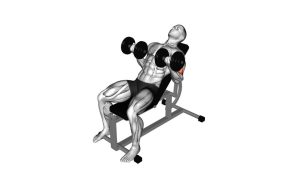
- Set the bench: Adjust a decline bench to a comfortable angle and secure your feet under the pads.
- Grab two dumbbells: Choose a pair you can lower under control without wobbling.
- Lie back carefully: Set your head, upper back, and hips firmly on the bench.
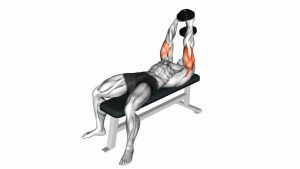
- Press the dumbbells up: Start with the weights directly above the chest/shoulders using a neutral grip.
- Set elbow position: Keep the elbows pointed upward and relatively close together, without flaring wide.
Tip: A slightly tucked ribcage and steady torso will help you keep the movement in the triceps instead of turning it into a press.
Execution (Step-by-Step)
- Start at lockout: Hold the dumbbells vertically above the shoulders with the arms extended and wrists neutral.
- Bend only at the elbows: Lower the dumbbells in a controlled arc toward the sides of the head or slightly behind it.
- Keep the upper arms stable: Avoid letting the shoulders roll forward or the elbows drift too far outward.
- Reach the stretch: Pause briefly when the elbows are deeply bent and the triceps are loaded in the bottom position.
- Extend to the top: Drive the dumbbells back up by straightening the elbows until the arms return to full lockout.
- Repeat smoothly: Maintain the same path on every rep without bouncing or rushing the transition.
Pro Tips & Common Mistakes
- Use a slow eccentric: Lowering the dumbbells under control increases tension and protects the elbows.
- Do not flare the elbows excessively: Too much flare shifts stress away from ideal triceps mechanics.
- Keep the wrists stacked: Letting the wrists bend back too far can create unnecessary strain.
- Don’t turn it into a press: If the shoulders start taking over, the weight is probably too heavy.
- Avoid crashing into the bottom: The stretch should be deliberate, not sloppy or sudden.
- Match both arms: Keep the dumbbells traveling evenly so one side does not dominate the rep.
- Choose the right bench angle: Too steep or awkward a decline may reduce stability and control.
FAQ
What does the Dumbbell Decline Triceps Extension work?
It mainly targets the triceps brachii, with extra emphasis on the long head because of the arm position and deep stretch at the bottom.
Is this better than a flat dumbbell triceps extension?
Not always better, but different. The decline setup can create a unique angle and stronger stretch for some lifters, which may make it feel more effective for triceps hypertrophy.
Should I use heavy or moderate dumbbells?
Start with moderate dumbbells. This exercise rewards control more than load, especially because the weights travel close to the head and elbows can get irritated by sloppy reps.
How low should I lower the dumbbells?
Lower them until you feel a strong but controlled stretch in the triceps while keeping the wrists neutral and elbows stable. Do not force a deeper range if it causes elbow or shoulder discomfort.
Can beginners do this exercise?
Yes, but many beginners should first learn dumbbell triceps extensions on a flat bench before adding the decline setup. The decline position requires more control and confidence with the movement path.
Recommended Equipment
- Adjustable Dumbbells — versatile loading option for progressive triceps training at home
- Decline Weight Bench — essential for performing this variation with stable body positioning
- Weightlifting Gloves or Grip Pads — can improve dumbbell comfort and grip security during higher-rep sets
- Elbow Sleeves — useful for lifters who want extra warmth and support during arm sessions
- Exercise Bench Mat — helps protect flooring and improve bench setup in home gyms
Tip: The best equipment upgrade for this movement is usually a stable bench and dumbbells with manageable jumps in weight, so progression stays smooth.