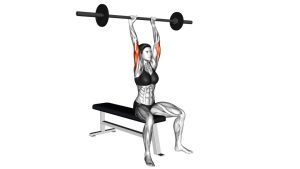
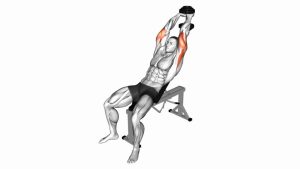
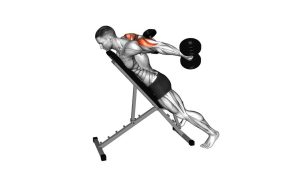
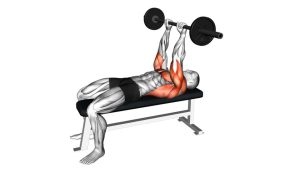
Barbell Standing Overhead Triceps Extension: Proper Form, Sets, Tips & FAQ
Learn the Barbell Standing Overhead Triceps Extension for stronger, bigger triceps with extra emphasis on the long head. Includes proper form, setup, step-by-step execution, sets by goal, common mistakes, FAQs, and recommended equipment.
Barbell Standing Overhead Triceps Extension
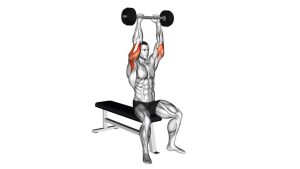
This exercise works best when performed with strict elbow control and a full but comfortable range of motion. You should feel a strong stretch in the triceps at the bottom and a hard contraction at the top. The movement should come primarily from elbow extension, not from leaning backward, swinging the torso, or turning it into a shoulder press.
Quick Overview
| Body Part | Triceps |
|---|---|
| Primary Muscle | Triceps brachii (long head emphasis) |
| Secondary Muscle | Lateral head and medial head of the triceps, shoulders and core as stabilizers |
| Equipment | Barbell, weight plates, collars |
| Difficulty | Intermediate |
Sets & Reps (By Goal)
- Muscle growth: 3–4 sets × 8–12 reps with controlled tempo and full triceps stretch
- Strength focus: 4–5 sets × 5–8 reps using stricter loading and longer rest periods
- Accessory volume: 2–4 sets × 10–15 reps after pressing or triceps compound work
- Technique practice: 2–3 sets × 8–10 reps with light weight and perfect elbow control
Progression rule: First improve control, range, and rep quality. Then add small amounts of weight while keeping your torso stable and elbows in a strong overhead position.
Setup / Starting Position
- Stand tall: Place your feet about hip- to shoulder-width apart for a stable base.
- Grip the barbell securely: Use a shoulder-width or slightly narrower grip if comfortable for your wrists and elbows.
- Raise the bar overhead: Carefully position the bar above and slightly behind your head with elbows bent.
- Set the upper arms: Keep the elbows pointing mostly upward and close to the sides of the head without forcing them inward.
- Brace the torso: Tighten your abs, keep ribs down, and avoid excessive lower-back arching.
Tip: If a straight bar feels awkward on your wrists or elbows, an EZ-bar version may feel smoother while keeping the same training effect.
Execution (Step-by-Step)
- Start from the stretch: Lower the barbell behind your head under control until your elbows are deeply bent and your triceps are stretched.
- Keep the upper arms steady: Your elbows should stay mostly in place instead of drifting far outward or backward.
- Extend the elbows: Drive the bar upward by straightening your arms until the barbell is overhead.
- Squeeze at the top: Contract the triceps hard without aggressively locking out or shrugging the shoulders.
- Lower slowly: Return the bar behind the head with control and repeat for the target reps.
Pro Tips & Common Mistakes
- Keep ribs down: Don’t let the lower back over-arch just to move the weight.
- Use a full stretch: The overhead position is what makes this variation great for the long head of the triceps.
- Don’t rush the eccentric: Lowering under control increases tension and protects the elbows.
- Avoid excessive elbow flare: Some natural movement is fine, but too much flare reduces efficiency and stability.
- Don’t go too heavy too soon: This exercise rewards precision more than ego loading.
- Keep wrists stacked: Avoid letting the wrists bend excessively backward under the bar.
- Warm up first: Light triceps and shoulder warm-up sets help improve comfort and control.
FAQ
What part of the triceps does the standing overhead barbell extension target most?
It strongly emphasizes the long head of the triceps because the overhead arm position places that portion of the muscle under a greater stretch than many other triceps exercises.
Is this exercise better for mass or strength?
It is most often used for hypertrophy, but it can also support strength development when programmed with good technique and moderate-to-heavy loads.
Should I use a straight bar or an EZ-bar?
Both can work well. A straight bar may feel more direct, while an EZ-bar often feels easier on the wrists and elbows. Choose the version that lets you train hard without joint discomfort.
Why do I feel this in my shoulders or lower back?
That usually happens when the load is too heavy, the core is not braced, or the upper arms are drifting too much. Tighten your torso, reduce the weight, and focus on elbow-driven movement.
Can beginners do this exercise?
Beginners can do it, but many will learn the pattern more easily with dumbbells, cables, or an EZ-bar before using a heavier straight barbell version.
Recommended Equipment
- Olympic Barbell — the main tool for performing the exercise with stable loading
- Weight Plates Set — lets you progressively overload the movement over time
- Barbell Collars — keeps the plates secure during overhead lifting
- EZ Curl Bar — a joint-friendlier alternative if a straight bar feels uncomfortable
- Weightlifting Belt — optional support for lifters who want extra trunk bracing awareness during heavier sets
Tip: For better long-term progress, prioritize clean technique, stable elbow positioning, and gradual loading over simply using the heaviest bar possible.