EZ-Bar Standing French Press: Form, Benefits, Sets, Tips & FAQ
Learn how to perform the EZ-Bar Standing French Press with proper form to build stronger triceps. Includes setup, step-by-step execution, sets by goal, mistakes to avoid, FAQs, and recommended equipment.
EZ-Bar Standing French Press
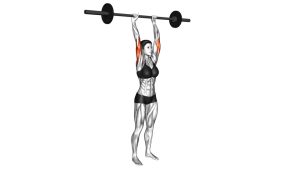
This exercise is best performed with a controlled tempo, stable elbows, and a neutral torso. The goal is to move at the elbow joint while keeping the upper arms mostly fixed. You should feel a clear stretch in the triceps at the bottom and a strong squeeze at the top, without turning the lift into a full-body press or over-arching the lower back.
Quick Overview
| Body Part | Triceps |
|---|---|
| Primary Muscle | Triceps brachii (long head emphasis) |
| Secondary Muscle | Triceps lateral head, triceps medial head, shoulders and core stabilizers |
| Equipment | EZ-bar, weight plates, collars |
| Difficulty | Intermediate |
Sets & Reps (By Goal)
- Muscle growth: 3–4 sets × 8–12 reps with controlled lowering and full lockout
- Strength-focused accessory work: 3–5 sets × 5–8 reps with heavier load and strict form
- Technique and joint-friendly volume: 2–3 sets × 12–15 reps using moderate weight and smooth tempo
- Finisher / pump work: 2–3 sets × 15–20 reps with lighter weight and constant tension
Progression rule: Add reps first while maintaining elbow control and a stable torso. Increase the load only when you can complete all target reps without flaring the elbows excessively or arching your lower back.
Setup / Starting Position
- Load the EZ-bar: Choose a weight you can control through a full overhead range without losing posture.
- Stand tall: Place your feet about shoulder-width apart and keep your knees softly unlocked.
- Grip the bar comfortably: Use the angled handles of the EZ-bar to find a wrist position that feels natural.
- Press the bar overhead: Start with your arms extended above your head and your elbows pointing mostly upward.
- Brace your torso: Tighten your core, keep ribs down, and avoid leaning back before the first rep begins.
Tip: A slightly staggered stance can help some lifters stay more balanced and reduce unwanted lower-back extension.
Execution (Step-by-Step)
- Start at lockout: Hold the EZ-bar overhead with the arms extended and the elbows aimed upward.
- Lower under control: Bend the elbows and bring the bar down behind your head in a smooth arc.
- Keep upper arms steady: Let the elbows flex, but avoid turning the rep into a shoulder movement or letting the elbows drift too far out.
- Reach the stretch: Lower until you feel a strong triceps stretch without pain or loss of posture.
- Extend back up: Drive through the triceps to straighten the elbows and return the bar to the overhead position.
- Finish with control: Squeeze at the top, stabilize the bar, and begin the next rep without bouncing.
Pro Tips & Common Mistakes
- Keep elbows from flaring too wide: Some natural movement is normal, but excessive flare reduces tension on the triceps and can stress the joints.
- Control the eccentric: Lowering slowly increases time under tension and helps maintain better overhead positioning.
- Do not over-arch the lower back: Squeeze the glutes lightly and brace your core to keep the ribs down.
- Use the EZ-bar angles: The angled grip often feels more comfortable on the wrists than a straight bar for this movement.
- Do not rush the bottom: Avoid dropping the bar behind the head and using momentum to rebound upward.
- Train through a pain-free range: A deep stretch is good, but joint discomfort is not.
- Stay tall through the rep: Avoid leaning forward or backward to “help” the bar move.
FAQ
What muscles does the EZ-Bar Standing French Press work?
It primarily targets the triceps brachii, with special emphasis on the long head because the arms are placed overhead. The shoulders and core also help stabilize the position.
Why use an EZ-bar instead of a straight bar?
The angled grips of an EZ-bar usually feel more comfortable on the wrists and elbows, especially during overhead triceps movements. Many lifters find it easier to control and less stressful than a straight bar.
Should the elbows stay completely fixed?
The elbows should stay mostly stable, but a small amount of natural movement is normal. The key is to avoid excessive flaring or letting the shoulders take over the exercise.
Is this exercise better for strength or hypertrophy?
It is most commonly used for hypertrophy and triceps development, but it can also work well as a strength accessory when performed with good control and moderate-to-heavy loads.
What if overhead triceps extensions bother my shoulders?
Reduce the load, shorten the range slightly, and make sure your core and rib position are controlled. If the exercise still causes discomfort, switch to a pain-free triceps variation such as pushdowns or lying extensions.
Recommended Equipment
- EZ Curl Bar — the main tool for performing standing French presses with a more wrist-friendly grip
- Olympic Weight Plates — lets you load the bar progressively for hypertrophy and strength work
- Barbell Collars — helps keep plates secure and stable during overhead movements
- Weightlifting Belt — optional support for lifters who need extra torso bracing with heavier loads
- Lifting Gloves or Grip Aids — optional for comfort and grip stability when hands fatigue during overhead sets
Tip: For most lifters, the best investment is a good EZ curl bar and secure collars. Comfort, control, and stable loading matter more than using excessive weight.