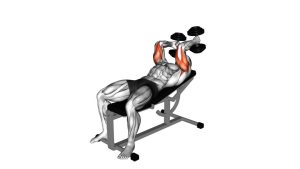
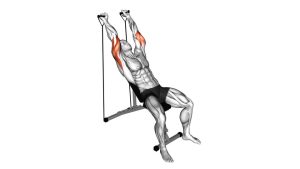
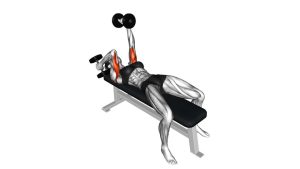
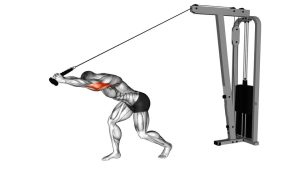
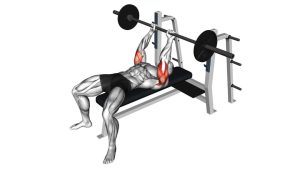
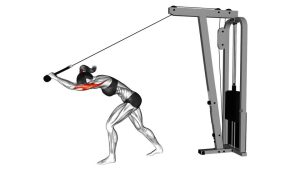
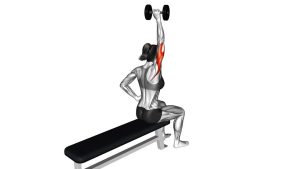
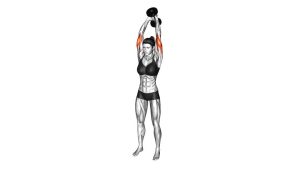
Bodyweight Overhead Triceps Extension: Form, Sets, Tips & FAQ
Learn how to do the Bodyweight Overhead Triceps Extension with proper form. Discover muscles worked, setup, step-by-step execution, sets by goal, common mistakes, FAQs, and recommended equipment.
Bodyweight Overhead Triceps Extension
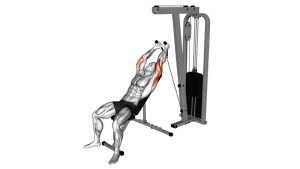
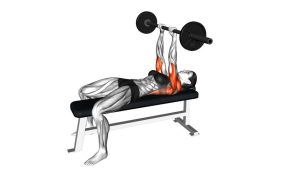
This exercise works best when you treat it like a controlled triceps isolation movement rather than a chest press. Your body should stay braced, your upper arms should remain relatively stable, and the motion should come mostly from bending and straightening the elbows. Because the body angle changes the difficulty, this movement is easy to scale: the more upright you are, the easier it becomes; the more horizontal your body line, the harder it gets.
Quick Overview
| Body Part | Triceps |
|---|---|
| Primary Muscle | Triceps brachii (especially the long head) |
| Secondary Muscle | Anterior delts, core, serratus anterior, and shoulder stabilizers |
| Equipment | Bench, bar, Smith bar, dip station bar, countertop edge, or another sturdy elevated surface |
| Difficulty | Intermediate (can be made easier or harder by changing body angle) |
Sets & Reps (By Goal)
- Muscle growth: 3–5 sets × 8–15 reps with 45–90 seconds rest
- Strength-focused bodyweight work: 4–6 sets × 5–8 reps with 75–120 seconds rest
- Technique / control practice: 2–4 sets × 6–10 slow reps with a 2–3 second lowering phase
- Finisher / pump work: 2–3 sets × 12–20 reps at an easier angle with short rest
Progression tip: First increase reps, then slow the eccentric, then lower the bar or use a more horizontal body angle to make the exercise harder.
Setup / Starting Position
- Choose a stable surface: Use a bench edge, bar, dip station, or any elevated support that will not move.
- Place your hands shoulder-width apart: Grip the edge or bar firmly with wrists in a comfortable, neutral position.
- Walk your feet back: Create a straight body line from hands through shoulders, hips, and ankles.
- Raise the elbows overhead: Your arms should be extended and angled so the triceps—not the chest—do most of the work.
- Brace the core: Keep the ribs down, glutes lightly engaged, and neck neutral before starting the first rep.
Tip: A higher surface usually makes the movement easier. A lower surface increases the challenge.
Execution (Step-by-Step)
- Start in the extended position: Arms straight, elbows pointed forward/upward, core tight, body aligned.
- Bend the elbows under control: Lower your head and upper body toward your hands or bar without letting the hips collapse.
- Keep the upper arms relatively fixed: The elbows should flex deeply, but the shoulders should not take over the movement.
- Lower until you feel a deep triceps stretch: Stop when you can still control the position with good alignment.
- Press back up: Extend the elbows to return to the start while maintaining a rigid torso and steady body angle.
- Repeat smoothly: Use a controlled rhythm and avoid bouncing out of the bottom.
Pro Tips & Common Mistakes
- Keep your elbows from flaring too wide: Excessive flare shifts stress away from the triceps and can irritate the joints.
- Stay braced from head to heel: A sagging midsection leaks tension and changes the line of force.
- Use full but controlled range: The bottom stretch is useful, but only if you can maintain alignment.
- Do not rush the lowering phase: A slower eccentric improves tension and technique.
- Avoid turning it into a press: If the shoulders drift too much, the triceps lose the main workload.
- Adjust the angle to match your level: Too hard too soon usually leads to elbow flare, short reps, and poor control.
- Warm up the elbows and shoulders first: A few light pushdowns, band extensions, or arm circles can help.
FAQ
What muscles does the Bodyweight Overhead Triceps Extension work?
It mainly targets the triceps brachii, with extra emphasis on the long head because the arms are positioned overhead. The core and shoulder stabilizers also work to keep the body aligned.
Is this exercise good for building bigger triceps?
Yes. It is an excellent bodyweight option for adding triceps volume, especially when performed through a controlled range of motion and progressed by adjusting body angle, tempo, or total reps.
How can I make it easier?
Use a higher surface, shorten the range slightly, and keep your body more upright. This reduces the amount of bodyweight your triceps need to move.
How can I make it harder?
Lower the bar or support, walk your feet farther back, slow the eccentric, add pauses in the stretched position, or perform more total reps and sets.
Is this better than push-ups for triceps?
It is usually more triceps-isolated than a standard push-up because the main motion is elbow extension with less chest involvement. Both can be useful, but this variation is often better when your goal is direct triceps emphasis.
Recommended Equipment
- Dip Stands — stable parallel supports that work well for bodyweight triceps extensions and other calisthenics movements
- Push-Up Stands — useful for elevating the hands and improving wrist comfort during bodyweight arm work
- Power Tower / Pull-Up Station — versatile home-gym option that provides a sturdy setup for extensions, dips, and pull-ups
- Adjustable Workout Bench — a practical elevated surface for beginner-to-intermediate setups and angle adjustments
- Resistance Bands Set — ideal for warm-ups, elbow prep, triceps burnout sets, and extra arm volume on lighter days
Tip: Choose equipment based on stability first. A rock-solid setup matters more than adding difficulty too early.