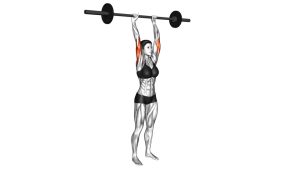
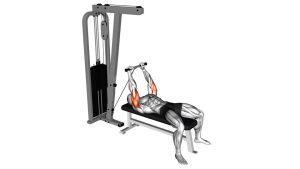
Dumbbell Lying One-Arm Pronated Triceps Extension: Form, Sets, Tips & FAQ
Learn the Dumbbell Lying One-Arm Pronated Triceps Extension for focused triceps growth and better elbow control. Includes setup, step-by-step execution, sets by goal, mistakes to avoid, FAQ, and recommended equipment.
Dumbbell Lying One-Arm Pronated Triceps Extension
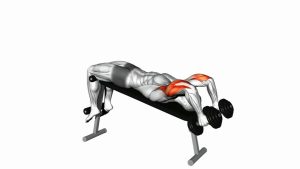
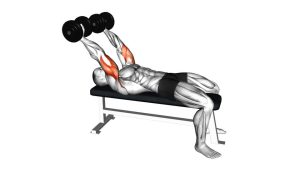
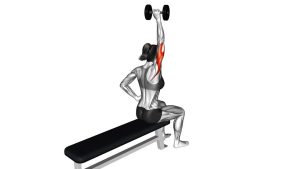
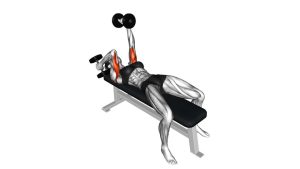
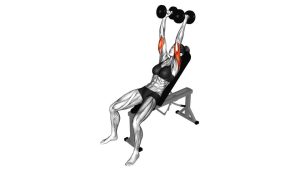
This movement works best with a moderate load, a fixed elbow position, and a smooth tempo. From the video, the dumbbell follows a small arc from a bent-elbow bottom position near the upper chest/face area to a strong extended position above the shoulder. The non-working hand can lightly support the upper arm to reduce elbow drift and improve triceps isolation.
Quick Overview
| Body Part | Triceps |
|---|---|
| Primary Muscle | Triceps brachii |
| Secondary Muscle | Forearm stabilizers, shoulder stabilizers |
| Equipment | Single dumbbell, flat bench |
| Difficulty | Beginner to Intermediate |
Sets & Reps (By Goal)
- Muscle growth: 3–4 sets × 8–12 reps per arm, 60–90 sec rest
- Technique & control: 2–3 sets × 10–15 reps per arm, lighter load, 45–75 sec rest
- Strength emphasis: 3–5 sets × 6–8 reps per arm, 90–120 sec rest
- Finisher / arm pump: 2–3 sets × 12–15 reps per arm with strict form
Progression rule: Add reps first, then increase dumbbell load only when you can keep the elbow steady, the wrist neutral, and the lowering phase controlled.
Setup / Starting Position
- Lie flat on a bench: Keep your head, upper back, and glutes supported with feet planted firmly on the floor.
- Hold one dumbbell with a pronated grip: Your palm should face forward/downward relative to your body position.
- Raise the working arm into position: The upper arm should be mostly fixed, with the elbow pointing upward and slightly inward.
- Use the free hand if needed: Lightly support the working upper arm to limit elbow flare and improve stability.
- Start with the elbow bent: The dumbbell should sit near the upper chest or face area without stressing the wrist.
Tip: Start with a lighter dumbbell than you think you need. This exercise rewards clean elbow mechanics more than heavy loading.
Execution (Step-by-Step)
- Brace your body: Keep your ribcage down, shoulder blades stable, and wrist straight.
- Extend the elbow: Press the dumbbell upward by straightening the arm while keeping the upper arm mostly still.
- Reach near lockout: Finish with the dumbbell stacked above the shoulder without jamming the elbow hard.
- Pause briefly: Squeeze the triceps at the top for a moment while maintaining control.
- Lower slowly: Bend the elbow and guide the dumbbell back down along the same path to the starting position.
- Repeat on one side: Complete all reps on one arm, then switch sides if training both arms evenly.
Pro Tips & Common Mistakes
- Keep the upper arm quiet: Too much shoulder movement turns the lift into a different exercise.
- Don’t rush the eccentric: The lowering phase builds control and keeps tension on the triceps.
- Use full but safe range: Lower until you feel a stretch in the triceps, not joint discomfort.
- Keep the wrist neutral: Don’t let the dumbbell fold your wrist backward at the bottom.
- Avoid elbow flare: Flaring too much reduces isolation and can irritate the elbow.
- Train both sides evenly: Since this is unilateral, match reps and quality on both arms.
- Don’t go too heavy too soon: Heavy weight often causes compensation and shortens the range of motion.
FAQ
What does the pronated grip change in this exercise?
A pronated grip changes the hand position and can make the movement feel more stable for some lifters. It also slightly changes how the elbow and forearm track compared with a neutral-grip extension.
Should I use my non-working hand to support the arm?
Yes, lightly supporting the upper arm can help reduce elbow drift and improve triceps isolation, especially when learning the movement or using stricter form.
Is this better than two-arm dumbbell triceps extensions?
It is not automatically better, but it is excellent for fixing side-to-side imbalances, improving control, and focusing on one triceps at a time without compensation from the stronger arm.
Where should I feel this exercise?
You should mainly feel it in the triceps, especially during the top half of the rep and at full extension. Mild forearm and shoulder stabilization is normal, but the triceps should do most of the work.
Can beginners use this exercise?
Yes. Beginners should simply start with a light dumbbell, a controlled tempo, and a manageable range of motion. Clean technique matters more than load here.
Recommended Equipment
- Adjustable Dumbbell — ideal for progressive overload without needing multiple fixed dumbbells
- Flat Weight Bench — provides the stable support needed for strict lying triceps extensions
- Elbow Sleeves — useful for warmth, compression, and extra comfort during arm work
- Resistance Bands Set — great for warm-ups, triceps activation, and extra accessory work
- Weightlifting Gloves — optional grip support if dumbbell handling or palm comfort is a limiting factor
These suggestions match common Amazon product categories for adjustable dumbbells, flat benches, elbow sleeves, and resistance bands, all of which are directly relevant to this exercise setup or support work.