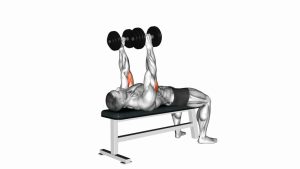
Dumbbell Lying Alternate Triceps Extension: Form, Sets, Muscles Worked & FAQ
Learn how to perform the Dumbbell Lying Alternate Triceps Extension with proper form. Discover muscles worked, setup tips, sets and reps by goal, common mistakes, FAQs, and recommended equipment.
Dumbbell Lying Alternate Triceps Extension
This exercise is excellent for building triceps size and control, especially the long head of the triceps. The alternating pattern slows the tempo, helps correct side-to-side imbalances, and makes it easier to maintain better form than fast bilateral extensions. You should feel the triceps doing most of the work, not the shoulders, wrists, or lower back.
Quick Overview
| Body Part | Triceps |
|---|---|
| Primary Muscle | Triceps brachii |
| Secondary Muscle | Shoulder stabilizers, forearms, core stabilizers |
| Equipment | Two dumbbells and a flat bench |
| Difficulty | Beginner to Intermediate |
Sets & Reps (By Goal)
- Muscle growth: 3–4 sets × 8–12 reps per arm
- Strength-focused assistance work: 3–5 sets × 6–8 reps per arm
- Technique and control: 2–3 sets × 10–15 reps per arm with slower tempo
- Light finishing pump: 2–3 sets × 12–15 reps per arm with short rest
Progression rule: Increase reps first while maintaining strict elbow control, then add weight gradually. Do not sacrifice range or tempo just to use heavier dumbbells.
Setup / Starting Position
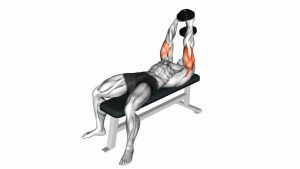
- Lie flat on a bench: Keep your head, upper back, and glutes supported while both feet stay planted on the floor.
- Hold a dumbbell in each hand: Press both dumbbells above your chest with a neutral grip or slight inward hand position.
- Stack the joints: Position the elbows above the shoulders and keep the upper arms mostly still.
- Brace your torso: Keep your ribcage down and avoid over-arching the lower back.
- Start under control: Both dumbbells should be steady at the top before you begin alternating reps.
Tip: Use lighter dumbbells first so you can learn the correct elbow path and keep tension on the triceps throughout the set.
Execution (Step-by-Step)
- Lock one arm in place: Keep one dumbbell extended at the top while the other arm begins the rep.
- Lower one dumbbell slowly: Bend the working elbow and bring the dumbbell down beside your head in a smooth arc.
- Keep the upper arm stable: Avoid letting the elbow flare wide or drift too far backward.
- Pause briefly near the bottom: Maintain tension without relaxing onto the joint.
- Extend the elbow: Press the dumbbell back up until the arm is nearly straight at the top.
- Switch sides: Keep the first arm extended while the second arm performs the same motion.
- Continue alternating: Repeat with controlled tempo until all reps are completed on both sides.
Pro Tips & Common Mistakes
- Use a controlled lowering phase: The eccentric portion is where many lifters lose tension and stability.
- Keep one arm strong at the top: The non-working arm should stay active instead of wobbling around.
- Don’t flare the elbows too wide: Excessive flare reduces triceps isolation and can stress the joints.
- Don’t turn it into a press: This is an elbow extension exercise, not a chest press or pullover.
- Choose a full but safe range: Lower the dumbbell close to the head without forcing an uncomfortable stretch.
- Keep wrists neutral: Avoid letting the dumbbells bend the wrists backward at the bottom.
- Stay braced on the bench: Excessive rib flare or lower-back arching usually means loss of control.
FAQ
What muscles does the Dumbbell Lying Alternate Triceps Extension work?
It primarily targets the triceps brachii, with special emphasis on elbow extension control. The shoulders, forearms, and core also help stabilize the movement.
Why do this exercise one arm at a time instead of both together?
Alternating reps help you slow down, improve focus on each arm, reduce momentum, and make it easier to spot strength or control imbalances.
Is this exercise good for triceps hypertrophy?
Yes. It is a strong triceps isolation exercise for muscle growth when performed with controlled tempo, full tension, and progressive overload.
Should the dumbbells go behind the head?
Slightly beside or just behind the head can be fine depending on arm length and mobility, but avoid excessive backward drift that turns the move into a shoulder-dominant pattern.
What is a common mistake in this exercise?
One of the most common mistakes is letting the elbows move too much. When the upper arms drift or flare excessively, tension shifts away from the triceps.
Recommended Equipment
- Adjustable Dumbbells — ideal for progressive overload and convenient home training
- Flat Weight Bench — provides the stable support needed for strict lying triceps work
- Lifting Gloves — can improve grip comfort during repeated dumbbell sets
- Exercise Mat — useful for floor setup, warm-ups, and supporting your training area
- Resistance Bands Set — great for triceps warm-ups, activation drills, and accessory arm work
Tip: Start with manageable dumbbells and prioritize strict control. Triceps isolation exercises respond best to clean reps, steady tempo, and safe elbow mechanics.