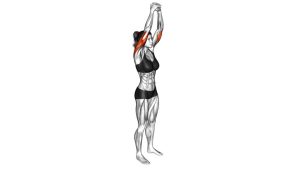
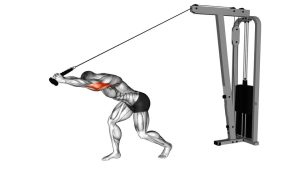
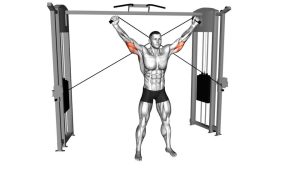
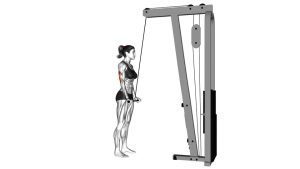
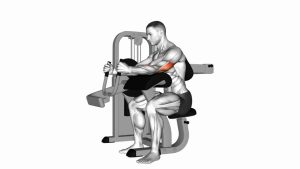
Cable High Pulley Overhead Triceps Extension: Form, Sets, Tips & FAQ
Learn how to do the Cable High Pulley Overhead Triceps Extension with proper form. Includes setup, step-by-step execution, sets and reps by goal, common mistakes, FAQs, and recommended equipment.
Cable High Pulley Overhead Triceps Extension
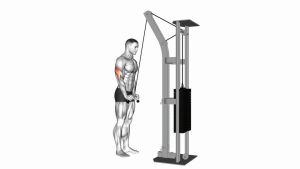
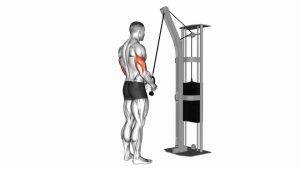
This exercise is best performed with controlled tempo, steady elbow positioning, and constant cable tension. When done correctly, you should feel the triceps doing most of the work, especially during the stretch at the bottom and the squeeze at the top. Avoid using momentum, excessive back arching, or flaring the elbows too wide.
Quick Overview
| Body Part | Triceps |
|---|---|
| Primary Muscle | Triceps brachii (especially the long head) |
| Secondary Muscle | Triceps lateral head, triceps medial head, core stabilizers, shoulder stabilizers |
| Equipment | High pulley cable machine with rope attachment |
| Difficulty | Intermediate |
Sets & Reps (By Goal)
- Muscle growth: 3–4 sets × 8–15 reps, 60–90 sec rest
- Strength-focused accessory work: 3–5 sets × 6–10 reps, 75–120 sec rest
- High-tension pump work: 2–4 sets × 12–20 reps, 45–75 sec rest
- Technique practice: 2–3 sets × 10–12 reps with light weight and slow tempo
Progression rule: First improve control, range of motion, and lockout quality. Then add small weight increases while keeping the elbows steady and the tempo clean.
Setup / Starting Position
- Set the pulley high: Attach a rope handle to a high pulley or overhead cable station.
- Face away from the machine: Grab the rope and step forward so the cable tracks behind your head.
- Establish stance: Use a split stance or shoulder-width stance for balance.
- Raise the elbows: Bring the upper arms beside your head with elbows bent and pointing upward/forward.
- Brace your torso: Keep your core tight, ribs down, and a slight forward lean if needed to match the cable path.
Tip: Before starting the rep, make sure the elbows are set in place and the cable already has tension.
Execution (Step-by-Step)
- Start from the stretched position: With elbows bent, hold the rope behind the head while keeping the upper arms mostly fixed.
- Extend the elbows: Press the rope upward and slightly forward until your arms are nearly straight overhead.
- Separate the rope: At the top, let the rope ends move apart naturally to maximize triceps contraction.
- Squeeze briefly: Pause for a short moment without slamming into lockout.
- Lower under control: Bend the elbows slowly and guide the rope back behind the head into a deep stretch.
- Repeat smoothly: Keep tension on the triceps and avoid relaxing at the bottom.
Pro Tips & Common Mistakes
- Keep upper arms stable: The cleaner the elbow position, the better the triceps isolation.
- Use full but pain-free range: A deep stretch behind the head helps emphasize the long head.
- Don’t rush the lowering phase: Controlled eccentrics build more tension and keep the cable loaded.
- Avoid flaring elbows too wide: Excessive flare can reduce efficiency and strain the shoulders.
- Don’t turn it into a standing press: Keep the movement focused at the elbows, not the torso.
- Brace the core: Prevent over-arching the lower back, especially on harder sets.
- Split the rope at lockout: This small detail often improves the finish and peak contraction.
FAQ
What part of the triceps does this exercise emphasize most?
The overhead arm position places extra emphasis on the long head of the triceps, making this variation excellent for complete upper-arm development.
Should I lock out fully at the top?
You should extend close to full lockout and squeeze the triceps hard, but avoid violently snapping the elbows straight.
Is a rope attachment better than a straight bar for this movement?
For many lifters, yes. A rope often feels more natural on the wrists and allows the hands to separate at the top for a stronger contraction.
Why do I feel this in my shoulders instead of my triceps?
That usually happens when the elbows drift too much, the load is too heavy, or your torso position is unstable. Reduce the weight and focus on keeping the upper arms fixed.
Can beginners use this exercise?
Yes, but it works best after learning how to stabilize the core and control elbow position. Beginners should start light and prioritize technique over load.
Recommended Equipment
- SYL Fitness Tricep Rope Cable Attachment — classic rope attachment for overhead extensions, pushdowns, and other cable triceps work
- TROPOW LAT Pulldown / Cable Machine — useful if you want a dedicated high-pulley setup for home triceps, rows, and pulldowns
- 5mm Neoprene Elbow Sleeves — can help keep the elbows warm and supported during higher-volume arm sessions
- AIRHOP Interlocking Gym Flooring — adds grip, floor protection, and a more stable training surface for cable work
- Anchor Gym Door Anchor — practical option for band-based overhead triceps extensions when you train at home
Tip: The most important item for this exercise is a smooth cable path and a comfortable rope attachment. Support gear is optional.