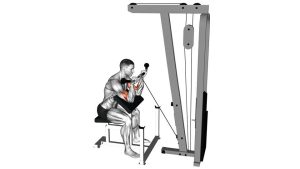
Cable Hammer Curl with Rope: Proper Form, Sets, Tips & FAQ
Learn how to perform the Cable Hammer Curl with a rope attachment for stronger forearms, brachialis, and biceps. Includes form tips, sets by goal, common mistakes, FAQs, and recommended equipment.
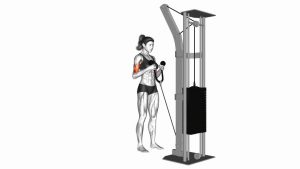
Cable Hammer Curl (Rope)
This exercise works best when you use strict form and a steady tempo. The cable provides continuous tension through the full range of motion, making the rope hammer curl useful for building arm size, improving grip-related arm strength, and training the forearms without relying on momentum. You should feel the movement mainly through the upper forearms and upper arms, not in the lower back, shoulders, or wrists.
Quick Overview
| Body Part | Forearms |
|---|---|
| Primary Muscle | Brachioradialis |
| Secondary Muscle | Brachialis, Biceps Brachii |
| Equipment | Cable machine with rope attachment |
| Difficulty | Beginner to Intermediate |
Sets & Reps (By Goal)
- Muscle growth: 3–4 sets × 8–12 reps with controlled tempo and 60–90 seconds rest
- Forearm / brachialis focus: 3–4 sets × 10–15 reps with strict form and constant tension
- Strength emphasis: 4–5 sets × 6–8 reps using a heavier load without torso swing
- Finisher / pump work: 2–3 sets × 12–20 reps with lighter weight and slower eccentrics
Progression rule: First improve rep quality, range of motion, and cable control. Then add small increases in weight while keeping the elbows pinned and wrists neutral.
Setup / Starting Position
- Attach the rope to a low pulley on a cable machine.
- Stand tall facing the machine with feet about shoulder-width apart.
- Grab the rope with a neutral grip so your palms face each other.
- Step back slightly until the cable is taut and your arms are extended downward.
- Set your posture: chest up, shoulders down and back, core braced, knees softly bent.
- Keep elbows close to your torso and wrists straight before starting the first rep.
Tip: A small step back helps maintain tension at the bottom so the movement starts under control instead of from slack.
Execution (Step-by-Step)
- Brace and lock in: Keep your torso still, eyes forward, and elbows tucked near your sides.
- Curl the rope upward: Flex at the elbows and pull the rope toward your upper chest while keeping a neutral hammer grip.
- Keep upper arms quiet: Your elbows should stay nearly fixed in place rather than drifting forward.
- Squeeze at the top: Pause briefly when your forearms are near vertical and your arms are fully flexed.
- Lower with control: Slowly return the rope to the starting position without letting the weight stack yank your arms down.
- Repeat smoothly: Maintain constant cable tension and avoid bouncing between reps.
Pro Tips & Common Mistakes
- Keep wrists neutral: Don’t curl the wrists upward to cheat the rep.
- Use a full controlled range: Extend fully at the bottom without losing tension.
- Don’t lean back: Excessive body swing turns the curl into a momentum-driven lift.
- Keep elbows tucked: Letting them drift forward shifts tension away from the target muscles.
- Separate the rope naturally: A slight split at the top can improve contraction without forcing your hands too wide.
- Control the negative: The lowering phase is valuable for arm growth—don’t rush it.
- Match load to form: A lighter, cleaner rope curl is usually more productive than a sloppy heavy one.
FAQ
What muscles does the cable hammer curl with rope work?
It mainly targets the brachioradialis and brachialis, while also training the biceps. The neutral grip makes it especially useful for arm thickness and forearm development.
Is the rope hammer curl better than dumbbell hammer curls?
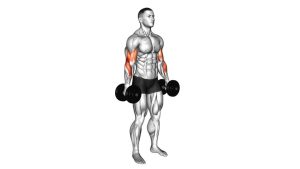
Neither is universally better. The cable version provides constant tension and a very smooth resistance curve, while dumbbells are simple and accessible. Both can work well in an arm program.
Should I go heavy on rope hammer curls?
You can use moderate-to-heavy loads, but only if you can keep your torso still and your elbows controlled. Once momentum takes over, the exercise becomes less effective.
Where should I feel this exercise most?
Most people feel it in the upper forearms, brachialis, and biceps. If you mainly feel your shoulders or lower back, your setup or weight selection likely needs adjustment.
Can beginners use this exercise?
Yes. It’s beginner-friendly because the cable path is stable and the rope grip is comfortable. Start light, learn strict form, and progress gradually.
Recommended Equipment
- Tricep Rope Cable Attachment — the key attachment for performing rope hammer curls with a comfortable neutral grip
- Adjustable Cable Pulley System — useful for home gym lifters who want cable-based curls without a full commercial station
- Cable Machine Handles — versatile add-ons for extra arm, back, and grip-focused cable work
- Lifting Wrist Straps — helpful for reducing grip fatigue during higher-volume pulling sessions
- Home Gym Cable Machine — ideal if you want a dedicated setup for curls, pushdowns, rows, and other cable exercises
Tip: Prioritize a solid rope attachment and smooth cable resistance first. Better cable feel usually improves exercise quality more than chasing extra load.