Dumbbell Cross-Body Hammer Curl: Form, Muscles Worked, Sets, Tips & FAQ
Learn how to do the Dumbbell Cross-Body Hammer Curl with proper form. Discover muscles worked, setup, step-by-step execution, sets and reps by goal, common mistakes, FAQs, and recommended equipment.
Dumbbell Cross-Body Hammer Curl
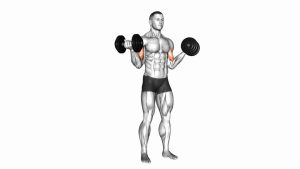
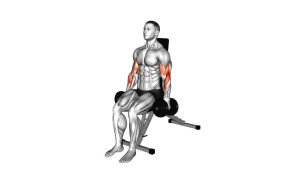
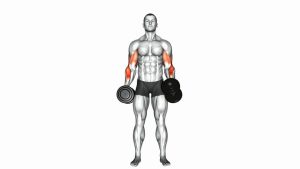
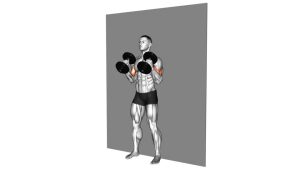
This movement works best when you keep the reps controlled and the elbows quiet. The video shows a clean alternating pattern with a stable torso, neutral wrists, and a consistent cross-body path. Your goal is to lift the dumbbell through elbow flexion, not by swinging the shoulders or rocking the torso. When performed correctly, the exercise creates strong tension through the front of the upper arm and the top of the forearm.
Quick Overview
| Body Part | Arms |
|---|---|
| Primary Muscle | Brachialis |
| Secondary Muscle | Brachioradialis, Biceps Brachii |
| Equipment | Dumbbells |
| Difficulty | Beginner to Intermediate |
Sets & Reps (By Goal)
- Muscle growth: 3–4 sets × 8–12 reps per arm with 60–90 sec rest
- Strength-focused arm work: 4–5 sets × 6–8 reps per arm with 90–120 sec rest
- Control and technique: 2–3 sets × 10–15 reps per arm with light-to-moderate load
- Finisher / pump work: 2–3 sets × 12–15 reps per arm with slow eccentrics
Progression rule: Add reps before increasing weight whenever possible. If your torso starts swaying or the dumbbell no longer travels diagonally with control, the load is too heavy.
Setup / Starting Position
- Stand tall: Place your feet about hip- to shoulder-width apart and brace your core lightly.
- Hold two dumbbells at your sides: Use a neutral grip with your palms facing inward.
- Set your shoulders: Keep your chest up, shoulders relaxed, and upper arms close to your torso.
- Align the wrists: Keep the wrists straight so the dumbbells stay stable throughout the curl.
- Start from full length: Let the arms hang naturally with the elbows extended but not aggressively locked.
Tip: Think “quiet upper arm, moving forearm.” This helps prevent turning the exercise into a swinging front raise.
Execution (Step-by-Step)
- Begin with one arm: Keep the opposite arm down while the working arm starts curling upward.
- Curl across the body: Bring the dumbbell diagonally toward the opposite side of your chest or shoulder.
- Keep the elbow close: Let the elbow bend, but do not let it drift far forward or flare away from your torso.
- Hold briefly at the top: Squeeze the arm hard for a moment without shrugging the shoulder.
- Lower under control: Bring the dumbbell back down along the same diagonal path.
- Alternate sides: Once one rep is complete, repeat with the other arm and keep the tempo smooth.
Pro Tips & Common Mistakes
- Use a neutral grip the whole time: Do not rotate into a fully supinated curl at the top.
- Keep the path diagonal: The dumbbell should travel toward the opposite shoulder, not straight in front of you.
- Don’t swing the torso: Momentum shifts tension away from the target muscles.
- Control the eccentric: Lowering slowly improves tension and usually makes lighter loads more effective.
- Don’t over-lift the elbow: A small natural elbow movement is fine, but avoid turning it into a shoulder-driven motion.
- Train both sides evenly: Match the same tempo and range of motion on left and right reps.
- Avoid wrist collapse: Bent wrists can reduce force transfer and irritate the joint.
FAQ
What muscles does the Dumbbell Cross-Body Hammer Curl work most?
The exercise mainly emphasizes the brachialis and brachioradialis, with the biceps brachii also assisting. It is especially useful for adding thickness to the upper arms.
Is this better than a regular hammer curl?
Not always better, just different. The cross-body version changes the line of motion and often feels more natural for lifters who want extra forearm and brachialis emphasis.
Should I do both arms at the same time or alternate?
Alternating is usually the easiest way to stay controlled, manage posture, and focus on one rep at a time. Both methods can work, but alternating often feels cleaner for this variation.
How heavy should I go?
Use a weight that lets you keep a neutral wrist, stable torso, and a controlled lowering phase. If you need to swing or rush, the load is too heavy for quality reps.
Where should I feel it?
Most lifters feel it in the front of the upper arm and across the forearm near the elbow. A strong squeeze at the top and a slow eccentric usually improve the mind-muscle connection.
Recommended Equipment
- Adjustable Dumbbells — versatile for progressive overload and convenient for home arm training
- Preacher Curl Bench — useful if you want extra biceps isolation work alongside hammer curl variations
- Wrist Wraps for Weightlifting — can help support wrist position during heavier curl sessions
- Fat Grip Attachments — increase handle thickness to challenge grip and forearm recruitment
- Adjustable Workout Bench — expands your arm-training options with incline curls, seated curls, and support work
Choose equipment that helps you maintain clean reps and consistent training. For this exercise, a comfortable dumbbell handle and steady wrist position matter more than using the heaviest load possible.