EZ-Bar Reverse-Grip Preacher Curl: Form, Sets, Tips & FAQ
Learn the EZ-Bar Reverse-Grip Preacher Curl to build forearms, brachioradialis, and arm strength with strict form. Includes setup, step-by-step execution, sets by goal, mistakes, FAQ, and recommended Amazon equipment.
EZ-Bar Reverse-Grip Preacher Curl
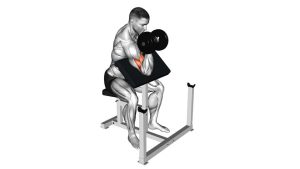
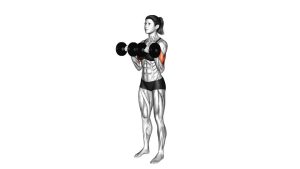
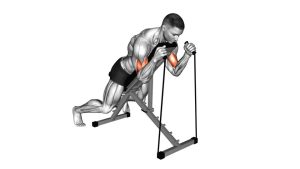
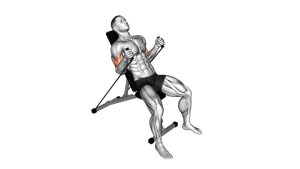
This variation is excellent for building forearm thickness, improving grip-related arm strength, and exposing weaknesses that can be hidden in regular underhand curls. Because the reverse grip places the wrists and forearms in a mechanically tougher position, lighter weights and cleaner reps usually work best. A smooth tempo, a fixed upper arm, and a controlled lowering phase are the keys to getting the most from this exercise.
Quick Overview
| Body Part | Forearms |
|---|---|
| Primary Muscle | Brachioradialis |
| Secondary Muscle | Brachialis, Biceps Brachii, Wrist Extensors and Forearm Stabilizers |
| Equipment | EZ curl bar, preacher bench, weight plates, collars |
| Difficulty | Beginner to Intermediate |
Sets & Reps (By Goal)
- Muscle growth: 3–4 sets × 8–12 reps with controlled lowering and 60–90 sec rest
- Forearm strength: 4–5 sets × 5–8 reps with strict form and 90–120 sec rest
- Technique practice: 2–3 sets × 10–15 reps using light weight and smooth tempo
- Arm-finisher work: 2–3 sets × 12–15 reps with moderate load and short rest
Progression rule: Add reps first, then add small amounts of weight. If wrist position breaks, elbows lift, or you start jerking the bar, the load is too heavy.
Setup / Starting Position
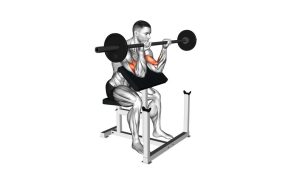
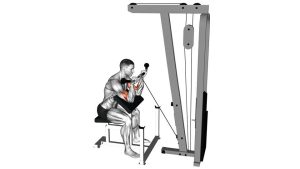
- Adjust the preacher bench: Set the seat so your armpits rest comfortably near the top edge of the pad while your upper arms stay fully supported.
- Grab the EZ bar with a reverse grip: Use a pronated grip on the angled portions of the bar where your wrists feel strongest and most natural.
- Plant your upper arms: Press the backs of the upper arms firmly into the pad and keep the elbows fixed in place.
- Start near full extension: Lower the bar until your elbows are almost straight, but avoid violently locking out.
- Set posture: Keep the chest against the pad, shoulders down, and wrists as neutral as possible.
Tip: A slightly narrower hand position often feels better on reverse curls, but the best grip is the one that lets your wrists stay stable.
Execution (Step-by-Step)
- Brace and stay still: Lock your torso into the bench and keep the upper arms glued to the pad.
- Curl the bar upward: Flex at the elbows and raise the EZ bar in a smooth arc without jerking or swinging.
- Keep the wrists firm: Avoid excessive wrist bending; let the forearms and elbows do the work.
- Reach the top under control: Bring the bar up until the forearms are strongly contracted, but do not let the elbows come off the pad.
- Lower slowly: Reverse the motion under control and resist gravity on the way down.
- Repeat with tension: Move into the next rep without bouncing at the bottom.
Pro Tips & Common Mistakes
- Use lighter weight than regular curls: The reverse grip is harder, so strict reps matter more than load.
- Don’t let the elbows slide: Once the upper arms shift, tension leaves the target muscles.
- Control the eccentric: The lowering phase builds a lot of value in this exercise, especially for hypertrophy.
- Keep wrists neutral: Excessive wrist extension can turn a good rep into an uncomfortable one.
- Avoid shoulder assistance: This is not a cheat curl—keep the torso quiet and the shoulders relaxed.
- Use full but safe range: Lower deep enough to feel a stretch, but don’t slam into lockout.
- Train it after heavy pulls or regular curls: It works well as a secondary arm movement for forearm emphasis.
FAQ
What muscles does the EZ-Bar Reverse-Grip Preacher Curl target most?
The main emphasis is on the brachioradialis, with strong assistance from the brachialis and some contribution from the biceps brachii. The reverse grip shifts the stress more toward the forearms than a standard underhand preacher curl.
Why use an EZ bar instead of a straight bar?
The angled grips on an EZ bar usually feel more comfortable on the wrists and elbows, especially in pronated curling variations. Many lifters can keep a stronger, more natural hand position with the EZ bar.
Should I go heavy on reverse-grip preacher curls?
Usually, no. This exercise works best with moderate or light-to-moderate loading and strict control. Chasing heavy weight often leads to wrist strain, shortened range, and sloppy form.
Is this better for forearms than regular preacher curls?
For forearm emphasis, yes. Regular preacher curls usually bias the biceps more, while the reverse grip increases the demand on the brachioradialis and forearm stabilizers.
Can beginners do this exercise?
Yes, as long as they start light and respect wrist comfort. Beginners should focus on clean mechanics, stable elbows, and controlled lowering before adding weight.
Recommended Equipment (Optional)
- EZ Curl Bar — the core tool for this exercise; the angled grip is usually easier on the wrists than a straight bar
- Preacher Curl Bench — supports the upper arms and reduces cheating so you can isolate the forearms and elbows more effectively
- Standard 1-Inch Weight Plates — useful for gradual overload if your EZ bar uses a standard 1-inch sleeve size
- Lifting Wrist Wraps — optional wrist support if reverse-grip work feels unstable or fatiguing during higher-volume sets
- Weight Lifting Gloves — optional for grip comfort and hand protection during repeated arm sessions
Tip: Keep your equipment simple. A solid EZ bar, a stable preacher station, and small plate jumps are usually all you need to make this exercise productive.