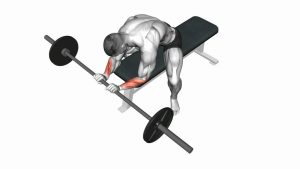
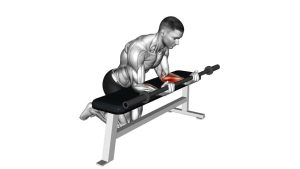
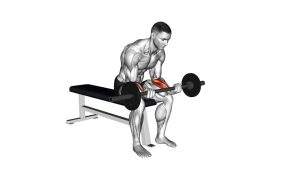
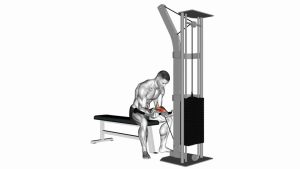
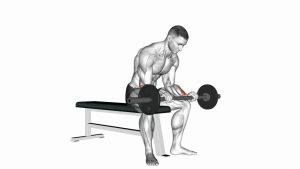
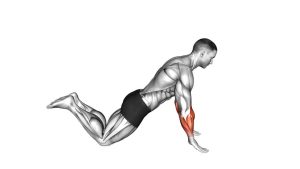
Barbell Behind-the-Back Finger Curl: Proper Form, Sets, Tips & FAQ
Learn how to do the Barbell Behind-the-Back Finger Curl for stronger forearms and grip. Includes proper form, sets and reps by goal, common mistakes, FAQs, and recommended equipment.
Barbell Behind-the-Back Finger Curl
This exercise is especially useful for lifters who want stronger hands for deadlifts, rows, carries, pull-ups, and overall grip performance. Because the bar rolls down into the fingers before being curled back into the palm, the movement creates a unique training effect that standard wrist curls do not fully replicate. Use a controlled tempo, keep your torso still, and let the forearms do the work.
Quick Overview
| Body Part | Forearms |
|---|---|
| Primary Muscle | Finger flexors (flexor digitorum profundus and flexor digitorum superficialis) |
| Secondary Muscle | Wrist flexors, brachioradialis, forearm stabilizers, grip musculature |
| Equipment | Barbell |
| Difficulty | Beginner to Intermediate |
Sets & Reps (By Goal)
- Grip strength: 3-4 sets × 8-12 reps with controlled rolling motion, 60-90 sec rest
- Forearm hypertrophy: 3-5 sets × 12-20 reps, moderate load, 45-75 sec rest
- Grip endurance: 2-4 sets × 15-25 reps, light-to-moderate load, 30-60 sec rest
- Accessory finisher: 2-3 sets × 12-15 reps after pulling or arm work
Progression rule: Add reps first, then increase the load gradually. Only go heavier if you can keep the bar rolling smoothly without body sway or losing finger control.
Setup / Starting Position
- Stand tall: Hold a barbell behind your body with your arms extended downward and your chest up.
- Use an overhand grip: Your palms should face backward, with the bar resting in your hands behind your thighs or glutes.
- Set your stance: Feet about shoulder-width apart, knees soft, torso upright, and core lightly braced.
- Position the wrists: Keep them mostly neutral or only slightly extended. Avoid aggressive wrist bending before the rep starts.
- Start secure: Begin with the bar in the palm and your fingers wrapped around it firmly.
Tip: A lighter bar or fixed-weight barbell works well when first learning the rolling motion.
Execution (Step-by-Step)
- Lower into the fingers: Let the bar slowly roll downward from the palm toward the fingertips under control.
- Reach the stretched position: Allow the fingers to open enough to create tension in the forearms, but keep the bar secure.
- Curl the fingers closed: Reverse the motion by closing the fingers and rolling the bar back upward into the palm.
- Squeeze at the top: Once the bar returns fully into the hand, contract the grip hard for a brief moment.
- Repeat smoothly: Continue each rep with steady tempo and no torso movement or swinging.
Pro Tips & Common Mistakes
- Use a controlled roll: Do not rush the lowering phase. The stretch portion is where much of the training effect happens.
- Keep the torso still: Avoid bouncing the hips or leaning to help move the bar.
- Do not overload too early: Going too heavy often turns the movement into a partial wrist curl with poor finger control.
- Keep the bar close: Let it travel naturally behind the body without drifting too far away from the legs.
- Train the full hand: Let the bar roll into the fingers, but never so far that you lose safe control of it.
- Do not over-bend the wrists: A little wrist movement is normal, but the emphasis should stay on finger flexion and grip.
- Use straps elsewhere, not here: This is a direct grip exercise, so let the hands do the work.
FAQ
What does the Barbell Behind-the-Back Finger Curl work?
It primarily trains the finger flexors and helps develop stronger forearms, better grip endurance, and improved hand control under load.
Is this different from a wrist curl?
Yes. A finger curl emphasizes the rolling action through the fingers, while a wrist curl focuses more on flexing the wrist joint. This exercise may include slight wrist motion, but the main driver should be the grip.
Should I go heavy on this exercise?
Usually no. This movement works best with strict control and a load you can safely manage through a full rolling range. Heavier is not better if it reduces finger motion or makes the bar unstable.
Can beginners do behind-the-back finger curls?
Yes, as long as they start light and focus on control. It is a simple movement, but grip security is important, so beginners should use conservative loading until the pattern feels natural.
Where should I place this exercise in a workout?
It works well near the end of an upper-body, arm, or pulling workout as a forearm and grip accessory. It can also be used after deadlifts or rows if grip strength is a priority.
Recommended Equipment (Optional)
- Olympic Barbell — the main tool for performing the exercise with stable loading and standard grip thickness
- Bumper Plates or Standard Weight Plates — useful for progressive overload while keeping the movement controlled
- Barbell Collars — helps keep plates secure during behind-the-body loading
- Grip Strength Trainer — useful for extra hand and finger work between workouts
- Forearm Roller — a solid accessory for building additional forearm endurance and grip capacity
Tip: Keep your grip work challenging but controlled. The best forearm results usually come from steady progression, full-range reps, and frequent practice.