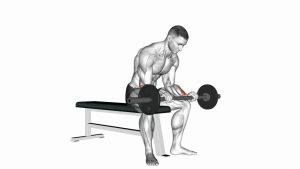
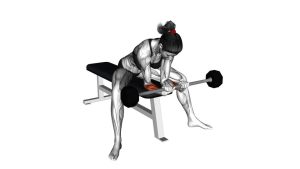
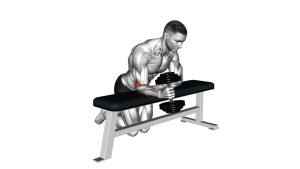
Dumbbell Over Bench Reverse Wrist Curl: Form, Muscles Worked, Sets & Tips
Learn how to do the Dumbbell Over Bench Reverse Wrist Curl with proper form. Discover muscles worked, setup, step-by-step execution, sets and reps by goal, common mistakes, FAQs, and recommended equipment.
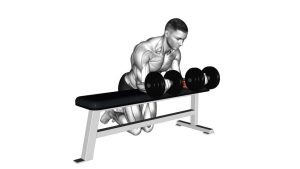
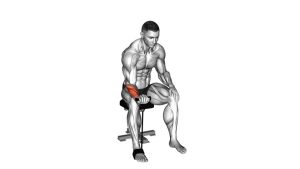
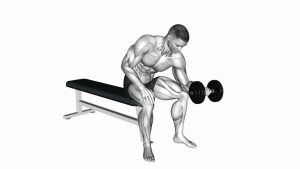
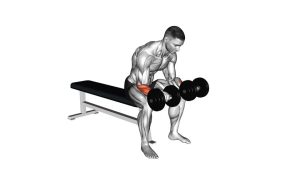
Dumbbell Over Bench Reverse Wrist Curl
This variation is excellent for lifters who want more balanced forearm development, stronger wrists, and better support for gripping, curling, pulling, and general upper-body training. Because the range of motion is short and the target muscles are relatively small, lighter weights and precise control usually produce better results than heavy, sloppy reps.
Quick Overview
| Body Part | Forearms |
|---|---|
| Primary Muscle | Forearm extensors |
| Secondary Muscle | Grip muscles, wrist stabilizers, brachioradialis (light stabilization) |
| Equipment | Dumbbell and flat bench |
| Difficulty | Beginner |
Sets & Reps (By Goal)
- Muscle growth: 3–4 sets × 12–20 reps with controlled tempo and short pauses at the top
- Wrist strength: 3–5 sets × 8–12 reps using strict form and slightly longer rest periods
- Endurance / forearm burn: 2–4 sets × 20–30 reps with light weight and smooth reps
- Warm-up / activation: 2–3 sets × 15–20 reps with very light load before upper-body training
Progression rule: First improve control, then add reps, then increase load in small jumps. Forearm work responds well to consistency and strict execution.
Setup / Starting Position
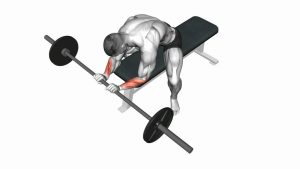
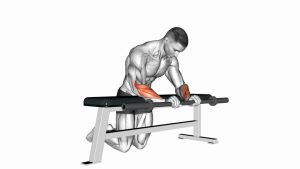
- Set up the bench: Use a flat bench and position yourself so your forearms can rest securely on the pad.
- Grip the dumbbell: Hold the dumbbell with a pronated grip so your palms face down.
- Place the forearms on the bench: Rest the forearms on the pad while allowing the wrists and hands to extend just beyond the bench edge.
- Stabilize the upper body: Keep the chest steady, shoulders relaxed, and elbows fixed in place.
- Start from a slight stretch: Let the wrists drop gently into flexion so the forearm extensors are loaded before each rep.
Tip: A bench height that lets you stay relaxed and stable makes it much easier to isolate the wrists instead of compensating with the shoulders.
Execution (Step-by-Step)
- Brace the forearms: Keep both forearms planted on the bench so only the hands and wrists can move.
- Lift through the wrists: Extend the wrists upward to raise the dumbbell using the muscles on the top side of the forearm.
- Squeeze at the top: Pause briefly when the wrists are fully extended without letting the elbows lift.
- Lower under control: Slowly return the dumbbell to the stretched bottom position.
- Repeat smoothly: Maintain the same wrist-only movement for every rep without bouncing or rushing.
Pro Tips & Common Mistakes
- Use lighter weight than expected: Wrist extension exercises usually require less load than people think.
- Keep the range honest: Let the wrist move through a controlled stretch and contraction instead of doing tiny half reps.
- Don’t lift with the arms: The forearms stay supported—avoid turning it into a mini row or shrug.
- Control the eccentric: Lowering the weight slowly often creates more effective forearm tension than rushing the rep.
- Don’t crank the wrists aggressively: Move through a comfortable range, especially if your wrists are stiff.
- Train both sides evenly: Match the same reps and tempo with each arm if done one side at a time.
- Pair it smartly: This exercise works well after curls, rows, deadlift accessories, or dedicated forearm work.
FAQ
What muscles does the Dumbbell Over Bench Reverse Wrist Curl work?
It mainly trains the wrist extensors on the top side of the forearm. These muscles help extend and stabilize the wrist during gripping and lifting tasks.
Should I use heavy or light dumbbells for reverse wrist curls?
Most people get better results with lighter dumbbells and stricter control. The target muscles are small, so clean reps usually matter more than heavy load.
Is this exercise good for grip strength?
Yes. While it is primarily a wrist extensor exercise, stronger forearms and wrists can improve overall grip support and wrist stability in other lifts.
Can beginners do this exercise?
Absolutely. It is beginner-friendly as long as the load is light enough to keep the movement controlled and isolated at the wrist.
When should I place this exercise in my workout?
It usually works best near the end of an upper-body or arm workout, or inside a dedicated forearm finisher. Very light sets can also be used as activation work.
Recommended Equipment
- Adjustable Dumbbells — ideal for fine-tuning load on a small isolation movement like reverse wrist curls
- Flat Weight Bench — provides stable forearm support and consistent positioning for cleaner reps
- Wrist Roller / Forearm Exerciser — a useful accessory for extra wrist and forearm strength work outside dumbbell curls
- Hand Grip Strengthener — complements forearm training by building crushing grip and hand endurance
- Lifting Wrist Wraps — optional support if your wrists feel unstable during heavier pressing or arm sessions
Tip: For this specific exercise, a stable bench and a light-to-moderate dumbbell matter most. The other items are helpful accessories, not requirements.