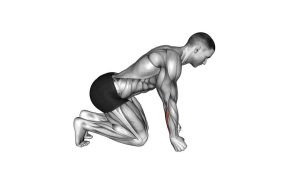
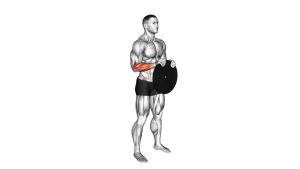
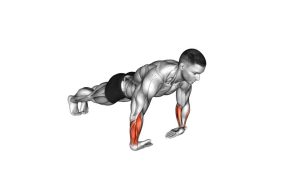
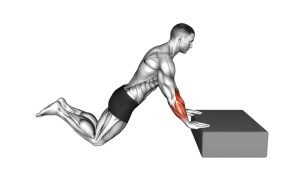
Dumbbell Seated Neutral Wrist Curl: Form, Sets, Tips & FAQ
Learn the Dumbbell Seated Neutral Wrist Curl to strengthen forearms, wrist flexors, and grip control with proper setup, execution, common mistakes, FAQs, and equipment tips.
Dumbbell Seated Neutral Wrist Curl
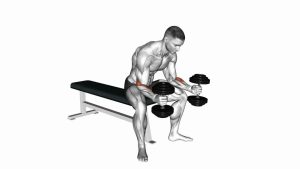
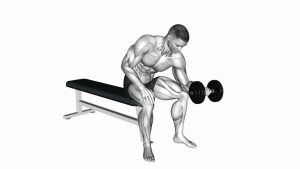
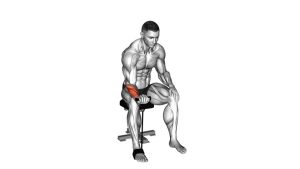
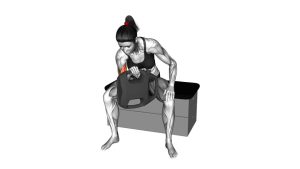
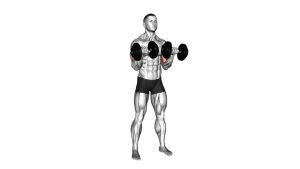
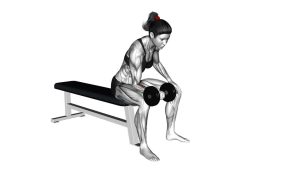
This exercise is best performed slowly with a light-to-moderate dumbbell. The goal is not to swing the weight, but to move only through the wrist while the forearm stays supported on the thigh. A clean neutral wrist path helps improve forearm endurance, wrist stability, and grip control.
Quick Overview
| Body Part | Forearms |
|---|---|
| Primary Muscle | Forearm flexors |
| Secondary Muscle | Brachioradialis, wrist stabilizers, grip muscles |
| Equipment | Dumbbell and flat bench |
| Difficulty | Beginner |
Sets & Reps (By Goal)
- Forearm endurance: 2–3 sets × 15–20 reps per side
- Grip strength: 3–4 sets × 8–12 reps per side
- Muscle growth: 3–4 sets × 10–15 reps per side
- Warm-up / wrist prep: 1–2 sets × 12–15 light reps
Progression rule: Increase reps first, then increase dumbbell weight only when every rep stays slow, smooth, and pain-free.
Setup / Starting Position
- Sit on a flat bench with your feet planted firmly on the floor.
- Hold a dumbbell with a neutral grip, thumb facing upward.
- Rest your forearm on your thigh with your wrist slightly past the knee.
- Keep your elbow anchored and your upper arm relaxed.
- Start with the wrist in a neutral or slightly lowered position.
Execution (Step-by-Step)
- Brace lightly: Keep your torso still and your forearm pressed gently into your thigh.
- Lower the dumbbell: Allow the wrist to move downward under control.
- Pause briefly: Feel a mild stretch through the forearm without forcing the joint.
- Curl upward: Raise the dumbbell by moving only at the wrist.
- Squeeze at the top: Hold briefly while maintaining a neutral grip.
- Return slowly: Lower the dumbbell with control and repeat.
Pro Tips & Common Mistakes
- Use light weight first: Wrist curls require control, not heavy swinging.
- Keep the grip neutral: Do not rotate the palm up or down during the rep.
- Do not lift the forearm: Keep it supported on your thigh the entire time.
- Avoid rushing: Use a slow tempo to improve forearm tension.
- Control the bottom: Do not let the dumbbell drop suddenly.
- Train both sides evenly: Match reps and tempo on each arm.
FAQ
What muscles does the Dumbbell Seated Neutral Wrist Curl work?
It mainly targets the forearm flexors, while also involving the brachioradialis, wrist stabilizers, and grip muscles.
Is this exercise good for grip strength?
Yes. Because the dumbbell must be controlled in a neutral hand position, it helps improve grip endurance, wrist stability, and forearm control.
Should I use heavy dumbbells?
No. Start light and focus on clean wrist movement. Heavy loads often cause elbow lifting, swinging, or wrist discomfort.
Can beginners do this exercise?
Yes. It is beginner-friendly when performed with light weight, slow tempo, and a pain-free range of motion.
How often should I train this exercise?
Most people can include it 2–3 times per week as part of forearm, arm, pull-day, or grip-strength training.
Recommended Equipment
- Adjustable Dumbbells — ideal for progressive forearm and wrist training
- Rubber Hex Dumbbells — stable, durable dumbbells for home or gym workouts
- Flat Workout Bench — provides a stable seated position for strict wrist curls
- Wrist Wraps — optional support for lifters who need extra wrist stability
- Grip Strengthener — useful accessory for improving hand and forearm strength