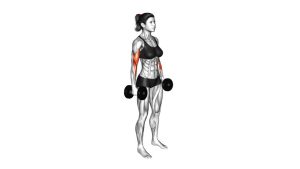
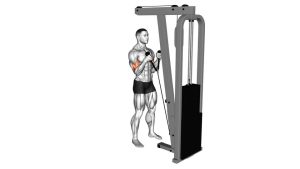
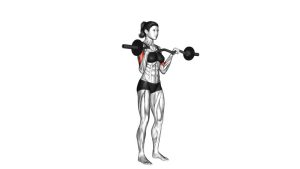
Cable Standing Reverse-Grip Curl: Form, Muscles, Sets, Tips & FAQ
Learn the Cable Standing Reverse-Grip Curl with a straight bar to build brachioradialis, forearms, and arm strength. Includes setup, execution, sets, mistakes, FAQs, and equipment.
Cable Standing Reverse-Grip Curl
This exercise is especially useful for lifters who want thicker forearms, stronger grip support, and better arm balance. The straight bar keeps both hands fixed in a pronated position, which challenges wrist stability and reduces the amount of assistance the biceps can provide compared with an underhand curl. The goal is not to swing the weight upward, but to curl smoothly while keeping the elbows close to the sides and the wrists strong.
The cable version is also joint-friendly when performed correctly because resistance stays smooth and consistent. Instead of losing tension at certain parts of the movement like some free-weight variations, the cable keeps the target muscles active during both the lifting and lowering phases. This makes it a great choice for bodybuilding, forearm development, warm-up work, and accessory training after heavier pulling exercises.
Quick Overview
| Body Part | Forearms |
|---|---|
| Primary Muscle | Brachioradialis |
| Secondary Muscle | Biceps brachii, brachialis, wrist extensors, grip muscles |
| Equipment | Cable machine with straight bar attachment |
| Difficulty | Beginner to Intermediate |
Sets & Reps (By Goal)
- Forearm hypertrophy: 3–4 sets × 10–15 reps with a controlled 2–3 second lowering phase.
- Arm strength support: 3–5 sets × 6–10 reps using a heavier but still strict load.
- Grip and wrist stability: 2–4 sets × 12–20 reps with light-to-moderate weight and no wrist collapse.
- Warm-up or activation: 2 sets × 12–15 reps before back, biceps, or pulling workouts.
- Finisher: 2–3 sets × 15–25 reps at the end of an arm workout for a forearm pump.
Progression rule: Add reps first, then increase weight gradually. If your elbows drift forward, shoulders shrug, or wrists bend backward, the load is too heavy.
Setup / Starting Position
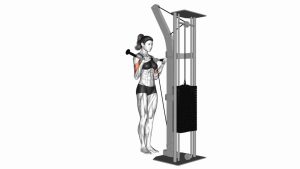
- Attach a straight bar: Clip a straight bar to the low pulley of a cable machine.
- Choose the right load: Start lighter than a normal curl because the pronated grip makes the movement more demanding.
- Grip the bar overhand: Hold the bar with palms facing down, hands about shoulder-width apart.
- Stand tall: Face the cable machine with feet hip-width apart, chest lifted, ribs controlled, and core lightly braced.
- Set your elbows: Keep your elbows close to your sides and slightly in front of the torso if needed for comfort.
- Lock in the wrists: Keep wrists neutral and firm. Do not let the cable pull the knuckles upward or backward.
- Start with arms extended: Allow the elbows to straighten fully without relaxing the shoulders or losing posture.
Before starting the first rep, make sure the cable line is smooth and the weight stack is not bouncing. Your body should stay quiet while the forearms and elbows do the work.
Execution (Step-by-Step)
- Brace and stabilize: Stand tall, tighten your core lightly, and keep your shoulders down and relaxed.
- Begin the curl: Pull the straight bar upward by bending your elbows. Keep the palms facing down throughout the movement.
- Keep elbows controlled: Your elbows should stay close to your torso. Avoid letting them swing forward to help lift the weight.
- Maintain wrist position: Keep the knuckles in line with the forearms. Do not allow the wrists to collapse backward.
- Reach the top: Curl until your forearms approach vertical or the bar reaches around upper-abdomen to lower-chest height.
- Squeeze briefly: Pause for a moment at the top and feel the forearms and brachioradialis working.
- Lower with control: Slowly extend the elbows and let the bar return to the starting position without dropping the stack.
- Reset each rep: At the bottom, keep tension in the arms and repeat without swinging your torso.
Pro Tips & Common Mistakes
Pro Tips
- Use a moderate grip width: Shoulder-width usually feels strongest and most natural for the wrists.
- Control the eccentric: Lowering slowly is one of the best ways to build forearm strength and tendon tolerance.
- Think “elbows bend, wrists stay locked”: This cue helps prevent the movement from turning into a wrist extension exercise.
- Keep the bar close: Let the bar travel in a clean path instead of drifting far away from the body.
- Train it after heavy pulling: This exercise works well after rows, pulldowns, deadlifts, or biceps curls.
Common Mistakes
- Using too much weight: Heavy loads often cause swinging, elbow drift, and wrist strain.
- Letting the wrists bend back: This reduces control and can irritate the wrists or forearm tendons.
- Shrugging the shoulders: Keep the traps relaxed so the forearms and elbow flexors stay the focus.
- Cutting the range short: Lower the bar until the elbows are extended while maintaining tension.
- Rushing the negative: Dropping the weight removes one of the most valuable parts of the exercise.
FAQ
What muscles does the Cable Standing Reverse-Grip Curl work?
It primarily targets the brachioradialis, a major forearm muscle involved in elbow flexion. It also works the brachialis, biceps brachii, wrist extensors, and grip muscles.
Is the reverse-grip curl better for forearms than regular curls?
Yes, for forearm emphasis. Regular curls place more focus on the biceps, while the pronated grip in reverse curls increases the demand on the brachioradialis and forearm stabilizers.
Should I use heavy weight on this exercise?
Use enough weight to challenge the forearms, but not so much that your wrists bend, shoulders shrug, or body swings. Strict form is more important than heavy loading.
Can beginners do this exercise?
Yes. Beginners can perform it safely with light weight, controlled tempo, and proper wrist alignment. Start with higher reps and focus on clean technique.
Why do my wrists hurt during reverse curls?
Wrist discomfort usually comes from using too much weight, gripping too tightly, or allowing the wrists to extend backward. Reduce the load and keep the wrists neutral.
Can I use an EZ bar attachment instead of a straight bar?
Yes. An EZ bar cable attachment may feel more comfortable for some wrists. However, the straight bar creates a stricter pronated position and stronger forearm challenge.
Recommended Equipment
- Cable Machine Straight Bar Attachment — essential for performing the strict straight-bar reverse-grip curl.
- Wrist Wraps for Lifting — useful for extra wrist support during heavier cable curl variations.
- Liquid Chalk — improves grip on the straight bar without needing to over-squeeze.
- Forearm Strengthener — helpful for building additional wrist, grip, and forearm endurance.
- Home Cable Machine / Pulley System — allows you to perform cable curls, triceps work, rows, and other accessory movements at home.
Choose equipment that allows smooth cable movement and secure attachment. Avoid cheap bars or clips that feel unstable under load.