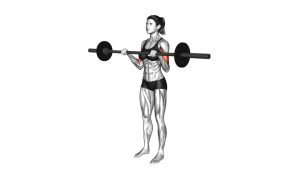
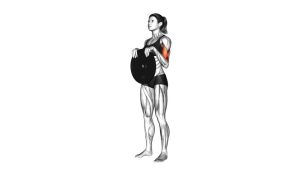
Barbell Wrist Curl: Proper Form, Sets, Tips & Forearm Training Guide
Learn how to perform the Barbell Wrist Curl with proper form to build stronger forearms, improve wrist flexion strength, and increase grip support. Includes setup, execution, sets, mistakes, FAQs, and equipment.
Barbell Wrist Curl
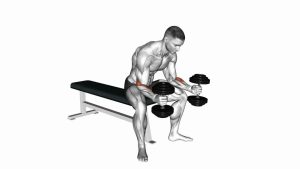
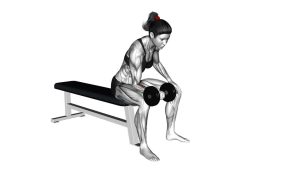
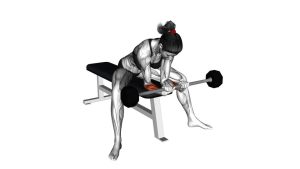
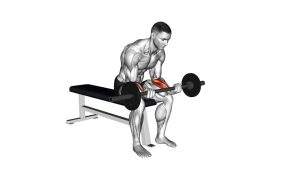
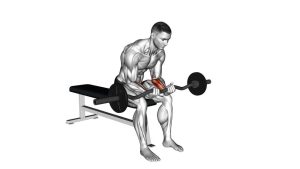
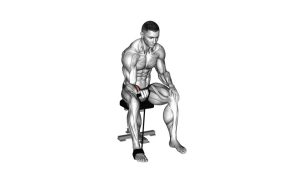
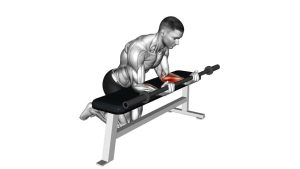
In the demonstrated exercise, the lifter sits with the forearms supported on the thighs while holding a barbell with an underhand grip. The wrists begin in a lowered, extended position, allowing the bar to sit slightly toward the fingers. From there, the wrists flex upward until the forearm flexors reach a strong contraction. The bar is then lowered slowly back into the stretched position. This controlled range of motion makes the barbell wrist curl highly effective for training the muscles on the palm-side of the forearm.
This exercise is especially useful for lifters who want thicker forearms, stronger wrists, and better grip endurance. It can be used at the end of an arm workout, after back training, or as part of a dedicated forearm routine. Because the wrist joint is small, this exercise should be performed with moderate weight, clean technique, and zero ego. The goal is not to swing the bar or overload the wrists aggressively. The goal is to create direct, controlled tension through the forearm flexors.
Quick Overview
| Body Part | Forearms |
|---|---|
| Primary Muscle | Wrist flexors, especially flexor carpi radialis, flexor carpi ulnaris, and finger flexors |
| Secondary Muscle | Grip muscles, wrist stabilizers, brachioradialis, and small forearm stabilizers |
| Equipment | Barbell and bench or stable seated support |
| Difficulty | Beginner to Intermediate |
Sets & Reps (By Goal)
- Forearm hypertrophy: 3–4 sets × 12–20 reps with a controlled tempo and strong squeeze at the top.
- Strength support: 3–5 sets × 8–12 reps using moderate weight while keeping the wrists controlled.
- Grip endurance: 2–4 sets × 20–30 reps with lighter weight and constant tension.
- Beginner technique practice: 2–3 sets × 10–15 reps using a light barbell or EZ bar.
- Finisher after arm/back training: 2 sets × 15–25 reps with short rest and strict form.
Progression rule: Add reps first before increasing load. Once you can complete the top end of your rep range with smooth wrist motion and no bouncing, increase the weight slightly.
Setup / Starting Position
- Sit on a flat bench: Place your feet firmly on the floor and lean slightly forward.
- Hold the barbell underhand: Use a supinated grip with palms facing upward.
- Support your forearms: Rest your forearms on your thighs or across a bench, allowing the wrists to hang just past the knees or edge.
- Keep elbows stable: Your elbows and forearms should remain fixed throughout the set.
- Start in the stretch: Let the wrists lower carefully so the bar moves toward the fingers without losing control.
- Brace lightly: Keep your torso steady, shoulders relaxed, and neck neutral.
The starting position should feel secure. Your forearms must be supported enough that the wrist joint is the only area moving. If the elbows slide, shoulders lift, or torso rocks, the load is probably too heavy or your setup is not stable enough.
Execution (Step-by-Step)
- Begin from the lowered position: Allow the wrists to extend downward under control while maintaining your grip on the bar.
- Curl the wrists upward: Flex the wrists by pulling the palms toward the forearms. Do not bend the elbows or lift the forearms.
- Squeeze at the top: Pause briefly when the wrists reach full flexion and the forearms feel fully contracted.
- Lower slowly: Reverse the movement with control, allowing the wrists to extend back down.
- Use full but comfortable range: Let the bar travel low enough to stretch the forearm flexors, but never force the wrists into painful extension.
- Repeat smoothly: Keep each rep consistent, controlled, and isolated at the wrist joint.
Pro Tips & Common Mistakes
Pro Tips
- Use controlled reps: A 2-second lift and 2–3-second lower works better than fast bouncing.
- Let the bar roll slightly: At the bottom, allowing the bar to move toward the fingers can increase stretch and activation.
- Keep the forearms locked down: The less your elbows move, the more direct tension goes into the wrist flexors.
- Train high reps: Forearms often respond well to moderate-to-high rep ranges and short rest periods.
- Pair with reverse wrist curls: Balance wrist flexor work with wrist extensor training for healthier forearm development.
Common Mistakes
- Using too much weight: Heavy loading often causes shortened range, wrist pain, or bouncing.
- Lifting the elbows: If the forearms rise off the thighs, the movement loses isolation.
- Rushing the lowering phase: Dropping the bar removes tension and increases joint stress.
- Overextending the wrists: A stretch is useful, but forcing the joint too far can irritate the wrist.
- Death-gripping the bar: Grip firmly, but do not create unnecessary tension in the hands, shoulders, or neck.
FAQ
What muscles does the barbell wrist curl work?
The barbell wrist curl mainly targets the forearm flexors, including flexor carpi radialis, flexor carpi ulnaris, and the finger flexors. These muscles help flex the wrist, support grip strength, and contribute to thicker-looking forearms.
Should I use heavy weight on barbell wrist curls?
Not usually. This is a small-joint isolation movement, so moderate weight with strict control is better than heavy weight with poor form. If your elbows lift, wrists hurt, or range of motion becomes short, the bar is too heavy.
How often should I train barbell wrist curls?
Most lifters can train wrist curls 1–3 times per week depending on recovery. Start with 2–4 sets once or twice weekly, then increase volume gradually if your wrists and elbows feel good.
Are barbell wrist curls good for grip strength?
Yes, they can support grip strength by strengthening the wrist and finger flexors. However, for complete grip development, combine them with carries, hangs, deadlift holds, grippers, and reverse wrist curls.
Can beginners do this exercise?
Yes. Beginners can perform barbell wrist curls safely if they start light, move slowly, and avoid forcing the wrists into painful positions. An EZ bar or light fixed barbell may feel more comfortable for some beginners.
Recommended Equipment
- Standard Barbell — the main tool for classic seated barbell wrist curls.
- EZ Curl Bar — a wrist-friendly alternative if a straight bar feels uncomfortable.
- Adjustable Weight Bench — useful for stable forearm support and better setup control.
- Barbell Weight Plates — allows small, progressive loading for forearm strength gains.
- Wrist Wraps — optional support for lifters who need extra wrist stability during training.
Tip: For wrist curls, smaller weight jumps are best. The forearms respond well to control, volume, and consistency rather than maximum load.