Dumbbell Reverse-Grip Biceps Curl: Forearm Form, Sets, Tips & FAQ
Learn the Dumbbell Reverse-Grip Biceps Curl to build forearms, brachioradialis, and arm strength. Includes setup, execution, sets by goal, mistakes, FAQs, and equipment.
Dumbbell Reverse-Grip Biceps Curl
This exercise is especially useful for people who want stronger forearms, better grip support, and more balanced arm development. Unlike a standard dumbbell curl, the reverse grip reduces the advantage of the biceps and forces the forearms and brachialis to work harder.
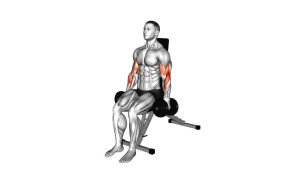
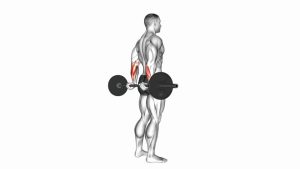
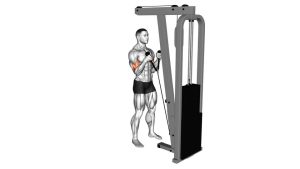
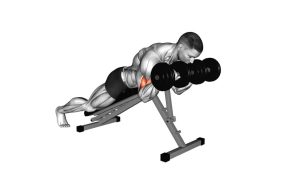
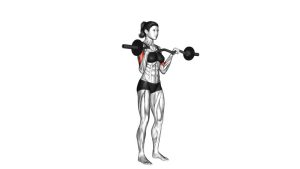
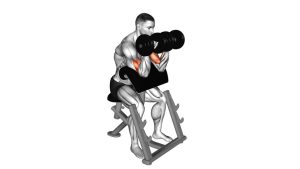
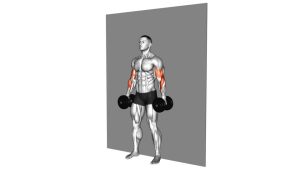
The video shows a clean, controlled rep pattern: the dumbbells start by the sides, the elbows stay close to the torso, the wrists remain straight, and the weight is lifted without swinging the body. The lowering phase is also controlled, which is important because the eccentric portion creates strong tension through the forearms.
Quick Overview
| Body Part | Forearms |
|---|---|
| Primary Muscle | Brachioradialis |
| Secondary Muscle | Brachialis, biceps brachii, wrist extensors, grip muscles |
| Equipment | Pair of dumbbells |
| Difficulty | Beginner to Intermediate |
Sets & Reps (By Goal)
- Forearm strength: 3–5 sets × 6–10 reps with controlled form and heavier dumbbells.
- Forearm hypertrophy: 3–4 sets × 10–15 reps with a slow lowering phase.
- Grip endurance: 2–4 sets × 15–20 reps using light-to-moderate dumbbells.
- Arm accessory work: 2–3 sets × 10–12 reps after main biceps or back training.
- Beginner practice: 2–3 sets × 8–10 reps focusing on wrist alignment and elbow control.
Progression rule: Increase reps first, then increase dumbbell weight. If your wrists bend, shoulders swing, or elbows drift forward excessively, the load is too heavy.
Setup / Starting Position
- Stand tall: Place your feet about hip-width to shoulder-width apart with knees softly unlocked.
- Hold the dumbbells: Grip one dumbbell in each hand using a pronated grip, palms facing backward/down.
- Set your arms: Let the dumbbells hang near your thighs with elbows close to your sides.
- Brace lightly: Keep your ribs stacked, core engaged, and torso still.
- Lock the wrist position: Keep the knuckles, wrist, and forearm in a straight line.
- Relax the shoulders: Avoid shrugging or rolling the shoulders forward before the curl begins.
A good starting position should feel stable and quiet. The only major joint moving during the rep should be the elbow.
Execution (Step-by-Step)
- Start from full control: Stand upright with both dumbbells hanging at arm’s length.
- Curl upward: Bend your elbows and lift the dumbbells toward the front of your body.
- Keep the grip pronated: Do not rotate into a normal curl. Palms should stay facing down/back throughout.
- Keep elbows close: Your upper arms should stay mostly still beside your torso.
- Reach the top: Curl until your forearms are strongly contracted and the dumbbells approach the upper-abdomen/lower-chest area.
- Squeeze briefly: Pause for a short moment without letting the shoulders take over.
- Lower slowly: Control the dumbbells back down until the elbows are extended again.
- Reset before the next rep: Avoid bouncing at the bottom. Recheck wrist position before continuing.
Pro Tips & Common Mistakes
Pro Tips
- Lead with the forearms: Think about lifting through the top of the forearm, not just curling with the biceps.
- Keep the wrists neutral: A straight wrist keeps tension where you want it and protects the joint.
- Lower slower than you lift: A controlled eccentric increases forearm tension and improves muscle control.
- Use moderate weight: Reverse curls usually require less weight than standard biceps curls.
- Keep your elbows glued: Elbow movement turns the exercise into a shoulder-assisted swing.
- Pause at the top: A small squeeze improves control and prevents rushing through the hardest part.
Common Mistakes
- Using too much weight: Heavy dumbbells often cause swinging, wrist collapse, and poor range of motion.
- Bending the wrists backward: This removes tension from the target muscles and may irritate the wrist.
- Turning it into a regular curl: Rotating the palms upward changes the exercise and reduces forearm emphasis.
- Shrugging the shoulders: Keep traps relaxed so the arms and forearms do the work.
- Dropping the weight down: The lowering phase should be controlled, not rushed.
- Cutting the bottom short: Return close to full elbow extension without losing tension or bouncing.
FAQ
What muscles does the Dumbbell Reverse-Grip Biceps Curl work?
It mainly targets the brachioradialis, a major forearm muscle. It also works the brachialis, biceps brachii, wrist extensors, and grip muscles.
Is this exercise more for biceps or forearms?
It trains both, but the reverse grip places more emphasis on the forearms and brachioradialis compared with a standard supinated dumbbell curl.
Should I go heavy on reverse-grip curls?
Use a weight you can control with straight wrists and no body swing. This exercise is usually best with light-to-moderate dumbbells and strict form.
Why do my wrists hurt during reverse curls?
Wrist discomfort often comes from using too much weight or letting the wrists bend backward. Reduce the load, keep the wrists neutral, and move slowly.
Can beginners do Dumbbell Reverse-Grip Biceps Curls?
Yes. Beginners can do this exercise safely by starting light, keeping the elbows close, and focusing on clean wrist alignment.
How often should I train reverse-grip curls?
Most people can train them 1–3 times per week depending on total arm, back, and grip volume. Allow recovery if your forearms feel overly sore or your grip strength drops.
Recommended Equipment
- Adjustable Dumbbells — ideal for progressing reverse curls without needing many separate dumbbell pairs.
- Hex Dumbbell Set — stable, durable option for strict arm and forearm training.
- Weightlifting Wrist Wraps — helpful for wrist support if you struggle to keep a neutral position.
- Forearm Grip Strengthener — useful accessory for improving grip endurance and forearm strength.
- Exercise Mat for Home Gym — provides a clean, stable training space for dumbbell workouts at home.
Tip: For this exercise, the best equipment choice is not the heaviest dumbbell. Choose a load that allows clean wrist alignment, full control, and smooth reps from start to finish.