Dumbbell One-Arm Standing Hammer Curl: Form, Muscles Worked, Sets, Tips & FAQ
Learn how to do the Dumbbell One-Arm Standing Hammer Curl with proper form. Discover muscles worked, setup, step-by-step execution, sets by goal, common mistakes, FAQs, and recommended equipment.
Dumbbell One-Arm Standing Hammer Curl
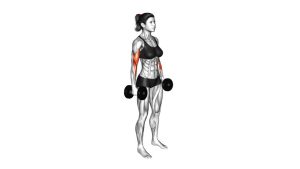
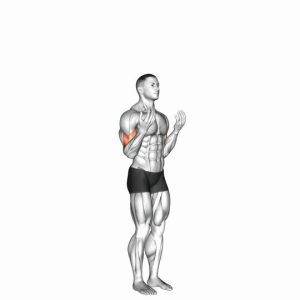
This exercise works best when you focus on strict elbow flexion instead of body momentum. The dumbbell should move smoothly from your side toward shoulder height while your upper arm stays mostly still. You should feel tension through the front of the upper arm and upper forearm, not in your lower back, neck, or shoulders. Since it is performed one arm at a time, it is also a great choice for cleaning up strength imbalances between your left and right sides.
Quick Overview
| Body Part | Biceps |
|---|---|
| Primary Muscle | Brachialis |
| Secondary Muscle | Brachioradialis, Biceps Brachii, Forearm Flexors |
| Equipment | 1 Dumbbell |
| Difficulty | Beginner to Intermediate |
Sets & Reps (By Goal)
- Muscle growth: 3–4 sets × 8–12 reps per arm, 60–90 sec rest
- Strength-focused arm work: 4–5 sets × 6–8 reps per arm, 90–120 sec rest
- Technique / control: 2–3 sets × 10–15 reps per arm, lighter weight, 45–60 sec rest
- Finisher / pump work: 2–3 sets × 12–15 reps per arm, short rest, controlled tempo
Progression rule: Add reps first, then increase the dumbbell load once you can complete all prescribed reps with strict form, no torso swing, and a controlled eccentric.
Setup / Starting Position
- Stand tall: Place your feet about hip-width to shoulder-width apart and brace your core.
- Hold one dumbbell at your side: Use a neutral grip so your palm faces inward toward your thigh.
- Keep the elbow close: Let the working arm hang naturally with a slight softness at the elbow, not locked out aggressively.
- Set your posture: Chest up, shoulders relaxed, and head neutral. Avoid leaning forward or backward.
- Free arm position: Let your non-working arm hang naturally or place it lightly on your hip for balance.
Tip: Before the first rep, lightly squeeze the handle and keep the wrist straight. This helps maintain a stable neutral grip through the entire curl.
Execution (Step-by-Step)
- Start from the bottom: The dumbbell hangs beside your thigh with the palm facing inward.
- Curl the dumbbell up: Flex at the elbow and bring the weight upward in a smooth arc while keeping the upper arm mostly fixed.
- Maintain the hammer grip: Do not rotate the palm up. Keep the thumb pointing upward throughout the rep.
- Lift to the top under control: Bring the dumbbell toward shoulder height without letting the shoulder roll forward or the elbow drift excessively.
- Squeeze briefly: Pause for a moment at peak contraction while keeping tension in the arm.
- Lower slowly: Reverse the motion with control until the arm is fully extended again.
- Repeat on one side: Finish the full set on one arm or alternate arms depending on your training style.
Pro Tips & Common Mistakes
- Keep the wrist neutral: Don’t curl the wrist inward or backward to “help” the rep.
- Control the lowering phase: The eccentric portion is where a lot of growth stimulus happens.
- Don’t swing the torso: Avoid using hip drive or leaning back to move the dumbbell.
- Keep the elbow close to your side: A little natural movement is fine, but excessive elbow drift turns it into a different curl pattern.
- Use full practical range: Lower to a full stretch and curl high enough to fully contract, without sacrificing posture.
- Train both sides evenly: Start with your weaker arm if one side is less coordinated or noticeably weaker.
- Match the load to the goal: Moderate weights usually work best for clean hammer curls and arm hypertrophy.
FAQ
What muscles does the one-arm standing hammer curl work?
It primarily targets the brachialis and brachioradialis, while the biceps brachii also assists. This makes it excellent for adding thickness to the upper arms and forearms.
Why use a hammer grip instead of a regular curl grip?
The neutral grip changes the emphasis slightly toward the brachialis and brachioradialis, and many lifters find it more comfortable on the wrists and elbows than a fully supinated curl.
Should I alternate arms or do all reps on one side first?
Both are effective. Doing all reps on one side first can improve focus and control, while alternating arms can make the set feel more rhythmic and time-efficient.
How heavy should I go on hammer curls?
Use a weight that allows you to move through the full rep without torso swing or wrist breakdown. For most people, strict medium-weight reps are more productive than overly heavy cheat reps.
Can beginners do this exercise?
Yes. It is one of the most beginner-friendly dumbbell arm exercises because the grip is natural, the movement pattern is simple, and it is easy to learn with light to moderate weight.
Recommended Equipment
- Adjustable Dumbbell — ideal for progressive overload without needing multiple separate dumbbells
- Weightlifting Wrist Wraps — useful if you want extra wrist support during heavier arm training
- Resistance Band Set — great for warm-ups, arm finishers, and adding extra elbow-friendly volume
- Adjustable Weight Bench — helpful if you want to pair hammer curls with incline curls, seated curls, or other dumbbell arm work
- Exercise Mat — adds comfort and grip for home workouts, especially when training on hard floors
Tip: For most lifters, the most useful purchase here is a quality adjustable dumbbell, since it lets you progress steadily while keeping your setup compact.