Barbell Side Bend: Proper Form, Oblique Benefits, Sets, Tips & FAQ
Learn how to perform the Barbell Side Bend with proper form to strengthen the obliques, improve lateral core control, and build waist stability. Includes setup, execution, sets, mistakes, FAQs, and equipment.
Barbell Side Bend
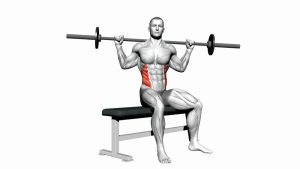
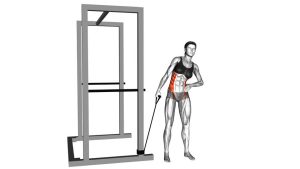
This exercise is especially useful for building stronger side-body control, improving core awareness, and strengthening the waist muscles that help resist unwanted side bending during loaded movements. In the video, the movement is performed with a controlled standing posture and a steady side bend pattern. The athlete keeps the hips stable, avoids twisting, and moves mainly through the torso.
Because the barbell adds load across the upper body, this version requires more control than a light dumbbell side bend. Keep the movement slow, avoid forcing the range, and focus on clean side-to-side mechanics. You should feel the obliques working, not the lower back pinching.
Quick Overview
| Body Part | Obliques |
|---|---|
| Primary Muscle | Obliques |
| Secondary Muscle | Quadratus lumborum, deep core stabilizers, spinal stabilizers |
| Equipment | Barbell |
| Difficulty | Beginner to Intermediate |
Sets & Reps (By Goal)
- Core control and technique: 2–3 sets × 10–12 reps per side with a light barbell and slow tempo.
- Oblique strength: 3–4 sets × 8–12 reps per side with moderate load and strict control.
- Waist endurance: 2–3 sets × 12–20 reps per side using a light load and continuous smooth reps.
- Warm-up or activation: 1–2 sets × 8–10 reps per side before heavier core or lower-body training.
Progression rule: Increase range control and tempo quality before adding more weight. If your hips shift, shoulders rotate, or the movement becomes bouncy, the load is too heavy.
Setup / Starting Position
- Stand tall: Place your feet about hip-width to shoulder-width apart with your weight balanced evenly across both feet.
- Position the barbell: Hold the barbell securely across the upper back/traps, similar to a back squat position. Avoid placing it directly on the neck.
- Brace lightly: Engage your core as if preparing to absorb a gentle push, but do not hold your breath or over-stiffen the torso.
- Keep the chest open: Shoulders stay level, chest lifted, and head aligned with the spine.
- Set your hips: Keep the pelvis centered and avoid pushing the hips far to the side before the movement begins.
Tip: Start with an empty barbell or very light bar. The exercise becomes effective when the torso moves cleanly, not when the weight is heavy.
Execution (Step-by-Step)
- Begin from neutral: Stand upright with your spine long, ribs controlled, and eyes facing forward.
- Bend sideways: Slowly lower your torso to one side by creating a controlled side bend through the waist.
- Keep the movement in one plane: Do not twist your shoulders, lean forward, or rotate your chest toward the floor.
- Feel the stretch: At the bottom, the opposite side of your waist should feel lengthened, while the working side controls the load.
- Pause briefly: Hold the bottom position for a short moment without bouncing or collapsing.
- Return to upright: Contract the obliques on the opposite side to pull your torso back to the starting position.
- Reset before repeating: Stand tall again before starting the next rep or switching sides.
Pro Tips & Common Mistakes
- Move slowly: A controlled tempo keeps tension on the obliques and prevents momentum from taking over.
- Avoid twisting: The torso should bend sideways, not rotate. Keep the chest facing forward throughout the rep.
- Do not overbend: Going too deep can place unnecessary stress on the lower back. Use a comfortable range.
- Keep hips quiet: Small natural movement is fine, but large hip shifting reduces the core-training effect.
- Control the return: Do not snap back to the top. Pull yourself upright using the side abs.
- Use light-to-moderate load: Heavy side bends can quickly become sloppy and stressful on the spine.
- Breathe naturally: Exhale gently as you return upright and avoid holding your breath for every rep.
FAQ
What muscles does the Barbell Side Bend work?
The Barbell Side Bend primarily works the obliques. It also trains the quadratus lumborum, deep core stabilizers, and spinal stabilizers that help control side bending and trunk position.
Is the Barbell Side Bend good for building obliques?
Yes. When done with strict control, it can be useful for strengthening the obliques through lateral flexion. However, the movement should be performed with moderate load and clean technique instead of heavy swinging.
Should I go heavy on Barbell Side Bends?
Not usually. This exercise works best with light-to-moderate weight, slow reps, and a controlled range of motion. Using too much load often causes hip shifting, spinal compression, or momentum.
Why do I feel this in my lower back?
A mild feeling around the side of the lower back can happen because the quadratus lumborum assists the movement. However, sharp pain, pinching, or discomfort in the spine usually means the range is too large, the load is too heavy, or the movement is not controlled.
Can beginners do the Barbell Side Bend?
Beginners can perform it, but they should start with a very light bar or practice the movement first using bodyweight or a light dumbbell. Good posture, controlled tempo, and small range matter more than load.
Recommended Equipment
- Standard Barbell — the main tool for performing loaded Barbell Side Bends.
- Barbell Pad — adds comfort when placing the bar across the upper back.
- Weight Plates Set — useful for gradually increasing resistance when technique is stable.
- Weightlifting Belt — optional support for advanced lifters using moderate loads.
- Exercise Mat — helpful for warm-ups, mobility drills, and core accessory work.
Tip: Equipment should support better technique, not encourage heavier loading too soon. For this exercise, smooth control is more important than maximum resistance.