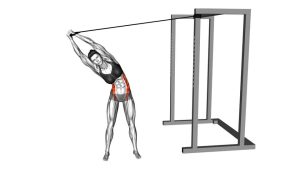
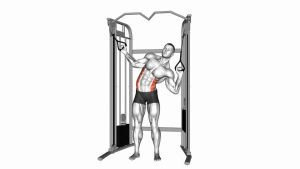
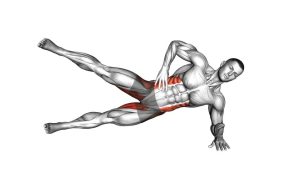
Weighted Side Bend on Stability Ball: Form, Sets, Tips & Benefits
Learn the Weighted Side Bend on Stability Ball to train obliques, improve core control, and build lateral trunk strength with safe form.
Weighted Side Bend on Stability Ball
This exercise is best used when you already understand basic side bends, side planks, and stability ball positioning. The unstable surface increases the need for balance, so every repetition should be performed with a slow tempo. Your feet should stay grounded, your hips should stay anchored into the ball, and your torso should move in a clean side-bending pattern. When done correctly, the movement targets the obliques while also challenging the quadratus lumborum and deep core stabilizers.
Quick Overview
| Body Part | Core |
|---|---|
| Primary Muscle | Obliques, especially the external and internal obliques |
| Secondary Muscle | Quadratus lumborum, transverse abdominis, spinal stabilizers, glutes, and hip stabilizers |
| Equipment | Stability ball and one dumbbell |
| Difficulty | Intermediate because balance, control, and spinal positioning are required |
Sets & Reps (By Goal)
- Core control: 2–3 sets × 8–10 reps per side using a light dumbbell and a slow tempo.
- Oblique strength: 3–4 sets × 10–12 reps per side with moderate resistance.
- Muscle endurance: 2–3 sets × 12–15 reps per side with controlled breathing.
- Beginner progression: 2 sets × 6–8 reps per side using bodyweight only before adding a dumbbell.
- Advanced control: 3 sets × 8–10 reps per side with a 1–2 second pause at the top.
Progression rule: First improve balance and range of motion. Then increase reps. Add weight only after both sides move evenly without twisting or rushing.
Setup / Starting Position
- Place the stability ball beside you: Choose a ball size that lets your hip and lower side rest comfortably on top of it.
- Position your body sideways: Lean your hip, outer thigh, and side of the torso against the ball.
- Set your feet wide: Place both feet firmly on the floor. A wider stance gives better balance and prevents rolling.
- Hold the dumbbell: Keep the dumbbell in the lower hand so it hangs naturally toward the floor.
- Stabilize the upper body: Place the opposite hand behind the head, across the chest, or on the waist.
- Stack your torso: Keep the chest open, ribs controlled, and shoulders aligned. Avoid rotating forward or backward.
- Brace lightly: Create gentle abdominal tension before the first rep. The brace should support the spine without locking your breathing.
Execution (Step-by-Step)
- Start tall on the ball: Keep your torso aligned, hips steady, and feet planted.
- Lower into the stretch: Slowly bend sideways over the ball. Let the dumbbell travel downward without pulling with the arm.
- Keep the movement lateral: Move through the side of the waist. Do not rotate your chest toward the floor or ceiling.
- Control the bottom position: Stop when you feel a comfortable stretch through the upper-side obliques.
- Lift with the obliques: Contract the working side of your waist to bring your torso back up.
- Pause briefly at the top: Squeeze the side of the core without leaning too far past neutral.
- Repeat with the same tempo: Keep every rep smooth, balanced, and quiet. Switch sides after completing all reps.
Pro Tips & Common Mistakes
- Use light weight first: The stability ball already makes the movement harder. A heavy dumbbell can quickly pull you out of position.
- Do not twist: The exercise should happen in the frontal plane. Keep your chest facing forward instead of rotating.
- Avoid bouncing off the ball: Lower smoothly, pause briefly, then lift under control.
- Keep the dumbbell passive: Your arm should act like a hook. The obliques should create the movement.
- Control your hips: Do not let the hips roll forward or backward on the ball.
- Match both sides: Use the same range, tempo, and weight on each side to reduce imbalance.
- Do not overextend at the top: Stop around neutral or slightly above neutral. Excessive side bending can irritate the lower back.
- Breathe naturally: Exhale as you lift. Inhale as you lower into the stretch.
- Use a stable base: If your feet slide, wear training shoes or place the ball on a non-slip surface.
FAQ
What muscles does the Weighted Side Bend on Stability Ball work?
It mainly works the obliques. It also trains the quadratus lumborum, transverse abdominis, spinal stabilizers, glutes, and hip stabilizers because the ball requires balance and trunk control.
Is this exercise good for building obliques?
Yes. It can build stronger obliques when performed with control and progressive resistance. However, it works best when combined with anti-rotation exercises, side planks, carries, and full core training.
Should beginners do this exercise?
Beginners can practice the bodyweight version first. The dumbbell variation is better for people who already have good balance and can control basic side bends without lower-back discomfort.
How heavy should the dumbbell be?
Start light. A weight that allows slow reps, clean balance, and no twisting is best. If the dumbbell pulls your shoulder down or makes you rush, it is too heavy.
Why use a stability ball instead of standing?
The stability ball increases range of motion and balance demand. It also supports the side of the body, making the exercise feel different from a standing dumbbell side bend.
Can this exercise hurt the lower back?
It can if you use too much weight, twist during the rep, or bend beyond your comfortable range. Keep the motion controlled and stop if you feel sharp pain or compression.
Recommended Equipment
- Stability Ball / Exercise Ball — the main support tool for performing the side bend with a larger range of motion.
- Rubber Hex Dumbbells — useful for adding progressive resistance while keeping the weight easy to control.
- Non-Slip Exercise Mat — helps prevent the ball and feet from sliding during the movement.
- Adjustable Dumbbell Set — allows small load changes as your oblique strength and control improve.
- Stability Ball Pump — keeps the ball properly inflated so the exercise feels stable and consistent.
Tip: Choose a stability ball that matches your height and allows your body to rest securely. An underinflated or oversized ball can make the exercise harder to control.