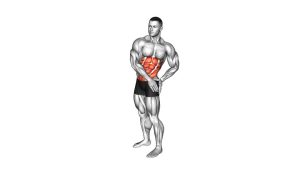
Band Twist Up-Down: Form, Core Benefits, Sets, Tips & FAQ
Learn the Band Twist Up-Down for stronger obliques, rotational core control, and better trunk stability. Includes setup, steps, tips, FAQs, and equipment.
Band Twist (Up-Down)
This exercise is useful for building rotational strength, improving core coordination, and teaching the body how to transfer force from the upper body through the trunk while the lower body stays stable. Because the resistance band pulls you back toward the anchor, the return phase also trains control. Each repetition should look smooth from the top position to the bottom position and back again.
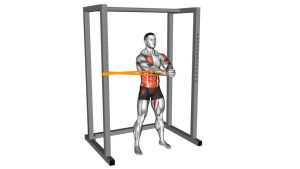
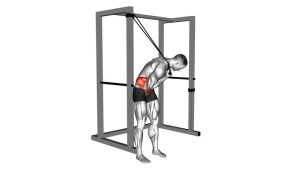
During the video movement, the lifter begins with both hands holding the band near the upper diagonal line. She rotates the torso away from the anchor and pulls the band downward across the body. At the bottom, her hands finish near the opposite hip or upper thigh. Then she returns slowly along the same path. This pattern makes the exercise a strong option for home core training, athletic warm-ups, and oblique-focused workouts.
Quick Overview
| Body Part | Core |
|---|---|
| Primary Muscle | Obliques |
| Secondary Muscle | Rectus abdominis, transverse abdominis, lower back stabilizers, shoulders, lats, glutes |
| Equipment | Resistance band and a secure anchor point |
| Difficulty | Beginner to intermediate |
Sets & Reps (By Goal)
- Core activation: 2–3 sets × 10–12 reps per side with light band tension.
- Oblique strength: 3–4 sets × 8–12 reps per side with moderate resistance.
- Muscle endurance: 2–4 sets × 12–20 reps per side using a smooth tempo.
- Athletic rotation: 3–5 sets × 6–10 reps per side with crisp but controlled execution.
- Warm-up use: 1–2 sets × 8–10 reps per side before rotational training or lifting.
Progression rule: First improve control, range, and timing. After that, increase band tension or step farther from the anchor. Do not progress by swinging faster or twisting harder.
Setup / Starting Position
- Anchor the band securely: Attach the resistance band to a stable point around upper-chest to head height, depending on the diagonal angle you want.
- Stand sideways to the anchor: Position your body so the band comes from one side and slightly above your starting hand position.
- Hold the handle with both hands: Keep your hands together and arms mostly extended, but do not lock the elbows aggressively.
- Set your stance: Place your feet about shoulder-width apart. Bend the knees slightly and keep your weight balanced through the mid-foot.
- Brace before moving: Pull the ribs down gently, tighten the abs, and keep the hips steady. Your torso should rotate, but your knees and hips should not collapse.
- Start high: Begin with the hands positioned diagonally upward near the anchor side. The band should already have light tension before the first rep starts.
Setup tip: If the band feels loose at the start, step farther from the anchor. If the band pulls you out of position, step closer or use a lighter band.
Execution (Step-by-Step)
- Start tall and braced: Keep your chest lifted, ribs controlled, shoulders relaxed, and hands high on the anchor side.
- Begin the twist from the trunk: Rotate your torso away from the anchor while your hands follow the diagonal path.
- Pull down across the body: Move your hands from the high starting point toward the opposite hip or upper thigh.
- Keep the arms connected to the core: Your arms guide the band, but your obliques should drive the movement.
- Control the bottom position: Pause briefly when your hands reach the low diagonal finish. Do not bounce or over-rotate.
- Return slowly: Let the band pull you back only as fast as you can control. Follow the same diagonal line back to the starting position.
- Reset before the next rep: Re-brace your abs, check your posture, and repeat with the same controlled rhythm.
Pro Tips & Common Mistakes
- Lead with the core: Rotate through your torso first. Avoid simply dragging the band with your arms.
- Keep the hips quiet: A small amount of hip movement is natural, but excessive hip turning reduces core demand.
- Use a clean diagonal path: Move from high to low in a controlled line. Do not let the band drift randomly forward or backward.
- Avoid lower-back twisting: Brace the abs and rotate through the trunk without forcing the lumbar spine into an aggressive twist.
- Do not shrug: Keep the shoulders down. If your traps take over, the band may be too heavy.
- Control the return: The upward return is just as important as the downward pull. Resist the band instead of letting it snap you back.
- Breathe with rhythm: Exhale during the downward twist and inhale as you return to the top.
- Train both sides evenly: Complete the same number of reps on each side to avoid rotational imbalance.
FAQ
What muscles does the Band Twist Up-Down work?
The main muscles are the obliques. The rectus abdominis, transverse abdominis, lower back stabilizers, shoulders, lats, and glutes also assist by helping you rotate, brace, and control the band.
Is the Band Twist Up-Down good for abs?
Yes. It is especially useful for training the sides of the abs and improving rotational core strength. However, it works best when performed with control instead of speed.
Should my hips move during the exercise?
Your hips may rotate slightly, but they should not swing aggressively. Keep the lower body stable so the core does most of the work.
How high should I anchor the band?
Anchor the band around upper-chest, shoulder, or head height. A higher anchor creates a stronger downward diagonal pattern, similar to a band woodchopper variation.
Can beginners do this exercise?
Yes. Beginners should start with a light band, short range of motion, and slow tempo. The movement should feel controlled and stable from start to finish.
What is the biggest mistake with this movement?
The most common mistake is turning it into an arm swing. The hands move the band, but the core should guide the rotation and control the return.
Recommended Equipment
- Resistance Bands with Handles — best for smooth standing twists and controlled diagonal core work.
- Door Anchor for Resistance Bands — helps create a secure high or mid-height anchor point at home.
- Loop Resistance Bands Set — useful for lighter core drills, warm-ups, and accessory training.
- Non-Slip Exercise Mat — improves foot grip and stability during standing band exercises.
- Resistance Band Wall Anchor — ideal for a permanent home gym setup with multiple anchor heights.
Equipment tip: Choose a band that lets you control every rep. If the band pulls your shoulders forward or makes you lose balance, reduce the resistance.