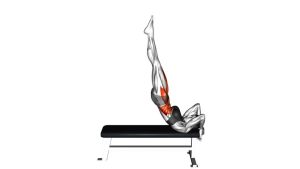
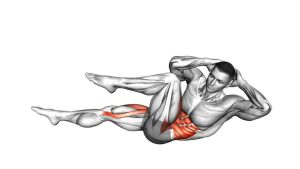
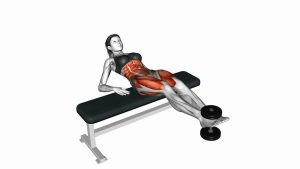
Floor Crunch Feet on Bench: Proper Form, Ab Benefits, Sets & Tips
Learn the Floor Crunch Feet on Bench for stronger abs, better control, and reduced hip flexor cheating. Includes form, sets, tips, FAQs, and equipment.
Floor Crunch Feet on Bench
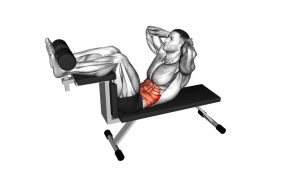
This crunch variation is excellent for beginners, home workouts, warm-ups, and focused ab training. The bench-supported leg position gives the body a stable base, so the movement can stay short, smooth, and precise. You should feel the abs working as the ribs move slightly toward the pelvis. The neck should stay relaxed, the elbows should stay open, and the hands should support the head without pulling it forward.
Quick Overview
| Body Part | Core |
|---|---|
| Primary Muscle | Rectus abdominis |
| Secondary Muscle | Obliques, deep core stabilizers, hip flexors lightly as stabilizers |
| Equipment | Flat bench or sturdy elevated surface |
| Difficulty | Beginner |
Sets & Reps (By Goal)
- Beginner ab control: 2–3 sets × 10–15 reps with a slow, clean tempo.
- Muscle endurance: 3–4 sets × 15–25 reps with 30–45 seconds rest.
- Core activation warm-up: 1–2 sets × 8–12 reps before larger compound lifts.
- Hypertrophy-focused abs: 3–4 sets × 12–20 reps with a 1–2 second squeeze at the top.
- Posture and control practice: 2–3 sets × 8–12 slow reps, focusing on rib-to-pelvis movement.
Progression rule: First improve control, then add reps. After that, increase time under tension by slowing the lowering phase or pausing briefly at the top.
Setup / Starting Position
- Lie on your back: Position your body on the floor with your hips close enough to the bench so your lower legs can rest comfortably on top.
- Place your feet on the bench: Keep your knees and hips bent around 90 degrees. Let the calves or feet rest securely on the bench.
- Set your spine: Keep the lower back gently connected to the floor without forcing a hard flattening position.
- Support your head: Place your hands lightly behind the head. Keep the elbows open rather than pulling them toward the face.
- Prepare the core: Exhale gently, brace the abs, and think about drawing the ribs slightly down toward the pelvis.
The bench should feel stable and secure. Avoid using a rolling chair, soft couch edge, or unstable object.
Execution (Step-by-Step)
- Start from a controlled position: Keep the legs supported, elbows open, and eyes looking slightly upward.
- Exhale before lifting: Begin the rep by tightening the abs and gently pulling the ribs toward the pelvis.
- Lift the shoulders: Curl the head, shoulders, and upper back off the floor. Keep the movement short and controlled.
- Pause at the top: Squeeze the abs for 1 second without yanking the neck or pushing the chin too far forward.
- Lower slowly: Return the upper back toward the floor with control. Do not drop suddenly or relax completely between reps.
- Repeat with rhythm: Use smooth reps. Each rep should look the same from start to finish.
Pro Tips & Common Mistakes
- Think ribs to pelvis: A good crunch is a small spinal flexion movement, not a full sit-up.
- Do not pull the head: Your hands support the head only. The abs should create the lift.
- Keep elbows wide: Collapsing the elbows forward often leads to neck pulling and poor control.
- Avoid momentum: Fast reps reduce abdominal tension and make the exercise less effective.
- Control the lowering phase: The descent builds strength when you resist gravity instead of dropping down.
- Keep the feet relaxed: Pressing hard into the bench can shift work away from the abs.
- Use a short range: You only need to lift the shoulder blades. More height does not always mean better tension.
- Breathe with the movement: Exhale as you crunch up, then inhale lightly as you return.
FAQ
What muscles does the Floor Crunch Feet on Bench work?
The main muscle is the rectus abdominis, especially the upper portion during the curling action. The obliques and deep core muscles also help stabilize the torso while the legs stay supported on the bench.
Is this better than a regular floor crunch?
It can be better for many beginners because the bench-supported leg position helps reduce hip flexor involvement. This makes it easier to focus on abdominal contraction instead of swinging or pulling from the hips.
Should my lower back stay on the floor?
Yes. Your lower back should stay stable and comfortable. Do not arch aggressively at the bottom or forcefully flatten the spine. Aim for a controlled position that allows your abs to work without back discomfort.
Why do I feel this in my neck?
Neck tension usually happens when you pull the head with the hands, tuck the chin too hard, or lift too high. Keep your hands light, elbows open, and movement small. Think about the abs lifting the shoulders, not the neck lifting the head.
Can I do Floor Crunch Feet on Bench every day?
You can use it frequently if the volume is low and your recovery is good. For most people, 2–4 sessions per week is enough for focused ab training. Daily use should stay light and controlled.
How do I make this exercise harder?
Slow down the lowering phase, pause longer at the top, or hold a light weight across the chest. Do not increase difficulty by pulling the neck or swinging faster.
Recommended Equipment
- Flat Weight Bench — gives the legs a stable elevated surface for proper crunch setup.
- Exercise Mat — adds comfort and support for the back during floor-based ab exercises.
- Ab Mat — useful for additional lumbar support during controlled crunch variations.
- Light Dumbbell Set — can be used later for weighted crunch progressions.
- Adjustable Weight Bench — helpful for multiple ab, strength, and home gym exercises.
Choose stable equipment first. A firm bench and comfortable mat will improve setup, control, and repeatable technique.