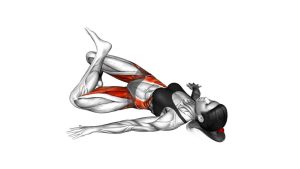
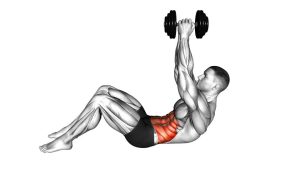
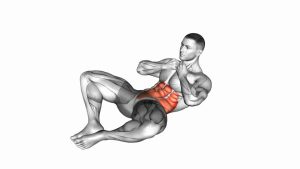
Crunch on Bench: Proper Form, Abs Benefits, Sets, Tips & FAQ
Learn how to do the Crunch on Bench with proper form to target your abs safely. Includes setup, steps, sets, mistakes, FAQs, and equipment.
Crunch on Bench
This exercise works best when the movement stays small, smooth, and deliberate. Unlike a full sit-up, the Crunch on Bench does not require the torso to rise completely upright. Instead, the abdominal muscles create a short spinal flexion as the shoulders lift from the bench. Because of this, it is a useful core exercise for beginners, home gyms, and controlled ab training sessions.
Quick Overview
| Body Part | Core |
|---|---|
| Primary Muscle | Rectus abdominis |
| Secondary Muscle | Obliques, deep core stabilizers, hip flexors with minimal assistance |
| Equipment | Flat bench |
| Difficulty | Beginner |
Sets & Reps (By Goal)
- Beginner core control: 2–3 sets × 10–12 reps with slow, clean movement.
- Ab muscle endurance: 3–4 sets × 12–20 reps with a steady tempo.
- Hypertrophy-focused abs training: 3–4 sets × 10–15 reps with a 1–2 second squeeze at the top.
- Warm-up activation: 1–2 sets × 8–12 reps before a core or full-body workout.
Progression rule: First improve control, pause time, and breathing. Afterward, increase reps or add light resistance only if your neck, hips, and lower back stay relaxed.
Setup / Starting Position
- Lie on the bench: Position your back flat on a stable bench with your head and upper back supported.
- Bend your knees: Keep both feet planted firmly on the floor so your lower body stays steady.
- Set your arms: Place your hands across your chest or near your torso. Avoid using the arms to pull your head forward.
- Brace gently: Tighten your midsection as if preparing for a light punch to the stomach.
- Keep the neck neutral: Maintain a small space between your chin and chest, and avoid looking aggressively downward.
The bench should feel stable before you begin. Also, your hips should remain still throughout the repetition.
Execution (Step-by-Step)
- Start from the bench: Lie back with your shoulders relaxed, knees bent, and feet grounded.
- Exhale and curl upward: Lift your head, shoulders, and upper back slightly from the bench by contracting your abs.
- Bring ribs toward pelvis: Think about shortening the front of your torso rather than sitting all the way up.
- Pause at the top: Hold briefly when your abs feel fully contracted.
- Lower with control: Slowly return your upper back and shoulders to the bench without dropping suddenly.
- Reset before repeating: Keep the feet planted, breathe, and begin the next rep with the same controlled pattern.
Pro Tips & Common Mistakes
- Use a short range of motion: A bench crunch is not a full sit-up. Therefore, stop once the upper back lifts and the abs contract strongly.
- Control the lowering phase: Do not fall back onto the bench. Instead, lower gradually to keep tension on the abs.
- Avoid neck pulling: If your hands are near your head, keep them light and avoid yanking the chin forward.
- Keep your feet planted: Moving feet usually means the body is using momentum instead of abdominal control.
- Do not overarch the lower back: Keep the ribcage controlled so your lower back does not flare off the bench excessively.
- Breathe correctly: Exhale as you crunch up, then inhale as you return to the bench.
- Prioritize quality reps: Clean repetitions build better core control than rushed, high-rep sets.
FAQ
What muscles does the Crunch on Bench work?
The Crunch on Bench mainly works the rectus abdominis, which is the front abdominal muscle responsible for trunk flexion. Additionally, the obliques and deep core muscles help stabilize your torso during the movement.
Is the Crunch on Bench good for beginners?
Yes. This exercise is beginner-friendly because it uses a small range of motion and requires minimal equipment. However, beginners should move slowly and avoid pulling the neck forward.
How is this different from a regular floor crunch?
The movement pattern is similar, but the bench changes the setup and body position. In many cases, the bench gives a firm surface and allows a clean, controlled crunch without lying directly on the floor.
Should my lower back come off the bench?
No. During a proper crunch, the upper back lifts while the lower back and hips stay mostly stable. If your lower back rises significantly, you may be turning the exercise into a sit-up.
Can I add weight to the Crunch on Bench?
Yes, but only after you can perform controlled bodyweight reps. Start with a light plate or medicine ball held near the chest. In addition, avoid heavy loading if it causes neck strain or lower-back discomfort.
Recommended Equipment
- Flat Weight Bench — essential support for performing bench crunches with a stable surface.
- Adjustable Weight Bench — useful if you want more exercise variety for abs, chest, shoulders, and strength training.
- Exercise Mat — helpful for warm-ups, floor crunches, stretching, and core accessories.
- Medicine Ball — optional resistance for advanced crunch variations after mastering bodyweight form.
- Weight Plate — allows gradual loading when held carefully near the chest during advanced sets.
Tip: For this exercise, a stable bench matters more than heavy resistance. Therefore, master clean bodyweight reps before adding load.