Half Squat Side Reach: Form, Benefits, Sets, Tips & FAQ
Learn the Half Squat Side Reach to train obliques, thighs, hips, and core control with step-by-step form, sets, mistakes, FAQs, and gear.
Half Squat Side Reach
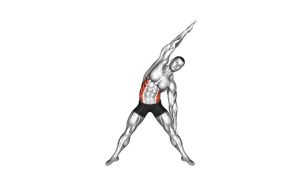
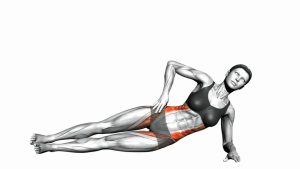
This exercise works best when the lower body stays steady while the upper body performs the reach. Therefore, the squat should not rise and fall with every repetition. Keep your feet wide, bend your knees slightly, and maintain a controlled half-squat position as you reach to one side. Then, return to center before repeating on the opposite side.
Quick Overview
| Body Part | Core |
|---|---|
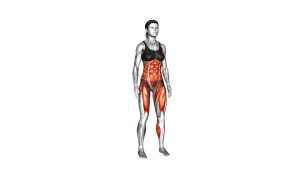
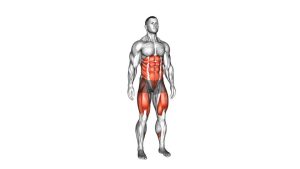
| Primary Muscle | Obliques |
| Secondary Muscle | Quadriceps, glutes, hip stabilizers, adductors, and deep core stabilizers |
| Equipment | No equipment required |
| Difficulty | Beginner to Intermediate |
Sets & Reps (By Goal)
- Beginner control: 2–3 sets × 8–10 reps per side, using a slow and steady tempo.
- Core endurance: 3–4 sets × 12–15 reps per side, while maintaining the half-squat hold.
- Lower-body burn: 3 sets × 30–45 seconds, keeping the knees bent the entire time.
- Warm-up activation: 1–2 sets × 8–12 reps per side before core, legs, or full-body training.
Progression rule: First, increase control and range. Then, increase reps or time. However, do not progress if your knees cave inward or your torso starts swinging.
Setup / Starting Position
- Stand wide: Place your feet wider than shoulder-width, with toes slightly turned outward if comfortable.
- Lower into a half squat: Bend your knees and sit the hips slightly back while keeping your chest lifted.
- Set your arms: Keep one hand near the head or upper side of the body, and prepare the opposite arm to reach.
- Brace gently: Tighten the core enough to control the ribs, but keep your breathing smooth.
- Stay balanced: Keep weight spread evenly across both feet before starting the side reach.
Tip: Your squat depth should feel stable. If your legs shake too much or your knees drift inward, reduce the depth and focus on better alignment.
Execution (Step-by-Step)
- Hold the half squat: Keep your feet wide, knees bent, and hips low.
- Reach to one side: Bend your torso laterally and allow one arm to reach toward the same side.
- Keep the lower body steady: Avoid standing up, shifting the hips too far, or letting one knee collapse inward.
- Pause briefly: At the side-reach position, feel the waist working while the thighs continue holding the squat.
- Return to center: Bring the torso upright with control, keeping your chest open and core engaged.
- Repeat on the other side: Move smoothly to the opposite side and continue alternating reps.
Pro Tips & Common Mistakes
- Keep the squat position consistent: Do not stand up every time you return to center.
- Reach with control: Move through the waist instead of throwing the arm downward.
- Protect the knees: Keep both knees pointing in line with the toes throughout the set.
- Avoid leaning forward: The torso should bend sideways, not collapse toward the floor.
- Use a smooth rhythm: Reach, pause, return, then switch sides without bouncing.
- Do not over-arch the back: Keep the ribs controlled and the pelvis steady.
- Stay active through the legs: Press evenly through both feet to keep the half squat stable.
FAQ
What muscles does the Half Squat Side Reach work?
The main focus is the obliques, especially during the side-bending action. In addition, the quadriceps, glutes, adductors, hip stabilizers, and deep core muscles help hold the half-squat position.
Is the Half Squat Side Reach good for beginners?
Yes. It can be beginner-friendly when performed with a small range of motion and a shallow squat. However, beginners should move slowly and prioritize knee alignment before adding more reps.
Should I feel this exercise in my legs or abs?
You may feel both. The legs work because you are holding a half squat, while the obliques and core work during the side reach. Therefore, it is normal to feel the thighs and waist working together.
Can I use this exercise for a warm-up?
Yes. It works well as a dynamic warm-up before lower-body, core, or full-body sessions. Use lighter effort, controlled reps, and a comfortable range of motion.
What is the most common mistake?
The most common mistake is losing the half-squat position. Many people rise up, drop too low, or let the knees cave inward. Instead, keep the squat steady and let the torso perform the reach.
Recommended Equipment (Optional)
- Exercise Mat — useful for comfortable home workouts and floor-based follow-up core exercises
- Mini Resistance Bands — helpful for adding hip activation before squat-based movements
- Ankle Weights — optional progression for lower-body endurance when used carefully
- Workout Mirror — helps you check knee position, squat depth, and side-bend control
- Non-Slip Training Shoes — supports stable foot contact during wide-stance bodyweight movements
Tip: This exercise does not require equipment. Still, simple tools can improve comfort, stability, and feedback during home training.