Seated Upper Body Rotation: Core Mobility, Form, Sets, Tips & FAQ
Learn the Seated Upper Body Rotation to improve core control, spinal mobility, and oblique activation with step-by-step form, tips, FAQs, and equipment.
Seated Upper Body Rotation
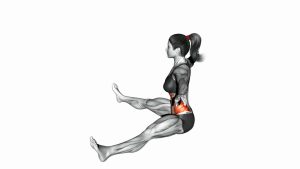
This exercise works best when the motion stays slow, clean, and controlled. Instead of forcing a large range, focus on keeping the legs stable, the hips grounded, and the arms long overhead. As a result, the movement trains the obliques, deep core stabilizers, and spinal mobility without needing equipment.
Quick Overview
| Body Part | Core |
|---|---|
| Primary Muscle | Obliques |
| Secondary Muscle | Rectus abdominis, deep core stabilizers, spinal erectors, shoulders |
| Equipment | No equipment required |
| Difficulty | Beginner |
Sets & Reps (By Goal)
- Core mobility warm-up: 2–3 sets × 8–12 reps per side with a smooth tempo.
- Beginner core control: 2–4 sets × 10–14 total reps while keeping the hips still.
- Posture and trunk awareness: 2–3 sets × 6–10 slow reps per side with a brief pause.
- Active recovery: 1–2 sets × 8–10 easy reps per side using a relaxed range of motion.
Progression rule: First improve smoothness and control. Then, gradually increase reps or pause time before increasing range.
Setup / Starting Position
- Sit on the floor: Begin in a cross-legged seated position with both hips grounded.
- Lift the chest: Sit tall without arching the lower back aggressively.
- Raise the arms overhead: Extend both arms upward and keep the hands together, as shown in the video.
- Set the shoulders: Keep the shoulders controlled and avoid shrugging toward the ears.
- Brace lightly: Engage the core enough to keep the lower body quiet while the upper body moves.
Tip: If sitting cross-legged feels uncomfortable, use a folded mat or small cushion under the hips to help the spine stay taller.
Execution (Step-by-Step)
- Start tall: Keep your spine upright, arms overhead, and hands together.
- Move to one side: Lean and rotate the upper body slightly to one side while keeping the hips planted.
- Keep the arms long: Let the arms follow the torso without bending the elbows or dropping the hands.
- Control the end range: Pause briefly when you reach your comfortable side position.
- Return to center: Bring the torso back upright with control.
- Repeat to the other side: Move smoothly in the opposite direction while keeping the same seated base.
Pro Tips & Common Mistakes
- Keep the hips grounded: The movement should come mainly from the upper torso, not from shifting the pelvis.
- Do not rush: A slow tempo helps the obliques and spinal stabilizers control each rep.
- Avoid collapsing forward: Stay tall as you move side to side.
- Keep the arms overhead: Dropping the arms reduces the posture and mobility challenge.
- Use a comfortable range: More range is not always better if it causes twisting, pulling, or bouncing.
- Breathe naturally: Exhale during the side movement and inhale as you return to center.
FAQ
What muscles does the Seated Upper Body Rotation work?
It mainly works the obliques and deep core stabilizers. Additionally, the spinal erectors, shoulders, and upper-back muscles assist with posture and overhead arm control.
Is this exercise a twist or a side bend?
Based on the visible movement, it is not a pure twist. It combines a side-to-side upper-body bend with a small rotational component while the hips remain stable.
Can beginners do this exercise?
Yes. It is beginner-friendly because it uses no equipment and allows a controlled range of motion. However, beginners should move slowly and avoid forcing the torso too far to either side.
Should my hips move during the exercise?
No. The hips should stay grounded and steady. If your hips lift or shift, reduce the range of motion and focus on moving only through the upper body.
Why are the arms held overhead?
Holding the arms overhead increases the posture demand and makes the movement feel longer through the torso. It also helps train shoulder positioning, rib control, and upper-body coordination.
Recommended Equipment (Optional)
- Exercise Mat — provides comfort for seated floor-based core and mobility drills.
- Yoga Block — can support the hips if sitting cross-legged feels tight or uncomfortable.
- Meditation Cushion — helps elevate the hips for a taller seated posture.
- Stretching Strap — useful for improving shoulder and upper-body mobility alongside this drill.
- Foam Roller — helpful for upper-back mobility work before or after seated rotation practice.
Tip: Equipment is optional. However, a mat or cushion can make the seated position easier to hold with better posture.