Cable Kneeling Side Crunch: Form, Oblique Tips, Sets & FAQ
Learn the Cable Kneeling Side Crunch for stronger obliques, better core control, and cleaner side-crunch form with setup, reps, tips, FAQs, and gear.
Cable Kneeling Side Crunch
This exercise is useful when you want to train the internal and external obliques with more resistance than a basic bodyweight side crunch. Because the cable provides steady tension, every rep should feel smooth from the top position to the deepest side bend. However, the movement works best when the knees, hips, and shoulders stay controlled rather than swinging or rotating.
Quick Overview
| Body Part | Obliques |
|---|---|
| Primary Muscle | Obliques, especially the external obliques and internal obliques |
| Secondary Muscle | Rectus abdominis, deep core stabilizers, and spinal stabilizers |
| Equipment | Cable machine with rope attachment |
| Difficulty | Intermediate because the cable resistance requires posture control and clean side flexion |
Sets & Reps (By Goal)
- Technique practice: 2–3 sets × 10–12 reps per side with light weight and slow control.
- Oblique hypertrophy: 3–4 sets × 10–15 reps per side with a moderate load.
- Core strength: 3–5 sets × 8–12 reps per side with a controlled heavier load.
- Finisher work: 2–3 sets × 15–20 reps per side using a lighter weight and steady tempo.
Progression rule: Add reps before increasing weight. Once every rep stays smooth, add a small amount of resistance while keeping the hips still and the rope close to the head.
Setup / Starting Position
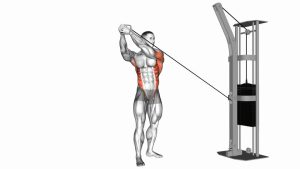
- Attach the rope: Set a rope attachment on a high cable pulley.
- Kneel beside the machine: Position your body sideways to the cable so the rope runs from above toward your hands.
- Hold the rope near your head: Keep both hands close to the side of your head or temples without pulling the rope with your arms.
- Stack your lower body: Keep both knees down, hips stable, and torso tall before each rep begins.
- Brace gently: Tighten your midsection enough to control the spine, but avoid locking the ribs or holding your breath.
The best starting position is tall, stable, and quiet. Therefore, adjust the cable height or your kneeling distance if the rope pulls you out of alignment.
Execution (Step-by-Step)
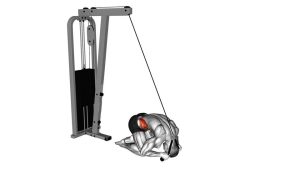
- Start tall: Keep your hips still, chest controlled, and rope close to your head.
- Crunch sideways: Bend your torso laterally by bringing the same-side elbow down toward the same-side hip.
- Shorten the waist: Think about closing the space between your ribs and pelvis on the working side.
- Pause briefly: Hold the bottom position for a moment while keeping the motion controlled.
- Return slowly: Let the torso rise back to the starting position without letting the cable pull you up quickly.
- Repeat evenly: Finish all reps on one side, then turn around and perform the same number of reps on the opposite side.
Pro Tips & Common Mistakes
- Move through the side waist: The main action is lateral trunk flexion, not an arm pull.
- Keep the hips quiet: Avoid shifting the pelvis away from the cable to fake a larger range of motion.
- Do not twist: Keep the crunch mostly sideways instead of rotating the chest toward the floor.
- Control the return: The upward phase matters because the cable keeps tension on the obliques.
- Avoid excessive weight: Too much load often turns the exercise into a jerky pull instead of a clean side crunch.
- Match both sides: Use the same weight, reps, and tempo on each side for balanced oblique training.
- Breathe with control: Exhale as you crunch down, then inhale as you return to the top.
FAQ
What muscles does the Cable Kneeling Side Crunch work?
The main target is the obliques, especially the internal and external obliques. Additionally, the rectus abdominis and deep core stabilizers help control the torso during each rep.
Should I feel this exercise in my lower back?
You may feel some light stabilizing effort around the trunk. However, sharp lower-back pain or pinching is not the goal. If that happens, reduce the weight, shorten the range, and focus on bending from the side of the waist.
Is the Cable Kneeling Side Crunch good for oblique growth?
Yes, it can be effective for oblique development because the cable allows progressive resistance. For best results, use a controlled tempo, avoid twisting, and train both sides evenly.
Should I use heavy weight?
Use enough weight to challenge the obliques without losing posture. If the arms, hips, or shoulders start doing most of the work, the load is too heavy.
How is this different from a regular side crunch?
A regular side crunch usually uses bodyweight resistance. In contrast, the cable version adds adjustable tension, which makes it easier to progress over time.
Recommended Equipment
- Cable Rope Attachment — essential for keeping both hands close to the head during cable side crunches.
- Cable Machine / Functional Trainer — provides adjustable resistance for oblique and full-body cable exercises.
- Exercise Knee Pad — adds comfort during kneeling cable exercises.
- Ab Training Mat — supports core training and provides extra cushioning for floor-based work.
- Weightlifting Gloves — improves grip comfort when holding cable attachments.
Choose equipment that helps you keep the movement controlled. Better comfort and grip can improve consistency, especially when performing multiple sets per side.