Cable Horizontal Pallof Press: Anti-Rotation Core Form, Sets, Tips & FAQ
Learn the Cable Horizontal Pallof Press for anti-rotation core strength, oblique control, posture stability, proper form, sets, mistakes, FAQs, and equipment.
Cable Horizontal Pallof Press
This exercise is useful because it trains the core to resist rotation rather than create rotation. As a result, the obliques, transverse abdominis, and deep trunk stabilizers must work together to keep the body steady. Because the cable pulls from one side, every repetition challenges your ability to stay square, balanced, and controlled.
Although the arm movement looks simple, the real purpose is trunk stability. Therefore, use a load that allows clean posture, smooth pressing, and steady breathing. If the cable pulls your torso out of position, reduce the weight before adding more reps or longer holds.
Quick Overview
| Body Part | Core |
|---|---|
| Primary Muscle | Obliques and transverse abdominis |
| Secondary Muscle | Rectus abdominis, glutes, deep spinal stabilizers, shoulders, and upper back |
| Equipment | Cable machine with single handle or D-handle attachment |
| Difficulty | Beginner to intermediate, depending on load and distance from the cable stack |
Sets & Reps (By Goal)
- Core activation: 2–3 sets × 8–10 reps per side with a light load and smooth control.
- Anti-rotation strength: 3–4 sets × 8–12 reps per side with a 1–2 second pause at full extension.
- Posture and control: 2–3 sets × 10–15 reps per side using a slow, steady tempo.
- Athletic stability: 3–5 sets × 6–10 reps per side with stronger bracing and no torso movement.
- Warm-up use: 1–2 sets × 8 reps per side before squats, deadlifts, presses, or sport practice.
Progression rule: First improve stillness, posture, and breathing. Then increase the pause time, step slightly farther from the cable, or add a small amount of weight.
Setup / Starting Position
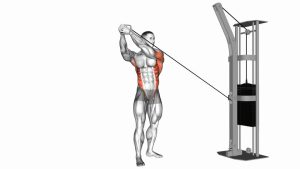
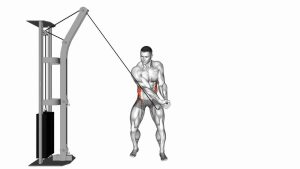
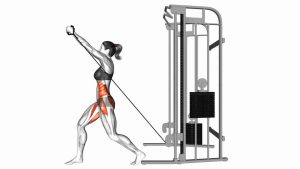
- Set the cable height: Adjust the pulley to about chest height so the handle travels straight forward and backward.
- Stand sideways to the machine: Position your body so the cable pulls from your left or right side.
- Grip the handle with both hands: Bring your hands close to the center of your chest with elbows bent.
- Create a stable stance: Place your feet about shoulder-width apart and keep your knees softly bent.
- Stack your posture: Keep your ribs down, hips level, chest tall, and head in a neutral position.
- Brace lightly: Tighten your midsection as if resisting a gentle push, but continue breathing normally.
Start close enough to the cable stack that you can control the pull. Then, if your torso stays steady, step farther away to increase tension.
Execution (Step-by-Step)
- Begin with the handle at your chest: Keep both hands centered and elbows close to your body.
- Press straight forward: Extend your arms in front of your chest without letting the cable rotate your torso.
- Hold the extended position: Pause briefly while keeping your shoulders square and your ribs stacked over your hips.
- Control the cable pull: Resist leaning toward the machine or twisting away from it.
- Return slowly: Bend your elbows and bring the handle back to your chest with the same control.
- Repeat on both sides: Turn around and perform the same number of reps facing the opposite direction.
Pro Tips & Common Mistakes
Pro Tips
- Think “press and resist”: The press happens with the arms, but the training effect comes from stopping the torso from rotating.
- Keep the handle centered: Press from the middle of your chest instead of drifting toward the cable side.
- Use a slow tempo: Move with control so your core, not momentum, manages the cable tension.
- Breathe behind the brace: Exhale gently as you press, then inhale as the handle returns.
- Train both directions evenly: Complete equal reps on each side to build balanced anti-rotation strength.
Common Mistakes
- Using too much weight: If the cable pulls you sideways, reduce the load immediately.
- Rotating the torso: Turning the chest or hips changes the exercise and reduces the anti-rotation benefit.
- Leaning away from the machine: Leaning may feel stronger, but it usually means the core is not controlling the position cleanly.
- Shrugging the shoulders: Keep the neck relaxed and avoid turning this into an upper-trap exercise.
- Rushing the return: The cable will try to pull your hands back quickly, so control the handle on every rep.
FAQ
What muscles does the Cable Horizontal Pallof Press work?
It mainly trains the obliques and transverse abdominis. In addition, the glutes, upper back, shoulders, rectus abdominis, and deep spinal stabilizers help keep the body steady.
Should my torso rotate during the movement?
No. The main goal is to resist rotation. Therefore, your hands press forward and return, but your shoulders, ribs, and hips should stay as square and still as possible.
Is the Cable Horizontal Pallof Press good for beginners?
Yes, it can be beginner-friendly when the load is light. However, beginners should focus on posture, short pauses, and smooth control before using heavier resistance.
How heavy should I go on this exercise?
Use a weight that lets you press forward without twisting, leaning, or holding your breath. If your torso moves, the weight is too heavy for the purpose of the exercise.
Can I do this exercise with a resistance band?
Yes. A resistance band can create a similar sideways pull. However, a cable machine gives more consistent tension and makes the horizontal pressing path easier to control.
Where should I feel the Cable Horizontal Pallof Press?
You should feel controlled tension through the sides and front of your core. You may also feel your glutes and shoulders helping you stay stable, but you should not feel sharp pain in your back or shoulders.
Recommended Equipment
- Cable Machine D-Handle Attachment — useful for a secure two-hand grip during Pallof press variations.
- Adjustable Cable Machine — allows chest-height cable setup for horizontal anti-rotation training.
- Resistance Bands with Door Anchor — a practical home alternative for banded Pallof press work.
- Non-Slip Exercise Mat — improves foot grip and stance stability during controlled core drills.
- Flat-Sole Training Shoes — provides a stable base for standing cable exercises.
Tip: Equipment should help you control the movement, not make the exercise harder too soon. If your posture breaks, lower the resistance and rebuild clean reps.