Side Plank Side Crunch: Form, Benefits, Sets, Tips & FAQ
Learn the Side Plank Side Crunch to target obliques, strengthen core stability, improve side-body control, and build safer plank strength.
Side Plank Side Crunch
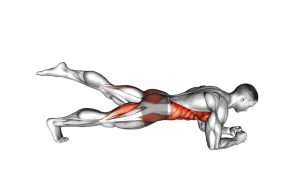
This exercise works best when every repetition stays smooth and stable. Because the body is supported on one forearm and the side of the lower foot, the core must resist dropping while the top leg and upper body move. As a result, the movement trains both anti-lateral-flexion strength and active side-crunch control.
Quick Overview
| Body Part | Obliques |
|---|---|
| Primary Muscle | Obliques |
| Secondary Muscle | Transverse abdominis, rectus abdominis, glutes, hip abductors, shoulder stabilizers |
| Equipment | No equipment required; exercise mat optional |
| Difficulty | Intermediate |
Sets & Reps (By Goal)
- Core control: 2–3 sets × 6–10 reps per side with slow, clean movement
- Oblique strength: 3–4 sets × 8–12 reps per side with a brief squeeze at the top
- Muscular endurance: 2–3 sets × 12–16 reps per side using a steady tempo
- Bodyweight core circuit: 30–45 seconds per side with controlled reps
Progression rule: First improve control and hip height. Then add more reps, longer sets, or a slower tempo.
Setup / Starting Position
- Start on your side: Place your lower forearm on the floor with the elbow under the shoulder.
- Stack your legs: Keep both legs extended and place the top foot over the lower foot.
- Lift your hips: Raise your hips until your body forms a straight line from head to feet.
- Place the top hand near your head: Keep the elbow open without pulling on the neck.
- Brace your core: Keep ribs controlled, glutes active, and shoulder stable before moving.
Tip: If the full version feels too difficult, bend the lower knee and perform the same crunch from a modified side plank.
Execution (Step-by-Step)
- Hold the side plank: Keep your lower elbow under your shoulder and your hips lifted.
- Begin the crunch: Lift the top knee toward the upper elbow while slightly crunching the upper side of your torso.
- Meet with control: Bring the elbow and knee close together without twisting aggressively.
- Squeeze the obliques: Pause briefly at the top while keeping your hips from dropping.
- Return slowly: Extend the top leg back and open the upper body to the starting side plank line.
- Repeat evenly: Complete all reps on one side, then switch sides with the same control.
Pro Tips & Common Mistakes
- Keep the lower shoulder stacked: Avoid sinking into the supporting shoulder.
- Move with control: Do not swing the leg or jerk the elbow toward the knee.
- Maintain hip height: The exercise loses value when the hips collapse toward the floor.
- Avoid neck pulling: The hand near the head should guide position, not yank the neck.
- Limit excessive rotation: Focus on a side crunch, not a fast twisting motion.
- Breathe steadily: Exhale during the crunch and inhale as you return to the long side plank.
- Match both sides: Use the same rep count and tempo to avoid uneven core development.
FAQ
What muscles does the Side Plank Side Crunch work?
The Side Plank Side Crunch mainly works the obliques. It also trains the transverse abdominis, rectus abdominis, glutes, hip abductors, and shoulder stabilizers because the body must stay lifted during the crunch.
Is the Side Plank Side Crunch good for abs?
Yes. It is especially useful for building side-ab strength and core stability. However, it works best when you keep the movement controlled instead of using momentum.
Why do my hips drop during this exercise?
Hips usually drop when the obliques, glutes, or shoulder stabilizers fatigue. Therefore, reduce the reps, shorten the range, or use a modified side plank until you can maintain alignment.
Can beginners do the Side Plank Side Crunch?
Beginners can try a modified version with the lower knee on the floor. Once the side plank feels stable, progress to the full stacked-leg version.
Should my elbow and knee touch?
They do not have to touch. The main goal is to bring them close together while keeping the hips lifted, the shoulder stable, and the obliques engaged.
Recommended Equipment (Optional)
- Thick Exercise Mat — adds comfort under the forearm and hip during side plank work
- Non-Slip Yoga Mat — helps prevent sliding while holding the side plank position
- Core Sliders — useful for related oblique and plank progressions
- Mini Resistance Bands — helpful for glute and hip-abductor activation before plank variations
- Foam Roller — useful for warm-ups and recovery around the hips, lats, and upper back
Tip: Equipment is optional. However, a stable mat can make the exercise more comfortable and easier to control.