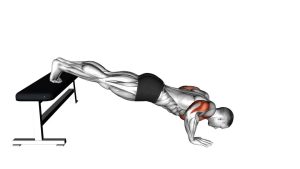
Pike Push-Up on Bench (Chest Focus): Form, Sets & Reps, Tips, FAQ
Learn the Pike Push-Up on Bench (Chest Focus) to build upper-chest pressing strength with bodyweight. Step-by-step form cues, sets & reps by goal, common mistakes, FAQs, and recommended equipment.
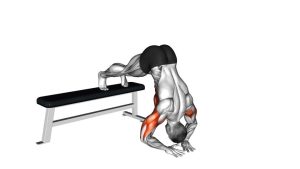
Pike Push-Up on Bench (Chest Focus)
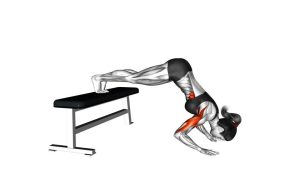
This variation rewards tight positioning. If your hips drop, your lower back arches, or your elbows flare hard, the rep becomes sloppy and shoulder-dominant. Aim for smooth control: lower with intent, pause briefly, then press back up without bouncing.
Quick Overview
| Body Part | Chest |
|---|---|
| Primary Muscle | Upper chest (clavicular pectoralis major) |
| Secondary Muscle | Anterior deltoids, triceps, serratus anterior, core stabilizers |
| Equipment | Bench/box (for feet), floor space (optional: mat, push-up handles/parallettes) |
| Difficulty | Intermediate (scale by reducing elevation or range) |
Sets & Reps (By Goal)
- Strength: 4–6 sets × 3–6 reps (2–3 min rest, strict form, no bounce)
- Hypertrophy (muscle growth): 3–5 sets × 6–12 reps (60–90 sec rest, slow lowering)
- Endurance / conditioning: 2–4 sets × 12–20 reps (45–75 sec rest, smooth tempo)
- Skill progression (toward HSPU): 3–6 sets × 3–8 reps (pause at bottom, perfect lines)
Progression rule: Add reps first, then raise foot height or add a slower eccentric (3–5 seconds). Only progress when every rep stays stable through shoulders, ribs, and hips.
Setup / Starting Position
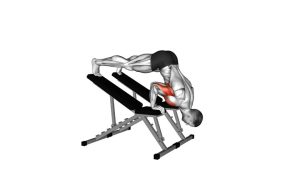
- Set the bench: Use a stable bench/box against a wall if needed to prevent sliding.
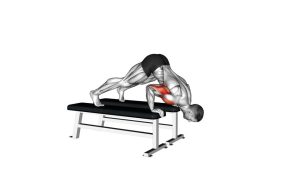
- Foot placement: Place toes on the bench, feet hip-width, legs straight (or slightly soft if hamstrings are tight).
- Hand placement: Hands shoulder-width on the floor. Wrists under control—avoid collapsing into the heel of the hand.
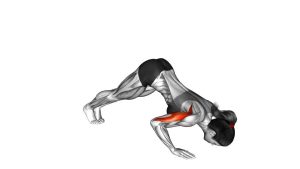
- Pike position: Lift hips high into an inverted “V.” Keep ribs down and core braced (no low-back arch).
- Shoulder setup: “Push the floor away” lightly—scapula stable, neck long, gaze between hands.
Tip: If you feel wrist discomfort, use push-up handles or parallettes to keep wrists more neutral.
Execution (Step-by-Step)
- Brace and breathe: Inhale gently, lock the ribs down, keep hips high.
- Lower forward and down: Bend elbows and guide your head/chest toward the floor between your hands. Think “chest forward”, not straight down.
- Elbow path: Keep elbows at a moderate angle (about 30–45° from the torso). Avoid hard flaring.
- Bottom position: Head close to the floor, shoulders stable, no collapsing. Brief pause (0.5–1 sec).
- Press up smoothly: Drive through palms, extend elbows, return to strong pike without bouncing or shifting feet.
Pro Tips & Common Mistakes
Pro Tips
- Use a slow eccentric: Lower for 3 seconds to increase upper-chest and shoulder stimulus.
- Keep hips high: High hips help maintain the chest/shoulder loading angle.
- Press “up and back”: Finish by returning to the pike, not drifting forward.
- Own the bottom: A brief pause removes bounce and keeps the shoulders honest.
- Scale smart: Lower the bench height before changing technique.
Common Mistakes
- Hips dropping: turns it into a sloppy incline push-up and stresses the low back.
- Elbows flaring hard: increases shoulder strain and reduces pressing efficiency.
- Bouncing off the bottom: reduces tension and can irritate shoulders/wrists.
- Neck leading: craning the head instead of keeping a neutral neck line.
- Hand position too wide: often causes instability and poor elbow tracking.
FAQ
Is this more chest or shoulders?
It’s a hybrid press. With feet elevated and a forward torso angle, you’ll feel a strong mix of upper chest and anterior delts. To bias chest more, keep the path slightly forward and avoid turning it into a vertical “headstand push-up” style rep.
What if my wrists hurt?
Use push-up handles or parallettes to reduce wrist extension, and keep your weight spread through the whole hand (not just the heel). Also scale the foot height down until your wrists tolerate the load.
How high should the bench be?
Start with a low elevation (step/low bench). As you get stronger, raise the feet to increase difficulty. Higher feet = more load on the upper body.
How do I make it harder without raising the bench?
Slow the lowering phase (3–5 seconds), add a 1-second pause at the bottom, or wear a light weighted vest. You can also elevate hands on parallettes to increase range if your shoulders tolerate it.
What’s a good alternative if I can’t do reps yet?
Try pike push-ups with feet on the floor, incline push-ups, or eccentrics only (lower slowly, then step down to reset). Build control first, then add reps.
Recommended Equipment (Amazon)
- Foam Plyometric Box — stable foot elevation; foam reduces shin/ankle discomfort
- Push-Up Handles — helps keep wrists neutral and improves pressing comfort
- Parallettes (Mini Bars) — increases stability and can extend range of motion if shoulders tolerate it
- Thick Non-Slip Exercise Mat — improves hand traction and comfort on hard floors
- Adjustable Weighted Vest — simple progression once you own clean reps and stable shoulders
Tip: Choose stable elevation first (bench/box), then add comfort tools (handles/mat). Progress load only after you can maintain clean positioning.