Suspension-Assisted Lying Leg Raise: Form, Core Benefits & Tips
Learn the Suspension-Assisted Lying Leg Raise to strengthen abs, hip flexors, and core control with proper form, sets, tips, FAQs, and equipment.
Suspension-Assisted Lying Leg Raise
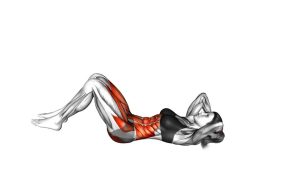
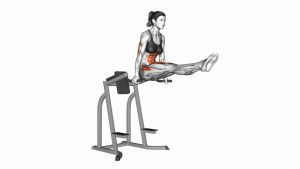
This exercise works best when the body stays quiet and controlled. The suspension straps provide stability, but the core should still perform the main work. Keep your ribs down, brace your abs, and lower your legs only as far as you can without losing contact between your lower back and the floor. If your back arches, your hip flexors take over too much and the movement becomes less effective for abdominal control.
Quick Overview
| Body Part | Core |
|---|---|
| Primary Muscle | Rectus abdominis, especially lower abdominal fibers |
| Secondary Muscle | Hip flexors, transverse abdominis, obliques, shoulder stabilizers, grip muscles |
| Equipment | Suspension trainer, exercise mat, stable anchor point |
| Difficulty | Intermediate; can be modified by bending the knees or shortening the leg-lowering range |
Sets & Reps (By Goal)
- Core control: 2–3 sets × 8–12 slow reps with 45–60 seconds rest.
- Lower-ab strength: 3–4 sets × 8–15 reps with a controlled 2–3 second lowering phase.
- Beginner modification: 2–3 sets × 6–10 reps with bent knees and a smaller range of motion.
- Advanced tension: 3–4 sets × 10–15 reps while keeping the heels hovering above the floor between reps.
Progression rule: First improve control and range of motion. Then increase reps, slow the lowering phase, or keep the legs straighter. Do not progress if your lower back arches during the descent.
Setup / Starting Position
- Anchor the suspension trainer: Attach the straps to a secure overhead or high anchor point.
- Lie on your back: Position your body on a mat with your head near the straps and your legs extended forward.
- Hold the handles: Grip the suspension handles with both hands and keep your arms extended but not locked aggressively.
- Brace your core: Draw your ribs down, tighten your abs, and keep your lower back close to the floor.
- Set your legs: Keep both legs together, straight or slightly bent, with the heels hovering just above the floor.
- Relax the neck: Keep your head neutral and avoid pulling your chin toward your chest.
The straps should help stabilize your upper body. They should not become the main source of force. Think of your hands as anchors and your abs as the engine of the movement.
Execution (Step-by-Step)
- Start with tension: Brace your abs before the legs move. Keep your shoulders stable and your ribs controlled.
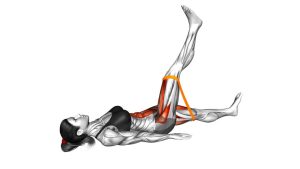
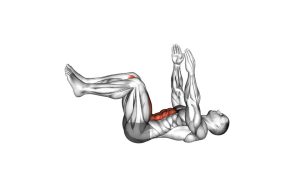
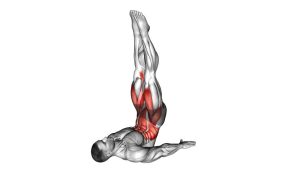
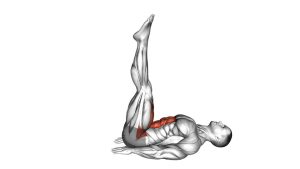
- Raise both legs: Lift your legs together in a smooth arc until they reach roughly 70–90 degrees.
- Control the top position: Pause briefly without swinging, yanking the straps, or lifting the head.
- Lower slowly: Bring the legs down under control while keeping your lower back from arching.
- Stop before compensation: End the lowering phase when your core can no longer control the pelvis.
- Repeat with precision: Keep every rep smooth, quiet, and consistent.
Pro Tips & Common Mistakes
- Keep the ribs down: Rib flare usually means the lower back is about to arch.
- Lower slower than you lift: The eccentric phase is where most of the core-control benefit happens.
- Do not swing: Momentum reduces abdominal tension and makes the exercise less effective.
- Use the straps lightly: Pull only enough to stabilize your torso, not enough to turn the movement into an arm exercise.
- Keep the legs together: This improves control and keeps the movement symmetrical.
- Bend the knees if needed: A bent-knee version is still effective and much safer for beginners.
- Avoid neck tension: Your head should stay relaxed while your core performs the work.
- Do not chase the floor: Only lower as far as your abs can control without lumbar extension.
FAQ
What muscles does the Suspension-Assisted Lying Leg Raise work?
It mainly works the rectus abdominis, with strong emphasis on lower-ab control. It also trains the hip flexors, transverse abdominis, obliques, shoulder stabilizers, and grip muscles.
Is this exercise good for lower abs?
Yes. The movement is highly effective for lower-ab-focused training because the abs must control the pelvis as the legs raise and lower. The key is keeping the lower back stable instead of letting it arch.
Why use suspension straps for a lying leg raise?
Suspension straps give the upper body extra stability. This helps you focus more on leg control, pelvic position, and abdominal tension, especially when learning the movement.
Should my lower back stay flat on the floor?
Your lower back should stay controlled and close to the floor. A small natural curve is normal for some people, but excessive arching means the range is too large or the movement is too difficult.
How can beginners modify this exercise?
Beginners can bend the knees, reduce the lowering range, or perform lying knee raises while still holding the straps. These variations make it easier to keep the pelvis and lower back stable.
Is this better than a regular lying leg raise?
It is not automatically better, but it is more supported. The straps can help reduce upper-body movement, making it easier to focus on controlled core mechanics.
Recommended Equipment
- Suspension Trainer Straps — the main tool for stabilizing the upper body during this exercise.
- Exercise Mat — adds comfort and support for the spine during floor-based core training.
- Door Anchor for Suspension Trainer — useful for home setups when a fixed overhead anchor is not available.
- Adjustable Ankle Weights — optional progression tool for advanced users who already control the movement well.
- Foam Roller — helpful for warm-ups, hip flexor relaxation, and recovery after core sessions.
Tip: Do not add ankle weights until you can complete every rep with a stable pelvis, controlled breathing, and no lower-back arching.