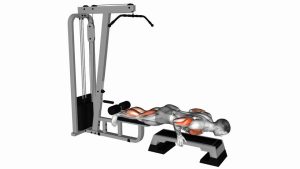
Lever Lying Single-Leg Curl: Form, Muscles, Sets, Tips & FAQ
Learn the Lever Lying Single-Leg Curl for stronger hamstrings with proper setup, single-leg control, sets, mistakes, FAQs, and equipment tips.
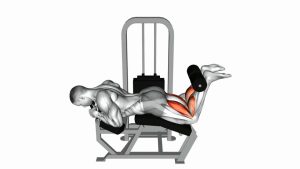
Lever Lying Single-Leg Curl
This exercise is useful when one hamstring feels weaker, less coordinated, or less developed than the other. Because each leg works independently, the Lever Lying Single-Leg Curl helps reduce side-to-side strength gaps while keeping the movement stable and easy to control.
Quick Overview
| Body Part | Hamstrings |
|---|---|
| Primary Muscle | Hamstrings — biceps femoris, semitendinosus, semimembranosus |
| Secondary Muscle | Gastrocnemius, glutes, and hip stabilizers |
| Equipment | Lever lying leg curl machine or plate-loaded lying leg curl machine |
| Difficulty | Beginner to Intermediate |
Sets & Reps (By Goal)
- Muscle growth: 3–4 sets × 8–12 reps per leg, 60–90 sec rest
- Strength control: 3–5 sets × 6–8 reps per leg, 90–120 sec rest
- Hamstring endurance: 2–4 sets × 12–18 reps per leg, 45–75 sec rest
- Warm-up activation: 1–2 sets × 12–15 light reps per leg
Progression rule: Add reps first, then increase load slightly. Keep the eccentric phase slow before chasing heavier weight.
Setup / Starting Position
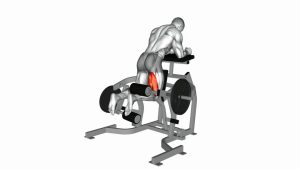
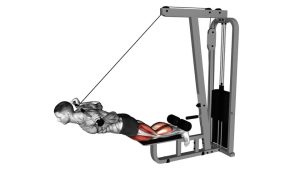
- Lie face down: Position your torso on the bench with your hips pressed firmly into the pad.
- Set the roller pad: Place the working leg under the roller so the pad rests near the lower calf or above the heel.
- Secure your body: Hold the machine handles and keep your chest, hips, and thighs stable.
- Choose one working leg: Keep the non-working leg relaxed and out of the movement path.
- Start with control: Begin with the working knee almost straight, but avoid locking the knee aggressively.
Tip: The machine should feel stable before the first rep. If your hips lift right away, reduce the load or adjust your body position.
Execution (Step-by-Step)
- Brace gently: Hold the handles, keep your ribs down, and press your hips into the bench.
- Curl the working leg: Bend the knee and pull the heel toward your glutes in a smooth arc.
- Squeeze at the top: Pause briefly when the hamstring is fully shortened.
- Lower slowly: Return the roller under control until the leg is almost straight.
- Repeat cleanly: Keep the same tempo and range for every rep before switching sides.
Pro Tips & Common Mistakes
- Do not swing the weight: Momentum reduces hamstring tension and increases joint stress.
- Control the lowering phase: The eccentric portion builds strength and should not be rushed.
- Keep hips glued down: Hip lifting turns the movement into compensation instead of clean knee flexion.
- Avoid locking out hard: Stop just before full knee lockout to maintain tension.
- Use equal reps per side: Start with the weaker leg and match that number on the stronger side.
- Use a full comfortable range: Curl high enough to contract the hamstring, but never force painful range.
FAQ
What muscles does the Lever Lying Single-Leg Curl work?
It mainly targets the hamstrings, including the biceps femoris, semitendinosus, and semimembranosus. The gastrocnemius and glutes assist with stabilization.
Is the single-leg version better than the regular lying leg curl?
It is not always better, but it is excellent for correcting strength imbalances and improving focus on each hamstring separately. The regular version is useful when you want to train both legs together with more total load.
Should I point or flex my toes?
A neutral or slightly dorsiflexed foot position works well for most people. Keep the ankle consistent so the hamstrings remain the main focus.
Why do my hips lift during the curl?
Your hips may lift because the weight is too heavy, the top range is forced, or your body is not anchored well. Lower the weight and focus on pressing your hips into the pad.
How slow should each rep be?
A good tempo is 1–2 seconds up, a short squeeze at the top, and 2–3 seconds down. This keeps tension on the hamstring and reduces swinging.
Recommended Equipment
- Plate-Loaded Lying Leg Curl Machine — ideal for performing the exact machine-based variation
- Adjustable Ankle Straps — useful for cable hamstring curl alternatives
- Resistance Bands — helpful for home hamstring curl variations
- Adjustable Exercise Bench — supports prone band or dumbbell hamstring curl variations
- Foam Roller — useful for hamstring warm-ups and recovery work
Tip: Use equipment that lets you train through a smooth, pain-free range. Better control usually beats heavier loading on this exercise.