Barbell Kneeling Squat: Proper Form, Quad Benefits, Sets, Tips & FAQ
Learn the Barbell Kneeling Squat for quad strength, knee control, and lower-body stability. Includes setup, reps, form tips, FAQs, and gear.
Barbell Kneeling Squat
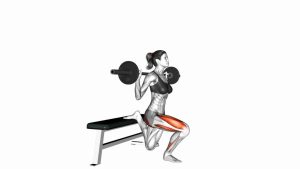
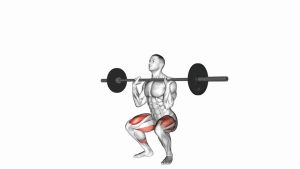
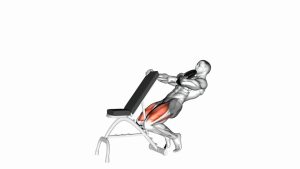
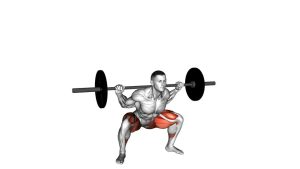
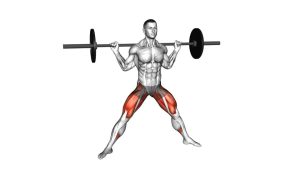
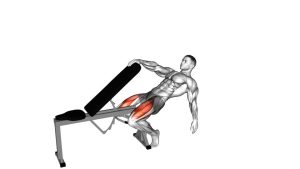
This exercise should be performed with a smooth tempo, controlled range of motion, and careful knee positioning. The movement is not a traditional squat because the feet are not planted on the floor. Instead, the knees remain fixed while the hips travel backward and forward. The best reps feel controlled through the thighs, stable through the trunk, and smooth at the knees without bouncing or collapsing into the bottom position.
Quick Overview
| Body Part | Legs |
|---|---|
| Primary Muscle | Quadriceps, especially rectus femoris |
| Secondary Muscle | Glutes, hip flexors, core stabilizers, spinal erectors |
| Equipment | Barbell, weight plates, squat rack, knee pad or exercise mat |
| Difficulty | Intermediate to advanced due to knee stress, balance demand, and loaded kneeling position |
Sets & Reps (By Goal)
- Technique practice: 2–3 sets × 6–8 reps with very light weight and slow control
- Quad hypertrophy: 3–4 sets × 8–12 reps with a controlled 2–3 second lowering phase
- Knee control and accessory strength: 2–4 sets × 6–10 reps with moderate load
- Advanced quad burnout: 2–3 sets × 12–15 reps using light weight and clean form
Progression rule: Master bodyweight or empty-bar reps first. Add load only when your knees feel comfortable, your torso stays braced, and your hips move smoothly without bouncing into the bottom.
Setup / Starting Position
- Prepare knee support: Place a thick mat, foam pad, or folded exercise mat under both knees.
- Set the bar: Position a barbell across your upper traps like a high-bar back squat.
- Kneel tall: Keep both knees about hip-width apart with your hips stacked over your knees.
- Brace your trunk: Keep the ribs down, chest proud, and core tight before lowering.
- Set the gaze: Look forward with a neutral neck so your head does not drop during the rep.
- Check balance: Keep the bar centered over your body and avoid leaning too far forward or backward.
A bench or box behind you can be used as a depth reference, but do not fully relax or sit heavily onto it.
Execution (Step-by-Step)
- Start tall: Begin in a strong kneeling position with the hips fully extended and the bar stable across the upper back.
- Lower with control: Slowly send the hips backward toward the heels while keeping the torso mostly upright.
- Keep tension: Do not collapse onto your heels. Stop when you feel a strong but manageable stretch and tension through the quads.
- Drive forward: Push the hips forward by extending the knees and squeezing the quads hard.
- Finish stacked: Return to the tall kneeling position with hips over knees, core tight, and glutes lightly engaged.
- Repeat smoothly: Keep every rep controlled with no bouncing, twisting, or sudden bar movement.
Pro Tips & Common Mistakes
- Use a slow negative: Lowering too fast increases knee stress and reduces quad control.
- Do not sit fully down: Resting on the heels removes tension and can create a rebound pattern.
- Keep the bar balanced: A shifting bar can pull the torso forward and make the knees uncomfortable.
- Avoid excessive back arch: Brace the core so the hips extend without the lower back overextending.
- Do not load too heavy too soon: This is a high-tension accessory exercise, not a max-strength squat replacement.
- Protect the knees: Always use padding and stop if the kneeling position feels sharp or irritating.
- Control the top position: Finish tall, but do not slam the hips forward aggressively.
FAQ
Is the Barbell Kneeling Squat the same as a regular squat?
No. A regular squat uses the feet, hips, knees, and ankles together. The Barbell Kneeling Squat is performed from the knees, making it more of a knee-dominant quad accessory movement with a shorter and more specialized range of motion.
What muscles does the Barbell Kneeling Squat work most?
The primary target is the quadriceps, especially the rectus femoris. The glutes, core, and lower-back stabilizers also assist to keep the torso upright and the barbell controlled.
Is this exercise safe for the knees?
It can be safe for trained lifters with good knee tolerance, but it places direct pressure through the kneeling position. Use thick padding, start light, and avoid the movement if it causes sharp pain or tendon irritation.
Should beginners do this exercise?
Most beginners should first master basic squat patterns, split squats, lunges, and bodyweight kneeling control. This exercise is better for intermediate or advanced lifters who already have good lower-body control.
Can I do this exercise without a barbell?
Yes. You can practice the movement with bodyweight, a resistance band, or a light dumbbell before progressing to a barbell. Bodyweight practice is the best first step if you are learning the movement.
Recommended Equipment
- Olympic Barbell — the main loading tool for performing the kneeling squat variation
- Weight Plates Set — allows gradual loading once form and knee comfort are consistent
- Thick Exercise Mat / Knee Pad — essential for reducing direct pressure on the knees
- Squat Rack — helps set and unrack the bar safely before kneeling into position
- Barbell Pad — optional comfort support if the bar feels uncomfortable across the upper back
Choose equipment that improves control and safety. For this exercise, knee comfort and stable bar setup matter more than heavy loading.