Plyo Wall Sit Squat: Form, Sets, Benefits, Tips & FAQ
Learn the Plyo Wall Sit Squat to build explosive quad strength, leg endurance, and controlled power with step-by-step form, sets, tips, FAQs, and gear.
Plyo Wall Sit Squat
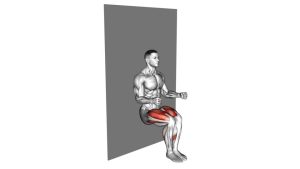
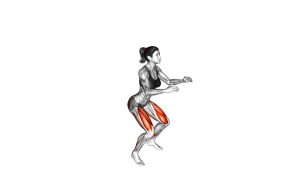
This exercise is best performed with a smooth and repeatable rhythm. The wall helps guide your torso, while your legs create the work through repeated knee and hip extension. Because the back stays in contact with the wall, the exercise places a strong emphasis on the quadriceps and teaches you to produce force vertically without leaning forward.
The goal is not to jump as high as possible. The goal is to create a quick, powerful upward pulse, return under control, and repeat with clean knee tracking. Each repetition should feel athletic, springy, and controlled, not sloppy or collapsed.
Quick Overview
| Body Part | Legs |
|---|---|
| Primary Muscle | Quadriceps |
| Secondary Muscle | Glutes, calves, hamstrings, core stabilizers |
| Equipment | Wall only; optional exercise mat and supportive training shoes |
| Difficulty | Beginner to Intermediate |
Sets & Reps (By Goal)
- Beginner technique: 2–3 sets × 6–8 reps, using a small range and controlled rhythm.
- Quad endurance: 3–4 sets × 10–15 reps, keeping steady tension and short rest periods.
- Explosive leg power: 3–5 sets × 5–8 fast reps, focusing on speed and clean knee tracking.
- Conditioning finisher: 2–4 rounds × 20–30 seconds, resting 45–75 seconds between rounds.
- Warm-up activation: 1–2 sets × 6–10 reps before squats, lunges, or jump training.
Progression rule: Increase speed only after you can control the landing and return phase. If your knees cave inward or your back loses contact with the wall, reduce the range or reps.
Setup / Starting Position
- Stand against a wall: Place your back flat against a sturdy wall with your feet slightly forward.
- Set your stance: Position your feet about shoulder-width apart with toes pointing slightly outward or straight ahead.
- Slide down carefully: Lower into a wall sit position until your knees are bent around 70–90 degrees.
- Stack your posture: Keep your head, upper back, and hips close to the wall without excessive arching.
- Brace lightly: Keep your core active, ribs controlled, and shoulders relaxed.
- Load the legs: Feel pressure through the midfoot and heel, not just the toes.
Your feet should be far enough forward that your knees do not travel too far past your toes at the bottom. The wall should support your torso, but your legs should still do the work.
Execution (Step-by-Step)
- Start in the wall sit: Hold a strong squat position with your back against the wall and knees aligned over your feet.
- Create a small dip: Lower slightly deeper to preload the quads and prepare for the upward drive.
- Drive upward fast: Push through both feet and extend the knees and hips quickly as your body slides upward along the wall.
- Keep contact with the wall: Let the wall guide your torso so the movement stays vertical and controlled.
- Avoid full lockout: Rise high enough to create power, but do not aggressively snap the knees straight.
- Return to the bottom: Slide back down under control into the wall sit position.
- Repeat rhythmically: Continue with quick, clean pulses while keeping your knees stable and your torso supported.
Pro Tips & Common Mistakes
Pro Tips
- Use the wall as a guide: Keep the movement vertical instead of leaning forward like a regular squat.
- Push through the full foot: Drive through the midfoot and heel while keeping the toes connected to the floor.
- Keep reps springy: Move with speed on the way up and control on the way down.
- Choose quality over height: The exercise is about power and control, not maximum jump distance.
- Maintain knee alignment: Keep your knees tracking over the second and third toes.
- Use short sets first: Plyometric-style reps fatigue quickly, so stop before your form breaks.
Common Mistakes
- Letting the knees cave inward: This reduces control and may increase knee stress.
- Sliding too low: Going too deep can make the movement slow and uncomfortable for the knees.
- Bouncing off the wall: Keep the wall as support, not as a rebound tool.
- Locking the knees hard: Finish tall but avoid snapping into full extension.
- Standing too close to the wall: This can push the knees forward and reduce stability.
- Using sloppy speed: Fast reps should still be controlled, balanced, and repeatable.
FAQ
What is the Plyo Wall Sit Squat?
The Plyo Wall Sit Squat is a wall-supported squat pulse performed with explosive upward intent. It starts from a wall sit position, then uses a quick leg drive to rise upward before returning to the squat position.
Is this the same as a jump squat?
No. A regular jump squat is performed freely and usually involves leaving the ground. The Plyo Wall Sit Squat keeps the back against the wall and focuses more on vertical power, quad tension, and controlled repetition.
What muscles does the Plyo Wall Sit Squat work?
It mainly targets the quadriceps. The glutes, calves, hamstrings, and core also assist by helping control the squat position, upward drive, and return phase.
Is the Plyo Wall Sit Squat good for beginners?
Yes, it can be beginner-friendly when performed with a small range of motion and slower rhythm. Beginners should focus on knee alignment, controlled sliding, and short sets before adding speed.
Should my feet leave the floor?
They do not need to. The movement can be performed as a fast wall-supported squat pulse without a true jump. If your feet briefly become light, make sure the landing is soft and controlled.
Why do my quads burn so quickly?
The wall sit position keeps constant tension on the quadriceps. Adding explosive pulses increases fatigue because the quads must both produce force and control the return phase.
Who should avoid this exercise?
People with active knee pain, recent lower-body injury, or difficulty controlling squat mechanics should use caution. Start with a basic wall sit or regular bodyweight squat before progressing.
Recommended Equipment
- Supportive Training Shoes — helps provide stable foot contact during fast lower-body reps.
- Non-Slip Exercise Mat — useful for traction and comfort during home leg workouts.
- Mini Resistance Bands — helpful for teaching knee alignment and glute activation.
- Foam Roller — useful for warm-ups, cooldowns, and general leg recovery.
- Adjustable Weighted Vest — optional progression tool once bodyweight reps are controlled.
Tip: Add equipment only after your bodyweight form is consistent. For plyometric-style movements, clean mechanics are more important than extra load.