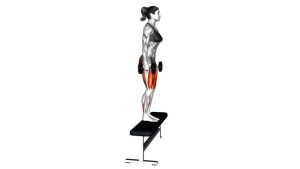
Dumbbell Curtsey Lunge: Form, Muscles Worked, Sets, Tips & FAQ
Learn the dumbbell curtsey lunge for glutes, quads, and hip stability. Step-by-step form, sets, tips, mistakes, FAQs, and equipment.
Dumbbell Curtsey Lunge
This exercise is useful for building stronger glutes, improving single-leg control, and adding variety to leg training. The goal is not to twist aggressively or step too far behind the body. Instead, move with control, keep the front foot grounded, and let the front leg perform most of the work.
Quick Overview
| Body Part | Legs |
|---|---|
| Primary Muscle | Glutes, especially gluteus maximus and gluteus medius |
| Secondary Muscle | Quadriceps, adductors, hamstrings, calves, and core stabilizers |
| Equipment | Pair of dumbbells |
| Difficulty | Intermediate because it requires balance, hip control, and clean knee tracking |
Sets & Reps (By Goal)
- Glute strength: 3–4 sets × 8–10 reps per leg with moderate-to-heavy dumbbells
- Muscle growth: 3–4 sets × 10–15 reps per leg with controlled tempo
- Balance and hip stability: 2–3 sets × 8–12 reps per leg using lighter dumbbells
- Lower-body conditioning: 2–4 sets × 12–20 alternating reps with short rest
Progression rule: Add reps first, then increase dumbbell weight only when your front knee stays controlled and your balance remains stable.
Setup / Starting Position
- Stand tall: Place your feet about hip-width apart with your chest lifted and core lightly braced.
- Hold the dumbbells: Keep one dumbbell in each hand with your arms straight at your sides.
- Set your front foot: Choose the working leg and keep that foot fully planted on the floor.
- Relax the shoulders: Let the dumbbells hang naturally without shrugging or swinging.
- Look forward: Keep your head neutral and your torso controlled before stepping.
Start with a light load until you understand the diagonal step pattern. This exercise should feel stable, not rushed.
Execution (Step-by-Step)
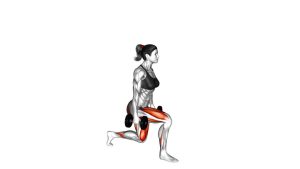
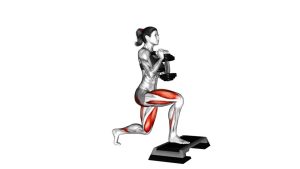
- Step diagonally back: Move one leg behind and across the standing leg, like a controlled curtsey position.
- Lower under control: Bend the front knee and lower the back knee toward the floor without collapsing inward.
- Keep the front foot grounded: Press through the front heel and midfoot while maintaining balance.
- Control the torso: Keep your chest lifted with only a slight natural forward lean.
- Drive back up: Push through the front leg to stand tall and return the back foot to the starting position.
- Repeat or alternate: Complete all reps on one side or alternate sides depending on your workout goal.
Pro Tips & Common Mistakes
- Do not over-cross the back leg: A small diagonal step is enough to load the glutes without stressing the knee.
- Keep the front knee controlled: Avoid letting it cave sharply inward as you descend.
- Use the front heel: Drive through the front heel and midfoot instead of pushing mainly from the back toes.
- Avoid dumbbell swinging: Keep the weights quiet so the legs and hips perform the movement.
- Control the depth: Lower only as far as you can while keeping balance and clean alignment.
- Keep the hips stable: Do not twist excessively at the waist or rotate the torso to chase more range.
- Start lighter: This lunge variation is more demanding on balance than a basic reverse lunge.
FAQ
What muscles does the dumbbell curtsey lunge work?
The dumbbell curtsey lunge mainly works the glutes, especially the gluteus maximus and gluteus medius. It also trains the quadriceps, adductors, hamstrings, calves, and core stabilizers.
Is the dumbbell curtsey lunge good for glutes?
Yes. The diagonal cross-behind step increases hip stability demand and helps target the side and upper glute area. For best glute activation, keep most of your weight on the front leg and push through the heel.
Should beginners do dumbbell curtsey lunges?
Beginners can practice the movement without dumbbells first. Once balance, knee control, and hip position feel stable, light dumbbells can be added gradually.
Why do my knees hurt during curtsey lunges?
Knee discomfort often happens when the back leg crosses too far, the front knee caves inward, or the load is too heavy. Reduce the crossover angle, shorten the range of motion, and focus on clean knee tracking.
What is the difference between a curtsey lunge and a reverse lunge?
A reverse lunge steps straight backward, while a curtsey lunge steps diagonally behind and across the body. This makes the curtsey lunge more demanding for glute medius, hip stability, and balance.
Recommended Equipment
- Adjustable Dumbbells — ideal for progressing load without needing many separate dumbbell pairs
- Hex Dumbbell Set — stable, durable dumbbells for lower-body strength training
- Resistance Loop Bands — useful for glute activation before curtsey lunges
- Non-Slip Exercise Mat — provides better grip and comfort for home workouts
- Stable Training Shoes — helps improve foot stability during loaded lunge variations
Choose equipment that allows clean technique first. A lighter dumbbell with perfect control is better than a heavy dumbbell that causes knee collapse or balance loss.