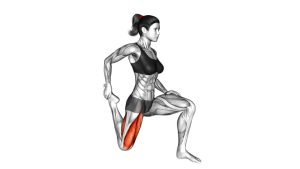
Prone Lying Quadriceps Stretch: Form, Benefits, Tips & FAQ
Learn the prone lying quadriceps stretch to improve front-thigh flexibility, knee comfort, and hip mobility with safe setup, form tips, FAQs, and gear.
Prone Lying Quadriceps Stretch
This exercise is best used after leg training, during a mobility routine, or as part of a gentle recovery session. It helps restore front-thigh length, supports better knee flexion, and can improve hip extension comfort when performed with control. The goal is not to force the heel to the glute. The goal is to create a steady, pain-free stretch while keeping the pelvis stable.
Quick Overview
| Body Part | Legs |
|---|---|
| Primary Muscle | Quadriceps, especially rectus femoris |
| Secondary Muscle | Hip flexors, anterior thigh fascia, knee flexion mobility structures |
| Equipment | None required; optional yoga mat, towel, or stretching strap |
| Difficulty | Beginner |
Sets & Reps (By Goal)
- General flexibility: 2–3 sets × 20–30 seconds per side
- Post-workout recovery: 1–3 sets × 30–45 seconds per side
- Mobility improvement: 3–4 sets × 30–60 seconds per side with relaxed breathing
- Warm-up preparation: 1–2 sets × 10–15 gentle pulses or 15–20 second holds
Progression rule: Increase hold time before increasing stretch intensity. A mild-to-moderate stretch is more useful than forcing the range.
Setup / Starting Position
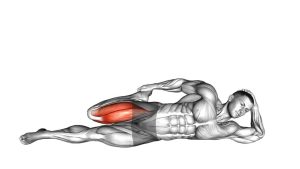
- Lie face down: Position your body prone on a mat with your legs extended behind you.
- Relax the upper body: Rest your head on your forearm or keep the chest lightly supported.
- Bend one knee: Slowly bring one heel toward the glutes without twisting the pelvis.
- Reach for the foot or ankle: Hold the ankle, foot, or use a towel/strap if needed.
- Keep the hips grounded: Press the front of the pelvis gently into the floor to prevent lower-back arching.
Tip: If the stretch feels mostly in the knee, reduce the pull and focus on keeping the thigh aligned with the hip.
Execution (Step-by-Step)
- Start in control: Lie flat, breathe normally, and keep both hips facing the floor.
- Bend the working knee: Bring the heel toward the glute slowly until you feel light tension in the front thigh.
- Apply gentle assistance: Use your hand, towel, or strap to guide the foot closer without forcing it.
- Hold the stretch: Maintain a comfortable stretch while keeping the knee aligned and the pelvis down.
- Breathe steadily: Exhale slowly to reduce unnecessary tension in the hips and lower back.
- Release slowly: Let the foot move away from the glute with control, then switch sides.
Pro Tips & Common Mistakes
- Keep the hip down: Letting the hip lift reduces the stretch and may shift stress into the lower back.
- Do not yank the foot: Pull gradually and keep the stretch smooth.
- Keep the knee aligned: Avoid letting the knee flare far out to the side.
- Use a strap if needed: A strap helps you stretch without twisting the shoulder or spine.
- Avoid excessive back arch: Brace lightly through the core and keep the pelvis heavy on the floor.
- Stretch both sides: Compare left and right sides, but do not force the tighter side to match immediately.
FAQ
Where should I feel the prone lying quadriceps stretch?
You should feel it mainly in the front of the thigh. Some people may also feel a gentle stretch near the front of the hip because the rectus femoris crosses both the hip and knee.
Is this exercise good for tight quads?
Yes. It is a simple and effective stretch for tight quadriceps when performed slowly and without forcing the knee into painful range.
Why do I feel it in my knee instead of my thigh?
Knee pressure may happen if you pull too hard, twist the leg, or move beyond your comfortable range. Reduce the intensity and use a strap if needed.
Should my heel touch my glute?
Not necessarily. The heel does not need to touch the glute for the stretch to be effective. Stop where you feel a controlled stretch in the quadriceps.
Can I do this stretch every day?
Yes, many people can perform it daily at a gentle intensity. Keep the stretch comfortable and avoid aggressive pulling, especially if your knees are sensitive.
Recommended Equipment (Optional)
- Thick Yoga Mat — provides comfort for the hips, knees, and torso during floor stretching
- Stretching Strap — helps you reach the foot without twisting the shoulder or spine
- Foam Roller — useful for warming up the quadriceps before stretching
- Exercise Knee Pad — adds cushioning if floor pressure bothers the knee or thigh
- Massage Ball — supports gentle soft-tissue release around the quads and hip flexors
Tip: Equipment should make the stretch easier and more controlled. If a tool increases discomfort, stop using it and return to a simpler version.