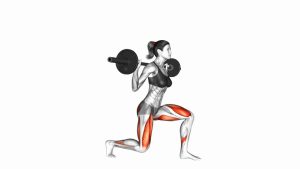
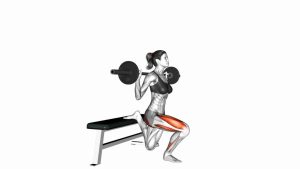
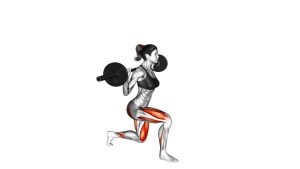
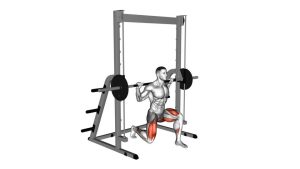
Suspender Abduction Lunge: Form, Muscles, Sets & Tips
Learn the Suspender Abduction Lunge to build glutes, legs, hip stability, and lateral control with safe form, sets, tips, FAQs, and gear.
Suspender Abduction Lunge
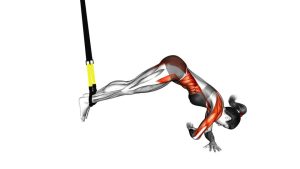
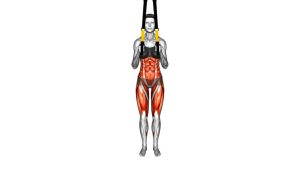
This movement works best when the athlete uses the suspension handles for balance assistance, not as the main source of force. The working leg should control the descent and drive the body back up. The extended leg creates a useful inner-thigh stretch, while the standing side trains strength, stability, and lateral movement control.
Quick Overview
| Body Part | Legs |
|---|---|
| Primary Muscle | Glutes, especially gluteus maximus and gluteus medius |
| Secondary Muscle | Quadriceps, adductors, hamstrings, calves, and core stabilizers |
| Equipment | Suspension trainer / straps |
| Difficulty | Beginner to intermediate depending on depth, tempo, and strap assistance |
Sets & Reps (By Goal)
- Beginner control: 2–3 sets × 8–10 reps per side with a slow, steady tempo.
- Glute and leg strength: 3–4 sets × 10–12 reps per side with moderate depth.
- Hip mobility and adductor control: 2–3 sets × 8–12 reps per side with a gentle pause at the bottom.
- Balance and stability training: 3 sets × 6–10 reps per side using light strap assistance only.
- Conditioning circuit: 2–4 rounds × 30–45 seconds per side with clean form and controlled breathing.
Progression rule: First improve control and depth. Then reduce how much you rely on the straps. Only increase speed or range of motion when the knee, hip, and foot remain aligned.
Setup / Starting Position
- Set the straps: Adjust the suspension handles to a comfortable height around chest to rib level.
- Face the anchor: Stand tall while holding both handles with your elbows slightly bent.
- Create light tension: Step back enough to keep the straps active without leaning heavily backward.
- Set your feet: Start with feet about hip-width apart and toes facing forward or slightly outward.
- Brace gently: Keep the ribs stacked over the pelvis and the core active.
- Prepare the working side: Shift your body weight toward one leg before moving into the lunge.
The straps should help you stay balanced. They should not turn the exercise into an upper-body pulling movement.
Execution (Step-by-Step)
- Start tall: Hold the handles, keep your chest lifted, and place your feet under control.
- Shift sideways: Move your hips toward the working leg while keeping the opposite leg long.
- Abduct the leg: Allow the non-working leg to move outward to the side as you lower into the lunge.
- Sit the hips back: Bend the working knee and push the hips slightly behind you, similar to a side-lunge pattern.
- Keep alignment: Track the working knee over the toes and avoid letting it collapse inward.
- Reach the bottom position: Pause briefly when you feel controlled tension in the glutes and inner thigh.
- Drive through the working foot: Push through the heel and midfoot to stand back up.
- Return to center: Bring the abducted leg back under the body with control.
- Reset posture: Stand tall before starting the next repetition.
Pro Tips & Common Mistakes
- Use the straps lightly: The legs should do most of the work. The handles are mainly for balance and control.
- Send the hips back: Do not turn the movement into a shallow knee-only bend.
- Keep the chest proud: A slight forward torso angle is fine, but avoid rounding the back.
- Control the extended leg: Keep it long without locking the knee aggressively.
- Do not bounce at the bottom: Pause briefly and return with strength.
- Watch the knee line: The working knee should follow the toes, not collapse inward.
- Start with a smaller range: Build depth only when your hips, knees, and ankles stay controlled.
- Train both sides evenly: Lateral exercises often reveal side-to-side imbalances.
FAQ
What muscles does the Suspender Abduction Lunge work?
It mainly targets the glutes, especially the gluteus maximus and gluteus medius. It also trains the quadriceps, adductors, hamstrings, calves, and core stabilizers.
Is the Suspender Abduction Lunge the same as a side lunge?
It is similar to a side lunge, but the suspension straps provide assistance and balance support. The abduction element also emphasizes lateral hip control and glute medius activity.
Should I pull hard on the straps?
No. The straps should guide your balance, not lift your body. If you need to pull hard, reduce the depth or slow down the movement until the working leg can control the rep.
Is this exercise good for beginners?
Yes, it can be beginner-friendly because the straps provide support. Beginners should use a smaller range of motion, move slowly, and focus on knee alignment before increasing depth.
Why do I feel a stretch in my inner thigh?
The extended leg places the adductors under a controlled stretch. This is normal as long as it feels like tension, not sharp pain or pulling near the groin.
How can I make the exercise harder?
Use less strap assistance, increase the depth, slow the eccentric phase, add a pause at the bottom, or progress to a non-assisted lateral lunge variation.
Recommended Equipment
- Suspension Trainer — the main tool for performing assisted abduction lunges and other strap-based exercises.
- Door Anchor for Suspension Trainer — useful for home setups when you do not have a fixed wall or ceiling anchor.
- Non-Slip Exercise Mat — improves foot grip and comfort during lateral lower-body drills.
- Resistance Loop Bands — helpful for glute activation drills before lateral lunge training.
- Ankle Mobility Wedge — useful for improving ankle mobility and squat/lunge positioning.
Choose stable, non-slip equipment. If your straps, anchor point, or floor surface feel unstable, fix the setup before performing the exercise.