Smith Machine Front Squat: Proper Form, Quad Benefits, Sets & Tips
Learn the Smith Machine Front Squat for stronger quads, better squat control, and upright form. Includes setup, steps, mistakes, FAQs, and equipment.
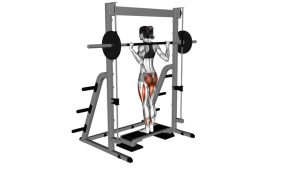
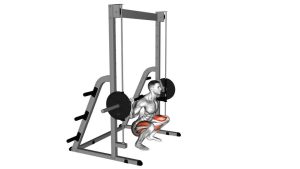
Smith Machine Front Squat
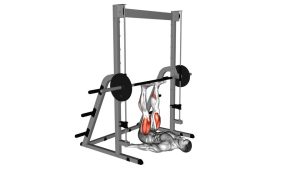
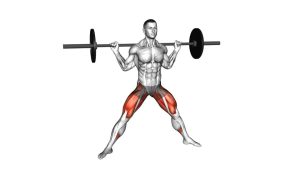
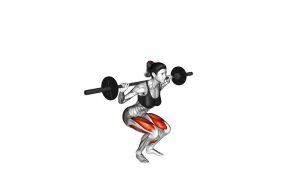
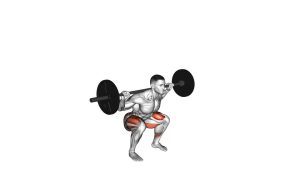
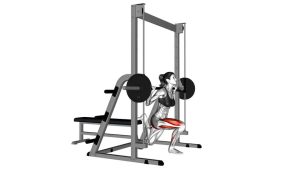
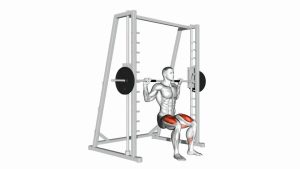
This exercise is useful for lifters who want a quad-dominant squat pattern with more stability than a free-weight front squat. Because the Smith machine guides the bar path, you can focus on depth, knee tracking, tempo, and upright posture. It is especially effective when performed with clean reps, full control, and a foot position that allows the knees to bend deeply without the heels lifting.
Quick Overview
| Body Part | Legs |
|---|---|
| Primary Muscle | Quadriceps |
| Secondary Muscle | Glutes, adductors, core, upper back, calves |
| Equipment | Smith machine, optional bar pad, lifting shoes, knee sleeves |
| Difficulty | Intermediate |
Sets & Reps (By Goal)
- Strength: 4–5 sets × 4–6 reps with controlled depth and 2–3 minutes rest.
- Muscle growth: 3–4 sets × 8–12 reps using a steady tempo and 60–90 seconds rest.
- Quad focus: 3–5 sets × 10–15 reps with a smooth descent and strong knee extension.
- Technique practice: 2–3 sets × 6–8 reps using light weight and slow controlled movement.
Progression rule: Add weight only when you can keep the torso upright, heels planted, knees tracking with the toes, and depth consistent on every rep.
Setup / Starting Position
- Set the bar height: Position the Smith bar around upper-chest to shoulder height so you can unrack it without standing on your toes.
- Place the bar on the front shoulders: Rest the bar across the front delts and upper chest area. Avoid placing pressure directly on the throat.
- Choose your arm position: Use a cross-arm front rack or a clean-style grip if your mobility allows it.
- Set your feet: Place the feet around shoulder-width apart, usually slightly forward of the bar path, with toes turned slightly out.
- Brace your core: Keep the ribs down, chest tall, upper back tight, and eyes forward.
- Unrack safely: Rotate the bar to release it from the hooks, then settle into a stable standing position before starting the rep.
Tip: Your foot position should allow a deep squat while keeping the heels down. If you feel pulled forward or trapped by the machine path, adjust your stance before adding load.
Execution (Step-by-Step)
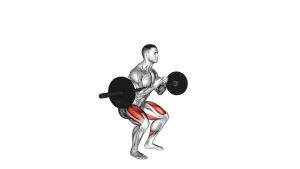
- Start tall: Stand with the bar stable on the front shoulders, core braced, and elbows lifted enough to keep the chest open.
- Begin the descent: Bend the knees and hips together while keeping the torso upright.
- Let the knees track forward: Allow the knees to move in line with the toes to create a quad-focused squat pattern.
- Control the bottom: Lower until you reach your best pain-free depth while maintaining heel contact and a neutral spine.
- Drive upward: Push through the midfoot and extend the knees and hips together.
- Keep the chest tall: Do not let the elbows drop or the torso collapse forward as you stand.
- Finish stacked: Return to a tall position with knees and hips extended, then reset your brace before the next rep.
Pro Tips & Common Mistakes
- Keep the torso upright: The front-loaded position should encourage a tall chest and strong brace.
- Do not place the bar on your neck: The bar should sit across the front delts, not press into the throat.
- Avoid heel lift: If the heels rise, adjust your foot position or reduce depth slightly.
- Control the descent: Do not drop into the bottom position. Lower with tension and control.
- Do not lock the knees aggressively: Finish tall without snapping into the joints.
- Watch knee alignment: Knees should track in the same direction as the toes, not collapse inward.
- Use the Smith machine correctly: The fixed path helps stability, but your stance must match the rail angle and your body mechanics.
- Do not overload too soon: Heavy weight with poor front-rack control can shift stress to the wrists, shoulders, knees, or lower back.
FAQ
What muscles does the Smith Machine Front Squat work?
The Smith Machine Front Squat primarily targets the quadriceps. It also works the glutes, adductors, core, and upper-back muscles that help maintain an upright front-rack position.
Is the Smith Machine Front Squat good for building quads?
Yes. The upright torso, forward knee travel, and stable machine path make this exercise very effective for quad-focused training, especially when performed with controlled depth and consistent tension.
Where should my feet be during the Smith Machine Front Squat?
Most lifters do best with the feet around shoulder-width apart and slightly forward of the bar path. The exact position should allow the knees to bend naturally, the heels to stay planted, and the torso to remain upright.
Is this easier than a barbell front squat?
It is usually easier to balance because the Smith machine controls the bar path. However, it still requires strong bracing, clean depth, and proper front-rack positioning.
Can beginners do the Smith Machine Front Squat?
Beginners can use it if they start light and learn the setup carefully. However, it may feel uncomfortable at first because the bar rests on the front shoulders. Proper positioning is more important than weight.
Should I use a bar pad?
A bar pad can make the front-rack position more comfortable, especially for new lifters. However, it should not cause the bar to roll or shift. The bar must stay stable on the front shoulders.
Recommended Equipment
- Smith Machine Bar Pad — helps reduce pressure on the front shoulders during the front-rack position.
- Weightlifting Shoes — raised heels can improve squat depth, ankle comfort, and upright posture.
- Knee Sleeves — provide warmth and light support during heavy or higher-volume squat sessions.
- Weightlifting Belt — useful for improving bracing during heavier Smith machine squat work.
- Liquid Chalk — improves hand grip when setting a clean-style or cross-arm front rack.
Tip: Equipment should support better technique, not hide poor form. Start with a stable stance, controlled depth, and light-to-moderate loading before progressing.