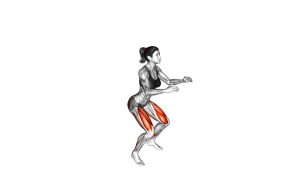
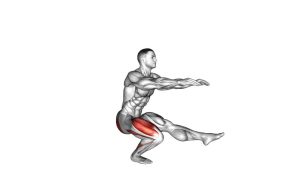
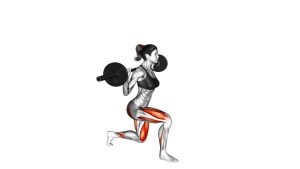
Barbell Bench Squat: Proper Form, Muscles Worked, Sets, Tips & FAQ
Learn the Barbell Bench Squat for safer squat depth, stronger quads, glutes, and legs. Includes form steps, sets, mistakes, FAQs, and gear.
Barbell Bench Squat
This exercise is ideal for lifters who want to practice squatting with more confidence and consistency. Because the bench creates a predictable stopping point, it can help beginners understand depth while still training the quadriceps, glutes, hamstrings, and core stabilizers. The best reps are controlled, quiet, and stable.
The goal is not to collapse onto the bench. Instead, think of the bench as a light touch target. Lower with control, keep tension in your legs, lightly contact the bench, then stand up by driving through the full foot. This makes the movement useful for strength, hypertrophy, and squat technique development.
Quick Overview
| Body Part | Legs |
|---|---|
| Primary Muscle | Quadriceps and gluteus maximus |
| Secondary Muscle | Hamstrings, adductors, calves, core, spinal erectors, upper back stabilizers |
| Equipment | Barbell, weight plates, squat rack, flat bench or box |
| Difficulty | Beginner to intermediate |
Sets & Reps (By Goal)
- Technique practice: 2–4 sets × 6–10 reps using light weight and a slow, controlled tempo.
- Muscle growth: 3–4 sets × 8–12 reps using moderate weight and steady tension.
- Strength development: 4–5 sets × 3–6 reps using heavier weight while maintaining clean form.
- Beginner confidence: 2–3 sets × 8–10 reps with an empty barbell or very light load.
- Warm-up activation: 1–2 sets × 8–12 reps before heavier squat or leg training.
Progression rule: Increase load only when you can lightly touch the bench, keep your knees stable, maintain a neutral spine, and stand up without rocking forward or bouncing.
Setup / Starting Position
- Place the bench: Position a flat bench or box behind you where your hips will naturally descend.
- Set rack height: Place the barbell around upper-chest height so you can unrack it without calf-raising or crouching.
- Choose bar position: Rest the bar across your upper traps for a high-bar style, or slightly lower across the rear delts if preferred.
- Grip the bar evenly: Pull the bar gently into your back and keep both hands balanced.
- Step back carefully: Take one or two controlled steps back until your stance is in front of the bench.
- Set your stance: Place your feet about shoulder-width apart with toes slightly turned out.
- Brace before moving: Take a breath into your midsection, tighten your core, and keep your ribs stacked over your pelvis.
Tip: Before adding weight, test the bench height with bodyweight reps. Your position should feel stable, not like you are falling backward or cutting the squat too high.
Execution (Step-by-Step)
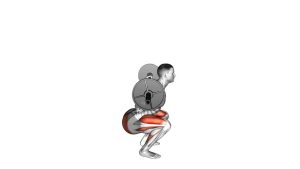
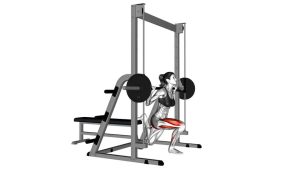
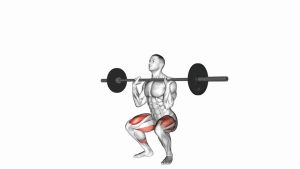
- Stand tall with control: Keep your chest lifted, eyes forward, and feet rooted into the floor.
- Begin the descent: Push your hips slightly back while bending your knees at the same time.
- Keep the knees tracking: Let your knees move in line with your toes instead of collapsing inward.
- Lower toward the bench: Descend slowly until your glutes lightly touch the bench.
- Stay tight at the bottom: Do not relax your legs, round your back, or bounce against the bench.
- Drive through the floor: Push through the midfoot and heel as your hips and knees extend together.
- Finish the rep: Stand tall with your glutes engaged, but avoid leaning backward or overextending your lower back.
- Reset before the next rep: Rebrace your core and repeat with the same controlled depth and tempo.
Pro Tips & Common Mistakes
- Use the bench as a target: Light contact is enough. Sitting fully can remove tension from the working muscles.
- Do not bounce: Bouncing off the bench increases stress and reduces control.
- Keep full-foot pressure: Avoid shifting only onto the toes or only onto the heels.
- Control your torso angle: A small forward lean is normal, but the spine should stay neutral.
- Match bench height to your mobility: Too high limits the exercise; too low may cause form breakdown.
- Keep the bar over midfoot: If the bar drifts too far forward, balance and power decrease.
- Do not rush reps: Slower reps build better control and reduce sloppy movement.
- Brace every rep: Treat each repetition as a separate lift, especially when using heavier weight.
- Watch knee collapse: If your knees cave inward, reduce the load and focus on stable tracking.
- Use safety pins: When training in a rack, set safety arms at an appropriate height for extra protection.
FAQ
What muscles does the Barbell Bench Squat work?
The Barbell Bench Squat primarily works the quadriceps and glutes. It also trains the hamstrings, adductors, calves, core, spinal erectors, and upper back stabilizers.
Is the Barbell Bench Squat good for beginners?
Yes. It is a strong beginner-friendly squat variation because the bench gives a clear target for depth. Beginners should start with a light barbell and focus on control before increasing weight.
Should I sit fully on the bench?
For most training goals, no. You should lightly touch the bench while keeping tension in your legs and core. Fully sitting and relaxing can reduce muscle engagement and make the upward phase less stable.
Is the Barbell Bench Squat the same as a box squat?
It is very similar. A bench squat uses a bench as the target, while a box squat usually uses a box with a specific height. Both can help improve depth control, squat confidence, and lower-body strength.
How heavy should I go on Barbell Bench Squats?
Use a weight that allows clean form, stable knees, a neutral spine, and a light bench touch. If you bounce, collapse, rock forward, or lose control, the weight is too heavy.
Why do my knees cave in during the movement?
Knee cave can happen from poor control, weak glutes, poor foot pressure, or too much weight. Reduce the load, keep the knees tracking over the toes, and focus on pushing the floor apart gently.
Can I use this exercise for glutes?
Yes. The glutes work strongly during the upward drive, especially when you keep tension at the bottom and extend the hips fully. A slightly wider stance may increase glute involvement for some lifters.
Recommended Equipment
- Olympic Barbell — essential for progressive barbell squat training and lower-body strength work.
- Adjustable Weight Bench — useful as a stable target for squat depth and controlled bench squat practice.
- Squat Rack with Safety Arms — helps you unrack, rerack, and train barbell squats more safely.
- Barbell Squat Pad — optional comfort support for lifters who feel pressure from the barbell.
- Weightlifting Shoes — can improve foot stability, heel support, and squat depth control.
Tip: Prioritize stable equipment before adding heavier loads. A secure bench, solid rack, and controlled bar setup make the Barbell Bench Squat safer and more effective.