Band Seated Leg Extension: Form, Muscles & Tips
Learn the Band Seated Leg Extension to strengthen your quads with controlled knee movement. Explore setup, sets, form tips, mistakes, FAQs, and equipment.
Band Seated Leg Extension
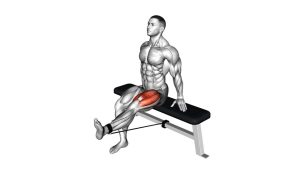
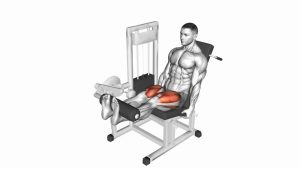
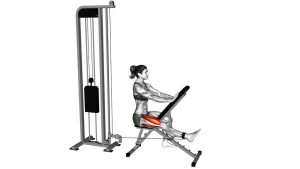
The Band Seated Leg Extension helps develop quadriceps strength, muscular endurance, and controlled knee movement without requiring a dedicated leg extension machine. Because one leg works at a time, the exercise also allows focused attention on each side independently. Additionally, the band provides increasing resistance as it stretches during the extension. This makes controlled movement especially important near the top of each repetition. For best results, select a band that allows a smooth range of motion without forcing the knee or lifting the thigh. Keep your hands on the bench for support, and avoid using momentum to swing the lower leg forward.
Quick Overview
| Body Part | Legs |
|---|---|
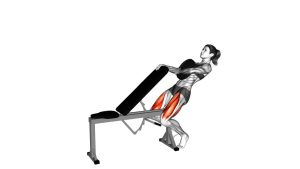
| Primary Muscle | Quadriceps: Rectus femoris, Vastus lateralis, Vastus medialis, and Vastus intermedius |
| Secondary Muscle | Hip flexors and core stabilizers (minor stabilization roles) |
| Equipment | Resistance band, secure anchor, and flat workout bench |
| Difficulty | Beginner to Intermediate, depending on band resistance, knee control, and training experience |
Sets & Reps (By Goal)
- Beginner control: Perform 2–3 sets of 10–12 repetitions per leg using light resistance. Rest for 45–60 seconds between sets. Initially, focus on smooth movement and stable thigh positioning rather than maximum band tension.
- Muscle strength: Complete 3–4 sets of 8–12 repetitions per leg with moderate resistance. Rest for 60–90 seconds between sets. Additionally, use a controlled lowering phase to challenge the quadriceps throughout the repetition.
- Muscle hypertrophy: Perform 3–4 sets of 12–15 repetitions per leg. Select enough resistance to make the final repetitions challenging without sacrificing technique. However, avoid using excessive tension that causes the hips or torso to shift.
- Muscular endurance: Complete 2–3 sets of 15–25 repetitions per leg with light-to-moderate resistance. Rest for 30–60 seconds. Meanwhile, maintain a steady rhythm and avoid rushing the return phase.
- Rehab-style control: When approved by a qualified healthcare professional, perform 2–3 sets of 8–12 controlled repetitions. Use a comfortable range of motion and very light resistance. Furthermore, adjust the exercise to the individual’s symptoms and recovery needs.
Choosing the Right Band Resistance
Start with a resistance level that allows every repetition to remain smooth and comfortable. As your strength improves, gradually increase repetitions or band tension. Nevertheless, movement quality should take priority over resistance. The final repetitions should feel challenging without requiring your torso to lean backward or your working thigh to rise.
Progression rule: First master the full comfortable movement with light resistance. Then increase repetitions, extend the lowering phase, or progress to a slightly stronger band. Only increase difficulty when knee alignment, breathing, and overall control remain consistent.
Setup / Starting Position
- Choose a stable bench: Sit near the front edge of a flat workout bench. Ensure your thighs are supported while both lower legs can hang freely. Additionally, check that the bench remains stable when resistance is applied.
- Secure the resistance band: Attach one end of the band to a solid, low anchor behind the working lower leg. Position the other end around the working ankle using a suitable band loop or ankle attachment. Before continuing, gently test the setup to confirm that neither attachment can slip.
- Position your upper body: Sit upright with your chest lifted, spine neutral, and shoulders relaxed. Place both hands on the sides of the bench beside your hips for support. Meanwhile, keep your abdomen lightly engaged to minimize unnecessary torso movement.
- Align the working leg: Allow the working knee to bend naturally, with the lower leg pointing toward the floor. Keep the thigh relatively stationary and aligned with the hip. Avoid rotating the knee inward or outward before beginning the extension.
- Position the opposite leg: Keep the non-working knee bent and relaxed. The opposite foot may hang naturally or rest comfortably where it does not interfere with the resistance band. As a result, you can concentrate on the movement of the working leg.
- Prepare for the first repetition: Begin with gentle tension in the band. Look straight ahead, maintain a stable seated posture, and breathe naturally. Finally, confirm that the band follows a clear path without rubbing against moving bench components.
Setup tip: The band should resist forward knee extension rather than pull the leg into an awkward sideways position. If the resistance causes hip rotation or knee discomfort, adjust the anchor location or reduce tension.
Execution (Step-by-Step)
- Establish your posture: Sit upright with both hands supporting your position on the bench. Keep the working thigh stable and the knee comfortably bent. Before moving, engage your core lightly to prevent unwanted torso motion.
- Begin extending the knee: Contract the quadriceps and slowly move the working foot forward and upward. As the knee straightens, the lower leg moves away from its starting position. Meanwhile, avoid lifting the entire thigh or swinging from the hip.
- Continue through the extension: Gradually straighten the knee against the increasing resistance of the band. Keep the movement smooth and controlled. Additionally, maintain a neutral torso without leaning backward to assist the lift.
- Reach the top position: Extend the working leg until the lower leg approaches horizontal or reaches your comfortable end range. The knee should approach straight without being forced into hyperextension. At this point, concentrate on a controlled quadriceps contraction.
- Pause briefly: Hold the extended position for approximately one second while maintaining steady breathing. However, avoid clenching the jaw, raising the shoulders, or pushing aggressively against the knee joint.
- Lower the working leg: Slowly bend the knee and allow the lower leg to return toward the floor. Resist the band’s pull instead of letting it snap the foot backward. Consequently, the quadriceps remain active while controlling the lowering phase.
- Reset and repeat: Return to the initial bent-knee position without losing your seated posture. Next, repeat for the prescribed number of repetitions. Once the set is complete, switch legs and perform the same movement with equal attention to technique.
Breathing and Movement Tempo
Exhale gently as you extend the knee and inhale during the controlled lowering phase. For example, use approximately two seconds to lift, a brief pause at the top, and two to three seconds to return. Although individual tempos can vary, smooth repetitions are more valuable than rapid movements driven by momentum.
Pro Tips & Common Mistakes
- Keep the thigh stable: Avoid lifting your thigh as the knee extends. Instead, isolate the movement at the knee to maintain consistent quadriceps engagement.
- Do not swing the working leg: Using momentum reduces muscular control and can make the return phase harder to manage. Therefore, extend and lower the leg slowly, especially when resistance increases.
- Avoid excessive band tension: A band that is too strong may cause compensations, shortened repetitions, or knee discomfort. Start lighter and progress gradually as technique and strength improve.
- Maintain an upright torso: Leaning backward can shift the exercise away from its intended movement pattern. Instead, hold the bench and keep your abdomen lightly engaged throughout each set.
- Do not force the knee lockout: Straighten the working leg only within a comfortable and controlled range. Furthermore, avoid snapping into full extension or pushing beyond your natural joint position.
- Control the return phase: Allowing the band to pull your foot backward too quickly reduces movement quality. Consequently, slow the lowering phase and maintain tension through the quadriceps.
- Keep the knee aligned: Avoid allowing the working knee to rotate inward or outward during extension. Your kneecap should generally remain aligned with the direction of your toes.
- Use a secure band anchor: Never attach resistance bands to loose, unstable, or sharp bench components. Before every set, inspect both the band and its attachment points for safety.
- Train both legs evenly: Perform controlled repetitions on each side, especially when one quadriceps feels weaker. However, avoid forcing the weaker leg to match a resistance level it cannot control.
How to Improve Quadriceps Activation
Focus on gradually straightening the knee while keeping the working thigh steady. Additionally, pause briefly near the top to reinforce control without forcing the joint. If you mainly feel tension around the hip or notice excessive body movement, reduce resistance and reassess your setup. Over time, consistent technique and gradual progression can improve your ability to train the quadriceps effectively.
FAQ
Muscles Worked and Exercise Technique
What muscles does the Band Seated Leg Extension work?
The Band Seated Leg Extension primarily targets the quadriceps, including the rectus femoris, vastus lateralis, vastus medialis, and vastus intermedius. These muscles work together to straighten the knee against resistance. Additionally, the hip flexors and core muscles contribute minor stabilization while you maintain your seated posture. Because the knee performs most of the movement, this exercise is classified as a quadriceps isolation exercise.
Is the Band Seated Leg Extension suitable for beginners?
Yes, this exercise can be suitable for beginners when performed with light resistance and a stable setup. Initially, focus on comfortable knee extension, consistent breathing, and controlled lowering. Furthermore, start with fewer repetitions if the movement feels unfamiliar. As coordination improves, gradually increase the training volume or band resistance without sacrificing technique.
Should I straighten my knee completely during the exercise?
You can approach full knee extension when your available range is comfortable and controlled. However, avoid forcefully locking or hyperextending the joint against strong resistance. Instead, stop at a natural end position that allows the quadriceps to remain engaged. If complete extension causes discomfort, use a smaller range and consider professional guidance when appropriate.
Training Frequency, Progression, and Safety
How often should I perform Band Seated Leg Extensions?
Most healthy adults can include this movement in a lower-body routine two or three times per week, depending on their overall workload. For example, it can complement squats, lunges, and other quadriceps exercises. Additionally, allow enough recovery between demanding sessions to maintain performance. Beginners should start with modest volume and increase it gradually as tolerated.
Can resistance band leg extensions replace a leg extension machine?
Resistance band leg extensions can provide a practical alternative when a dedicated machine is unavailable. Both exercises train knee extension and emphasize the quadriceps. However, the resistance profiles are different because a band generally becomes more challenging as it stretches. Therefore, choose the variation that best suits your equipment, training goals, and ability to maintain controlled movement.
Recommended Equipment
- Resistance Bands Set — provides adjustable resistance levels for seated leg extensions, quadriceps training, and other lower-body strengthening exercises
- Flat Weight Bench — offers a stable seated platform that supports upright posture and controlled unilateral knee-extension movements
- Resistance Band Ankle Straps — provides a secure connection between compatible resistance bands and the working ankle during lower-body isolation exercises
- Resistance Band Anchor Strap — helps attach compatible resistance bands to a suitable fixed anchor while reducing unwanted movement or slipping
- Non-Slip Exercise Mat — provides a protective workout surface and can help reduce unwanted movement during home training when used appropriately
Equipment tip: Choose resistance bands with appropriate tension and compatible attachment accessories. Additionally, ensure the bench and anchor remain stable throughout each repetition. For safer training, inspect your equipment regularly and replace damaged bands immediately. Never use an anchor that cannot safely withstand the direction and amount of pulling force.